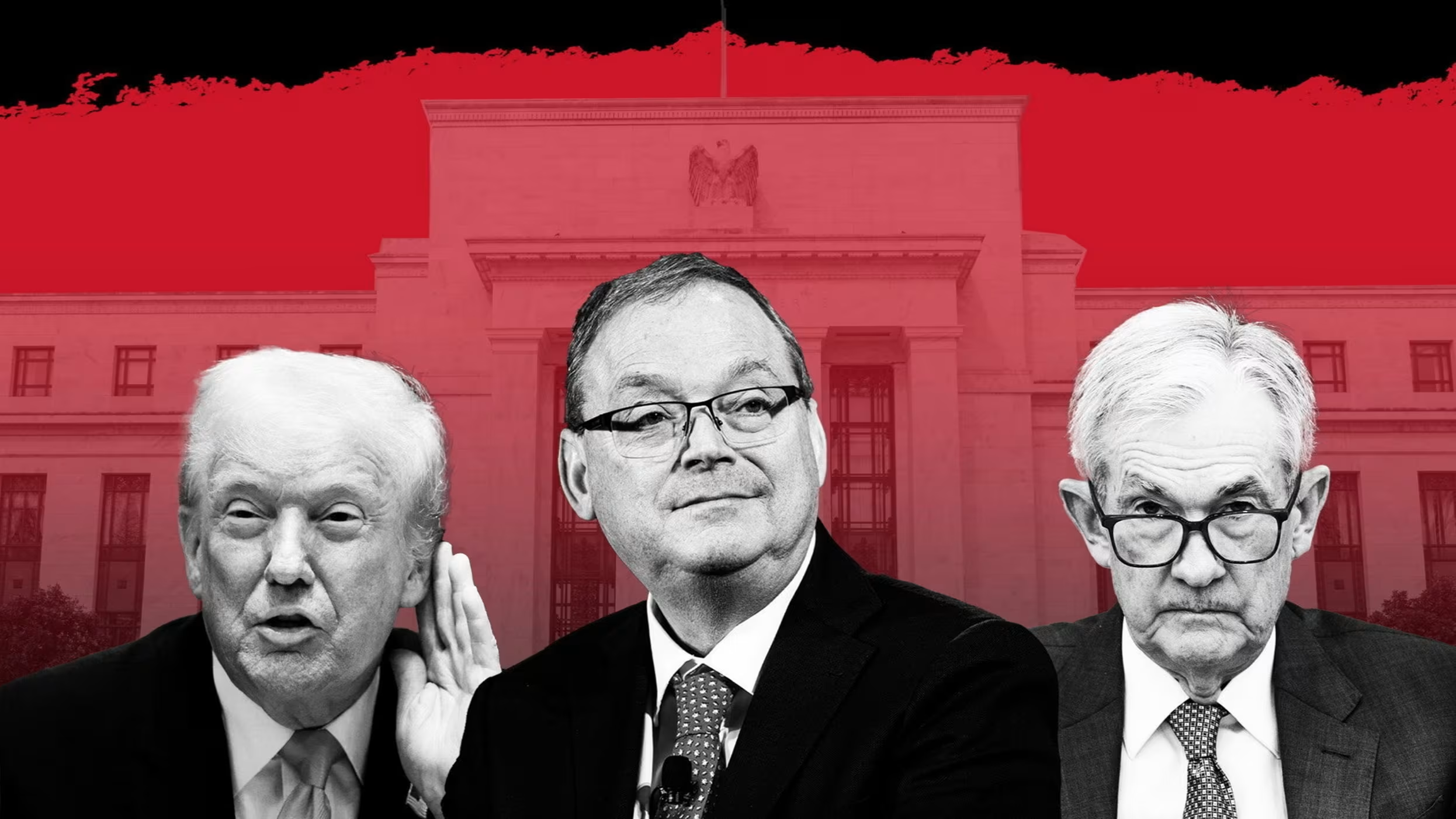
Bond investors have issued a warning to the US Treasury regarding the potential appointment of Kevin Hassett as the Federal Reserve Chair, citing concerns over financial stability and market impact.
Vanguard, the second-largest asset manager in the world, is optimistic about long-term US Treasuries after a challenging summer for bond investors. They believe that the Federal Reserve has reached the end of its rate hiking cycle and that the economy will slow down next year, making long-term bonds attractive. Vanguard expects an economic recession and a potential cut in borrowing costs, which would push down prices of shorter-dated Treasuries and increase the appeal of longer-dated bonds. They also view high-quality corporates as an attractive option in the credit market.
Bond investors of Credit Suisse are planning to file a lawsuit against Switzerland, alleging that the country failed to properly regulate the bank, leading to financial misconduct. The investors claim that Credit Suisse's risky investments and lack of oversight resulted in significant losses, and they are seeking compensation for their damages.
The stock market faces a key test as a round of government auctions approaches, which will determine the demand for U.S. government debt. The recent rise in Treasury yields, driven by concerns about the deteriorating fiscal outlook, has spooked investors. The upcoming auctions of $103 billion in 3-, 10-, and 30-year Treasurys will reveal whether buyers are deterred by Fitch Ratings' downgrade of the U.S. government's top AAA rating. The market's ability to absorb the increased supply without hiccups is complicated by still-elevated inflation, better-than-expected economic growth, and the possibility of more rate hikes by the Federal Reserve. Some experts believe that higher rates will be met with solid demand, while others expect yields to continue rising, potentially impacting stock valuations.
Economist Nouriel Roubini warns that a global recession is looming, with three potential scenarios posing serious risks to markets. The most positive outcome would be a "soft landing" where central banks manage to bring inflation down without triggering a recession. However, a "hard landing" scenario could lead to a protracted recession and financial instability. If central banks fail to tame inflation, a fourth scenario of allowing above-target inflation could emerge. The eurozone is already in a technical recession, the UK's growth has slowed, and the US experienced a sharp slowdown in the first quarter. China's recovery has stalled, and emerging markets are facing anemic growth and high inflation. Central banks may need to raise rates further, increasing the risk of an economic contraction and new debt and banking stresses. The possibility of a short and shallow recession has become more likely, which could erode consumer and business sentiment and potentially lead to a more severe downturn. Asset prices, including stocks and bonds, could be negatively impacted in these scenarios.
Bond investors are preparing for a recession and the end of the Federal Reserve's tightening cycle by embracing the safety of U.S. Treasuries and shedding risky exposures in investment grade and high yield credit. The Fed is expected to raise interest rates by 25 basis points at its meeting this week to a range of 5.0%-5.25%, but may pause after that and possibly start lowering rates in the fall. Fund managers have remained either neutral on their risk stance, stuck to Treasuries and high-quality investment grade corporate bonds, or extended duration in their portfolios.