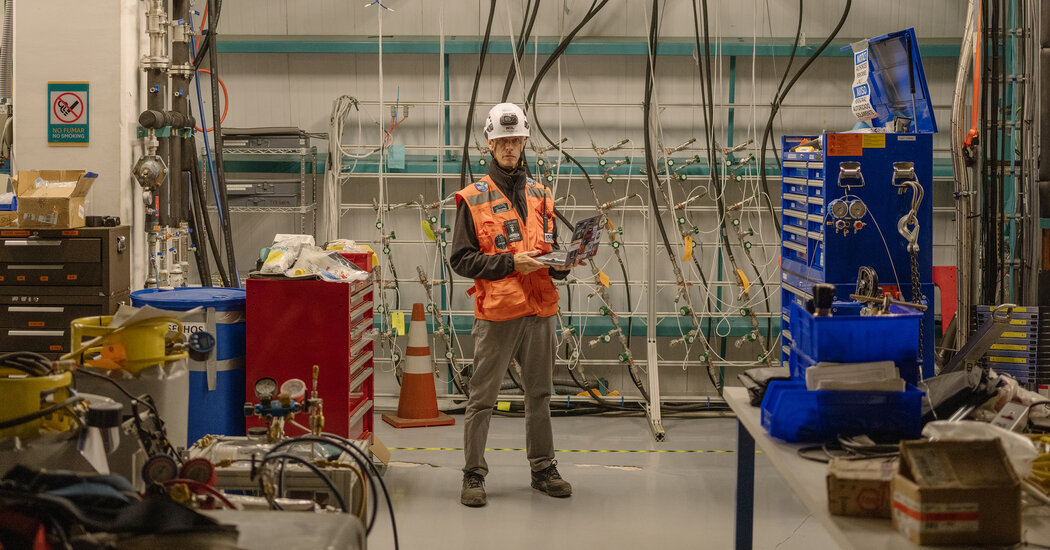
The Vera C. Rubin Observatory in Chile will generate about 60 million billion bytes of astronomical image data over a decade, using advanced data processing, AI, and cloud computing to analyze and identify celestial phenomena, transforming traditional astronomy into a big data science.
Scientists at the University of Copenhagen and University of Victoria have used artificial intelligence (AI) to analyze 700 years' worth of wave data and discover a mathematical model for predicting the occurrence of rogue waves. By combining various factors such as ocean movements, sea state, water depths, and bathymetric information, the researchers were able to identify the causes of these extreme waves and develop an algorithm that calculates the probability of their formation. The findings have implications for maritime safety, allowing shipping companies to assess the risk of encountering rogue waves and choose alternative routes.
Palantir Technologies, a big-data software firm, has recently announced a partnership with British defense contractor Babcock International Group to enhance the contractor's digital defense capabilities. The company also held its AIPCon customer conference, where highly rated analyst Dan Ives praised Palantir's hand-engineered solutions and its ability to significantly increase productivity for its customers. Palantir has shown strong revenue growth, with commercial revenue increasing by 10% YoY and government revenue increasing by 15%. The company is well-positioned to capitalize on commercial spending tailwinds and is expected to continue its profitable streak.
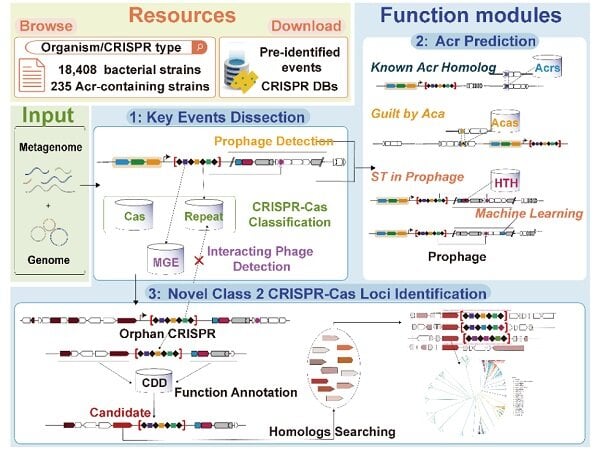
Researchers from the Hefei Institutes of Physical Science of the Chinese Academy of Sciences have developed a web server called CRISPRimmunity, which is an analysis service platform for identifying important molecular events related to CRISPR and regulators of genome editing systems. The platform provides an evolutionary perspective of the CRISPR-Cas and anti-CRISPR systems and accurately predicts anti-CRISPR proteins and identifies novel class II CRISPR-Cas loci. It also offers various visualization and customization options, with machine-readable results and tutorials for users of all levels.
Astronomers have discovered an extremely energetic and long-lasting transient object, nicknamed "Scary Barbie," which is a supermassive black hole consuming a star. The event has lasted over 800 days due to the effect of relativity on the light reaching us, making it the most luminous and energetic phenomenon ever observed. The discovery was made using big data analysis and an AI program, highlighting the role of technology in unveiling astronomical phenomena. The object was hidden in a neglected corner of the sky and was discovered using an AI engine that combs through millions of alerts.
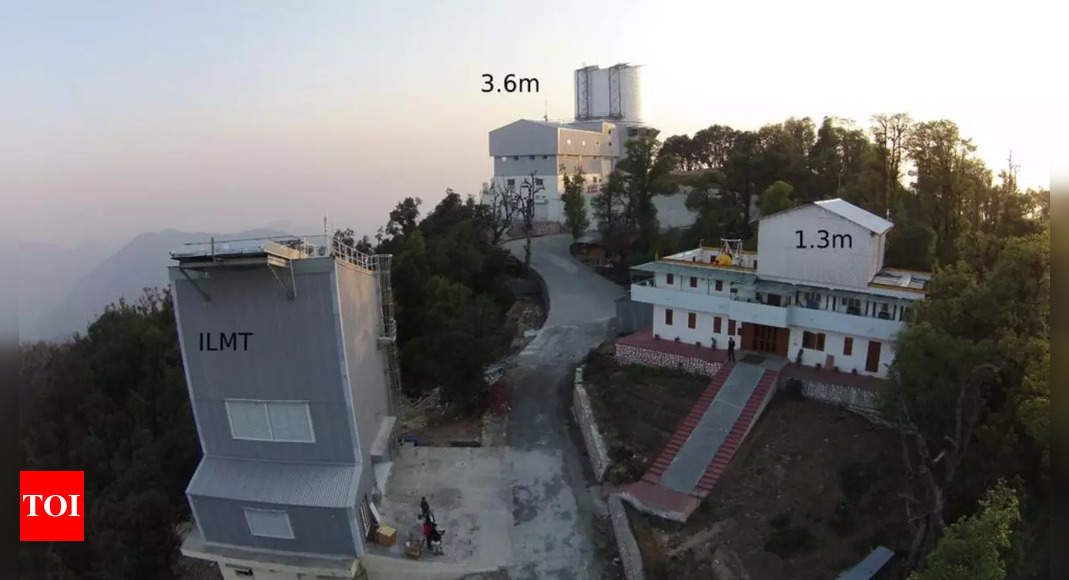
Asia's largest 4-metre International Liquid Mirror Telescope (ILMT) was inaugurated at Devasthal in Uttarakhand, India. The telescope is located at an altitude of 2,450 metres and is designed to survey the strip of the sky passing overhead each night, allowing it to detect transient or variable celestial objects such as supernovae, gravitational lenses, space debris, and asteroids. The ILMT is the first liquid mirror telescope designed exclusively for astronomical observations and is the largest aperture telescope available in the country at present. The wealth of ILMT generated data will permit the application of big data and artificial intelligence/machine learning (AI/ML) algorithms that will be implemented for classifying the objects observed with the ILMT.