Flight delays at Washington's Reagan National Airport, exacerbated by staffing issues and recent aviation accidents, are highlighting ongoing political disputes over funding and healthcare, with experts warning that continued disruptions could worsen and push parties toward negotiations.
Senator Catherine Cortez Masto faces criticism from Democrats for her vote during the shutdown fight, with some arguing it weakens their bargaining position, while others understand her cautious approach given Nevada's shifting political landscape. The debate highlights the tension between electoral strategy and party unity as the 2024 elections approach.
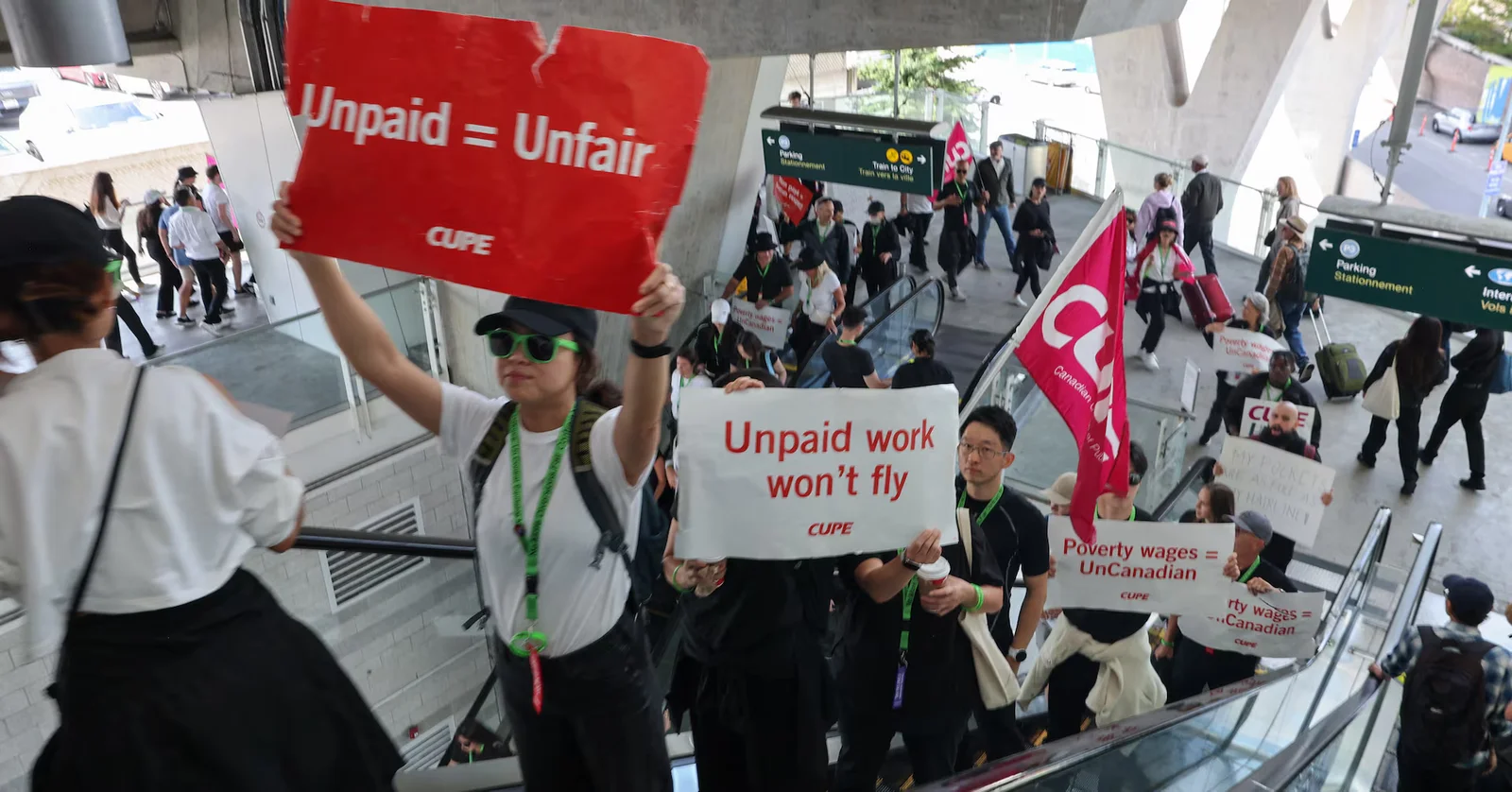
Air Canada's fleet remains grounded as striking flight attendants, represented by CUPE, refuse a government-backed order to return to work, demanding better wages and pay for ground duties. The government has called for binding arbitration to resolve the dispute, but the union considers the order unconstitutional, leading to a standoff that has disrupted travel and challenged labor relations in Canada.
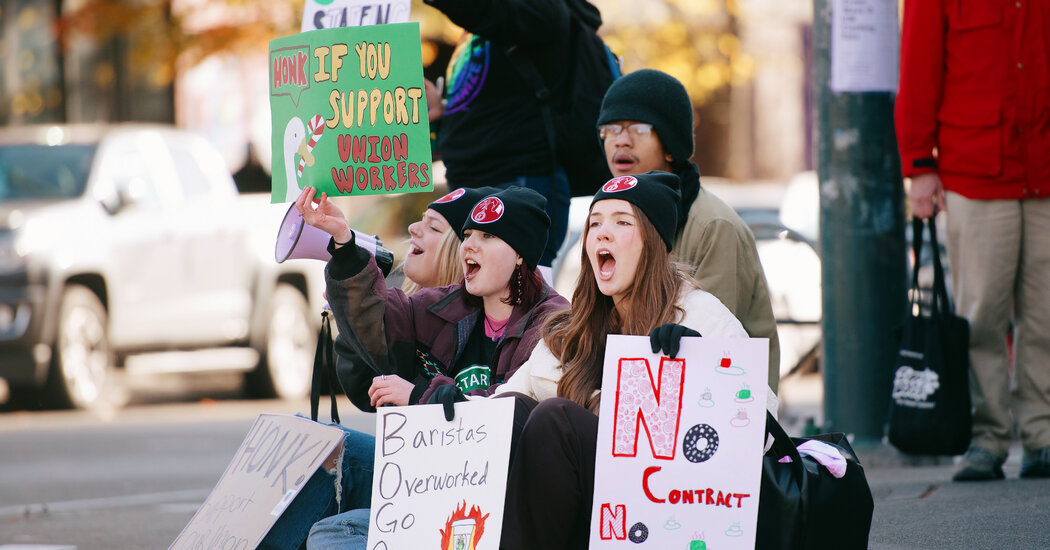
Starbucks has expressed its desire to resume contract negotiations with the union that represents over 9,000 of its workers. The company proposed that bargaining continue in January with a set of organized stores. Starbucks also requested that the meetings be conducted without audio or video recording, while the union has previously advocated for videoconferencing to allow more members to participate. The union is currently reviewing the letter and considering its response. The two sides have been at a deadlock for over six months, with issues ranging from Pride Month décor to accusations of company retaliation.
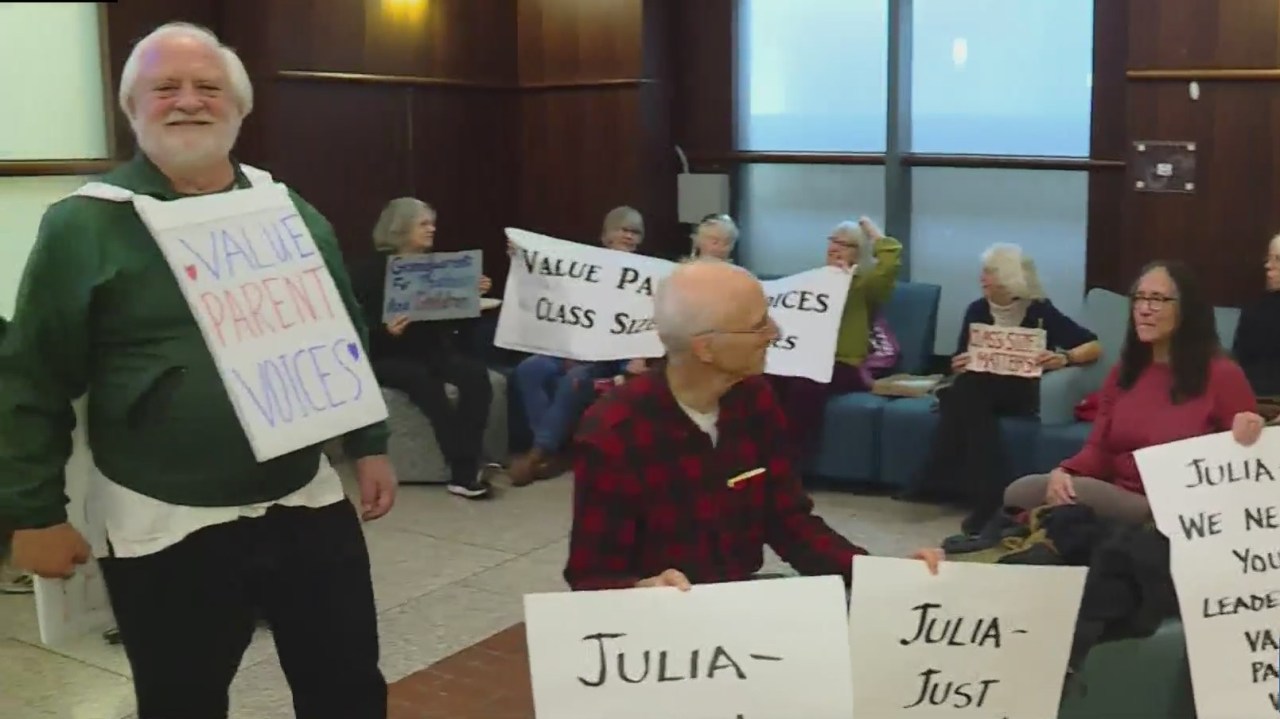
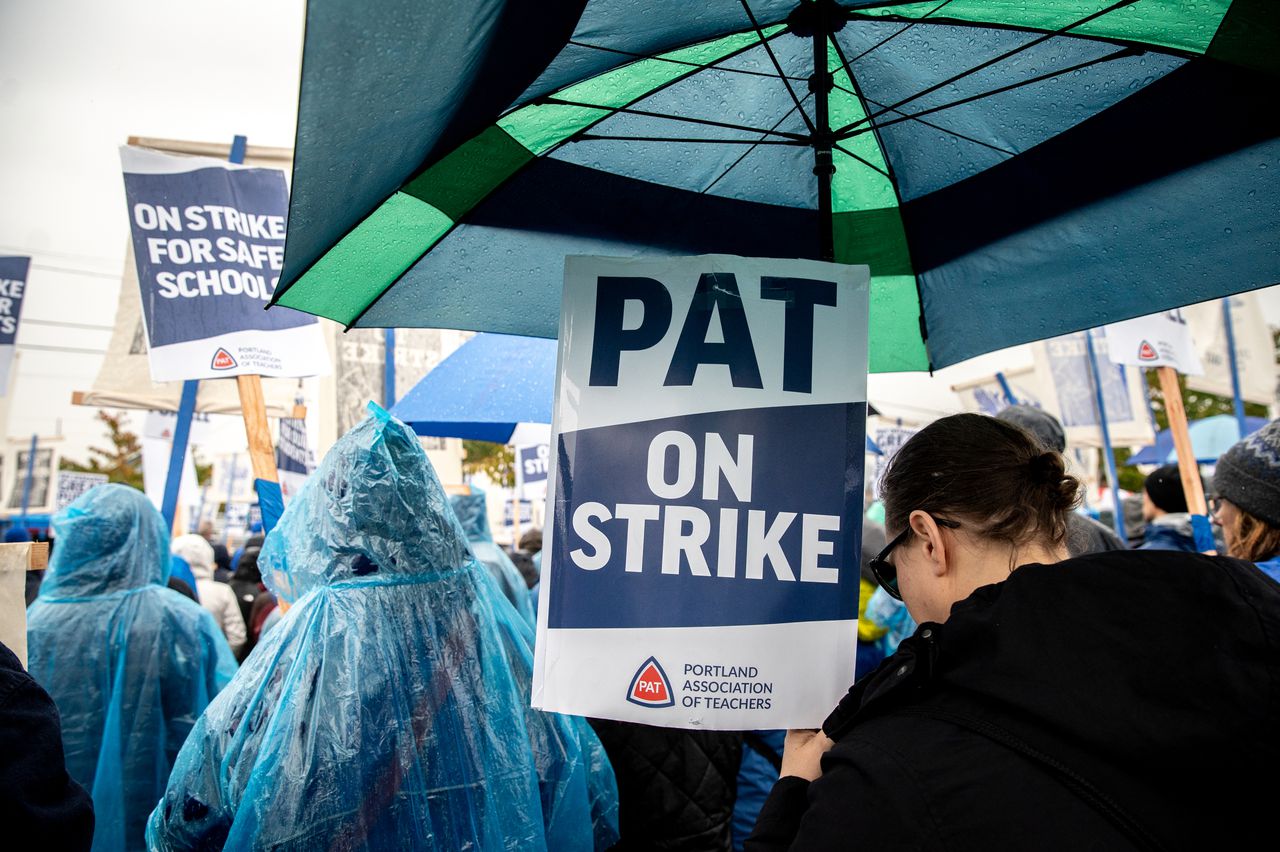
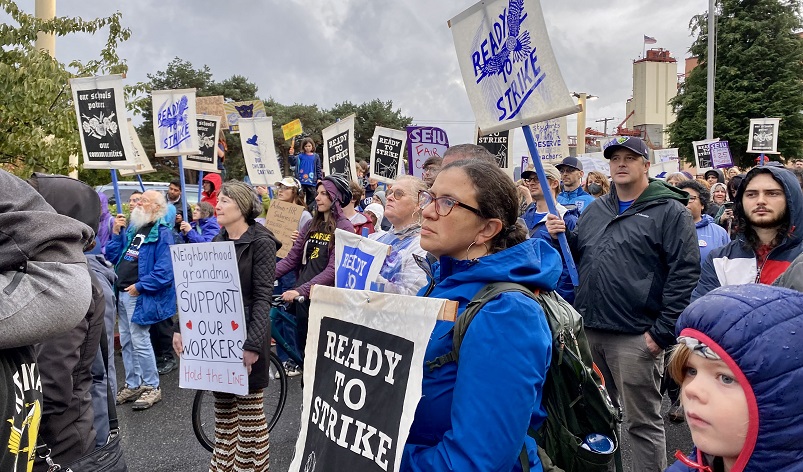
Frustrated families held a sit-in at the Multnomah County building in Portland as the historic teachers' strike entered its fourth week with no resolution in sight. A marathon bargaining session did not yield a deal, and the district is considering cutting the first week of Christmas vacation to make up for missed school days. The teachers' union claims a settlement was reached but rejected by the district, while the district denies this. The proposed compromise of letting parents on committees decide class sizes is not acceptable to some board members due to student privacy concerns. The district's plan for making up lost school days would need to be agreed upon by the union, potentially leading to more bargaining.
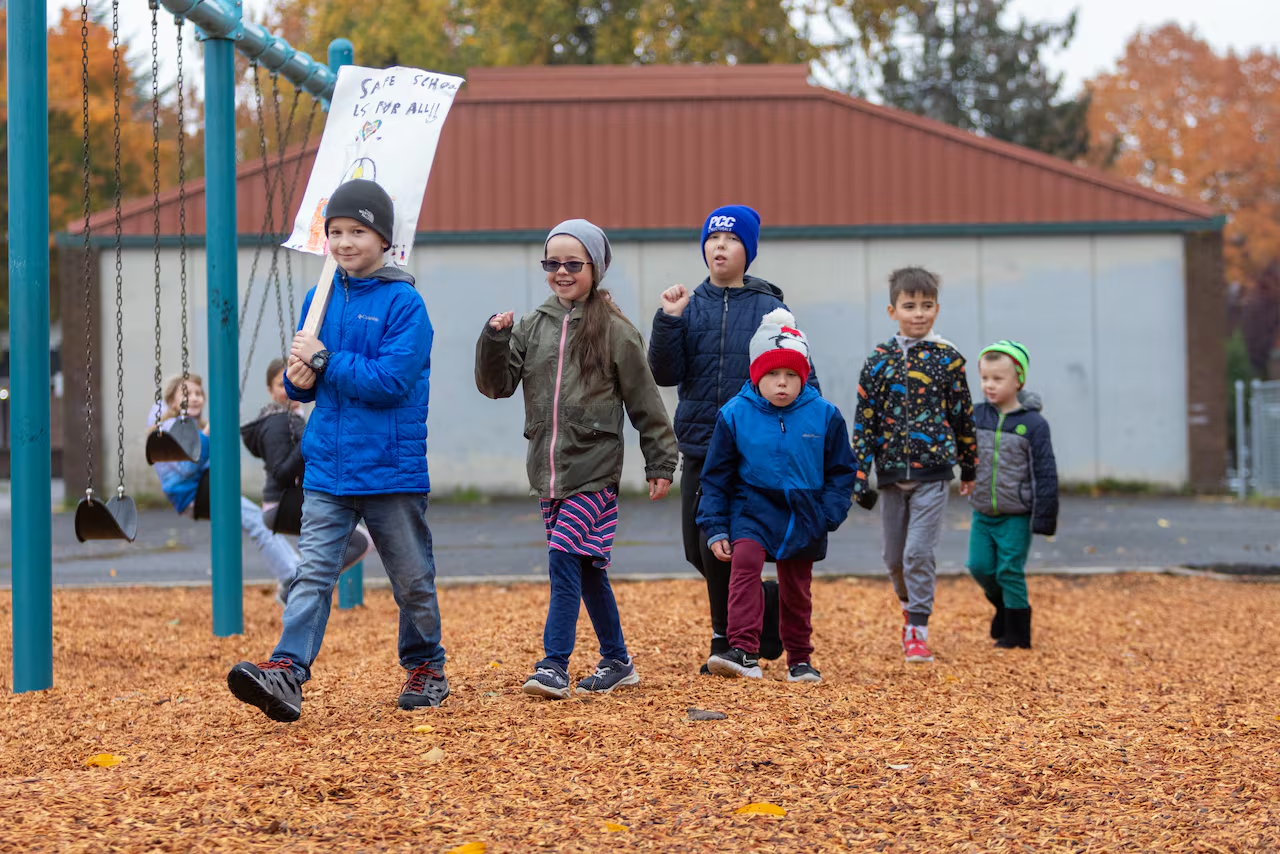
Tensions are escalating as the teachers strike in Portland enters its seventh day, leaving 44,000 students uncertain about the future. Communication between teachers and the school district has been sporadic, forcing families to rely on social media and official statements to understand the impasse. Some demonstrations have become more pointed and personal, with protesters gathering outside the superintendent's home and workplace. The school district plans to file an unfair labor practices complaint, while families and students express their frustration and desire to return to school. The strike has highlighted issues such as wages, planning time, and class sizes, as well as the impact on students' education and well-being.
Bargaining between the Portland teachers' union and the school district resumes as the strike enters its third day, but members of the school board have rejected calls to join the negotiations. Governor Tina Kotek and most Portland-area lawmakers have urged the board to be present, emphasizing the need to refocus on classroom and student learning investments and cut administrative spending. Superintendent Guadalupe Guerrero blames the $200 million gap between the teachers' requests and the district's offers on a lack of state funding, which has not kept up with inflation. Both the school board and the union's members will need to ratify any agreement reached in negotiations.
The union representing Portland Public Schools teachers has voted to authorize a strike starting on November 1 after failed bargaining attempts. The district would need to close schools during the strike, with no in-person or online instruction provided. The duration of the strike is uncertain, but the district is working on contingency plans and providing limited resources for remote learning. Grab-and-Go meals will still be available during the strike.
The United Auto Workers (UAW) ordered 8,700 workers at Ford's Kentucky Truck Plant to go on strike after claiming that the automaker refused to make further progress in bargaining. This surprise move marks the first time the UAW has expanded its simultaneous strike of all three Detroit automakers without publicly stating a deadline. The Kentucky Truck Plant is Ford's largest and most profitable plant, producing Super Duty trucks and large SUVs, generating about $25 billion a year. The strike adds to the 25,300 autoworkers already on strike at select Ford, GM, and Stellantis facilities, resulting in thousands of layoffs and an estimated $5.5 billion in economic losses.
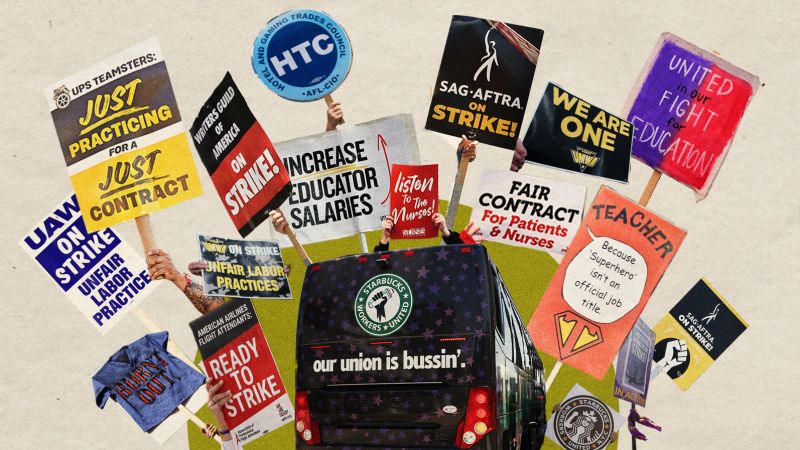
Unions in the United States are experiencing a surge in strikes and bargaining power, with workers demanding better contracts and improved working conditions. President Joe Biden recently visited the United Auto Workers picket line, expressing support for the strikers. Major strikes have occurred in the entertainment industry, healthcare sector, and transportation sector, with unions achieving significant victories in some cases. The number of strikes with 100 or more strikers has increased by 65% compared to last year. Public support for unions is also at a record high, with a majority of Americans believing that unions benefit the economy.
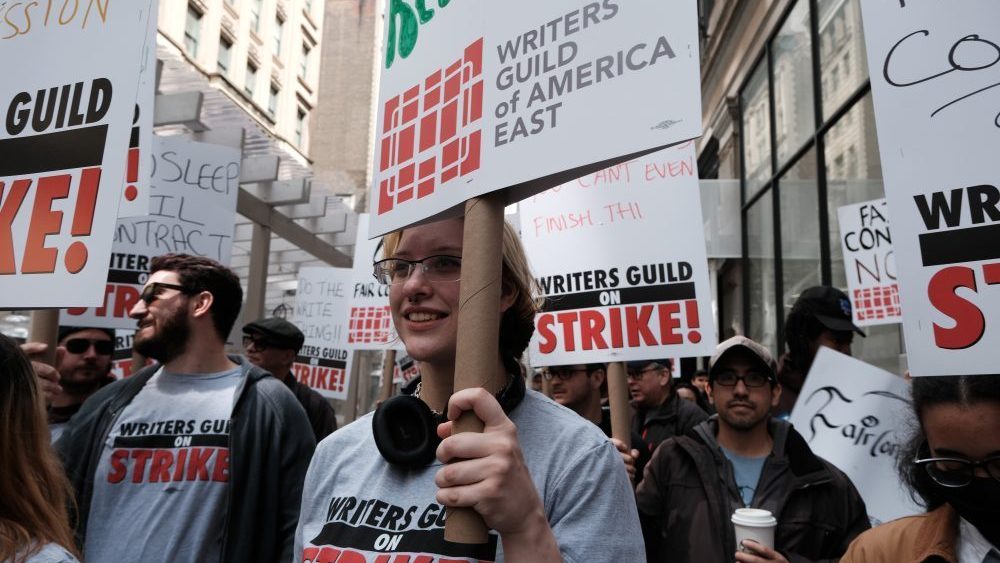
The Writers Guild of America (WGA) has resumed bargaining with major studios as the 142-day writers strike approaches a record duration. In a departure from previous sessions, top CEOs including Bob Iger of Disney and Ted Sarandos of Netflix joined the talks. The WGA is seeking a residual formula based on streaming views and a mandatory minimum staffing level for TV writers rooms, while the studios have offered a 15% first-year hike in minimum rates for writer-producers. The strike has already led to film release delays and the postponement of the Emmys, with the potential for the 2023-24 TV season to be heavily impacted.
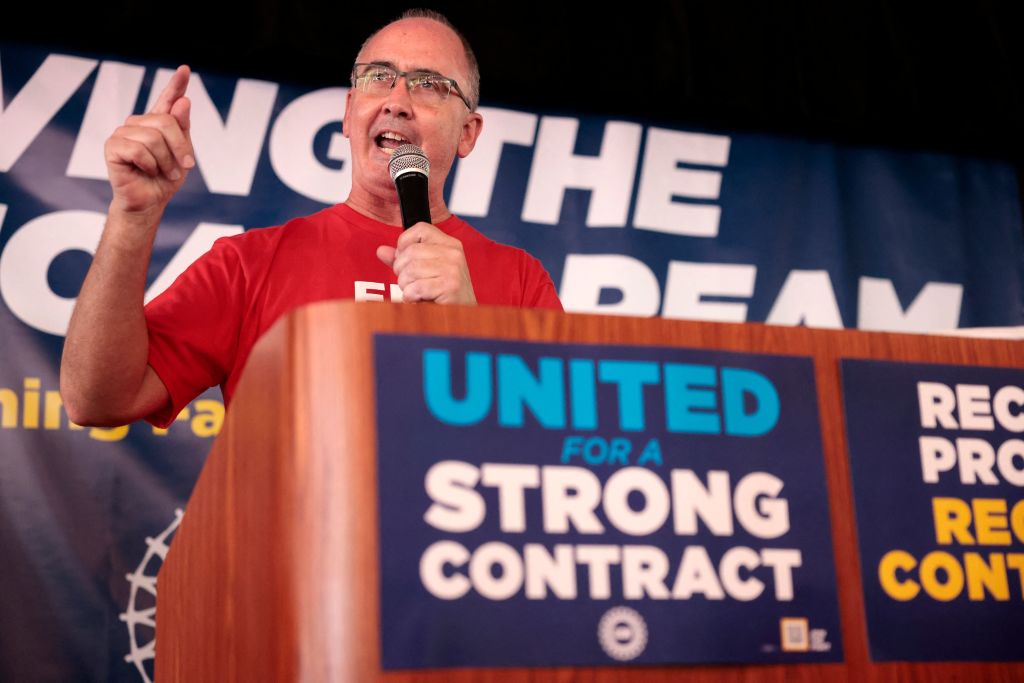
UAW President Shawn Fain addresses the ongoing strikes and negotiations with the Big Three automakers, highlighting the support for the working class. He emphasizes the need to end the tier system, increase wages to match CEO pay and inflation, restore cost-of-living adjustments, protect profit sharing, convert temporary workers to full-time positions, and ensure job security. Fain criticizes the companies for their unrealistic proposals and highlights the significant profits they have made while neglecting workers' demands. He asserts that the UAW is prepared to take action if necessary.
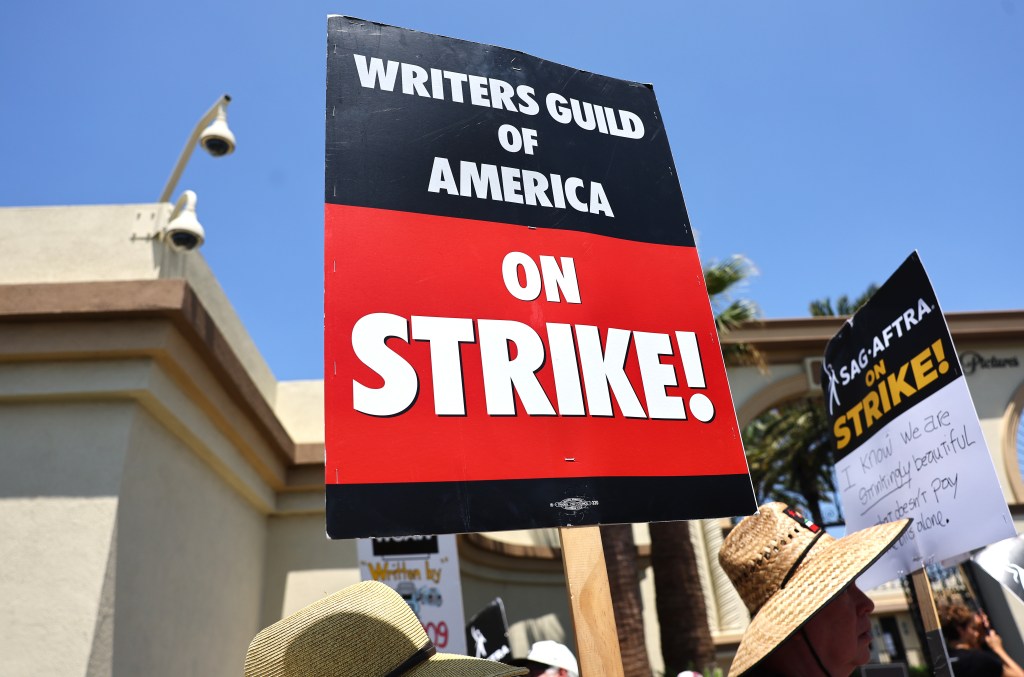
Contract negotiations between Hollywood studios and striking screenwriters may resume next week, potentially marking a turning point in the strike, which has been ongoing for five months. The Alliance of Motion Picture and Television Producers and the Writers Guild of America have been at odds over procedure, with studios publicly disclosing their offer in an attempt to pressure guild members into accepting it. The Writers Guild has reached out to the studios, requesting a meeting to move negotiations forward, and the studios have agreed. The strike has taken a toll on the entertainment industry, with showrunners and crew members eager to return to work.
The Writers Guild and the Alliance of Motion Picture and Television Producers will meet again next week after four days of bargaining. The guild issued a "Call to Action" urging members to file public comments in support of proposed revisions to Merger Guidelines, citing media consolidations as a root cause of the strike. The guild also released a report calling for more government regulation of Disney, Amazon, and Netflix, accusing them of anti-competitive practices.
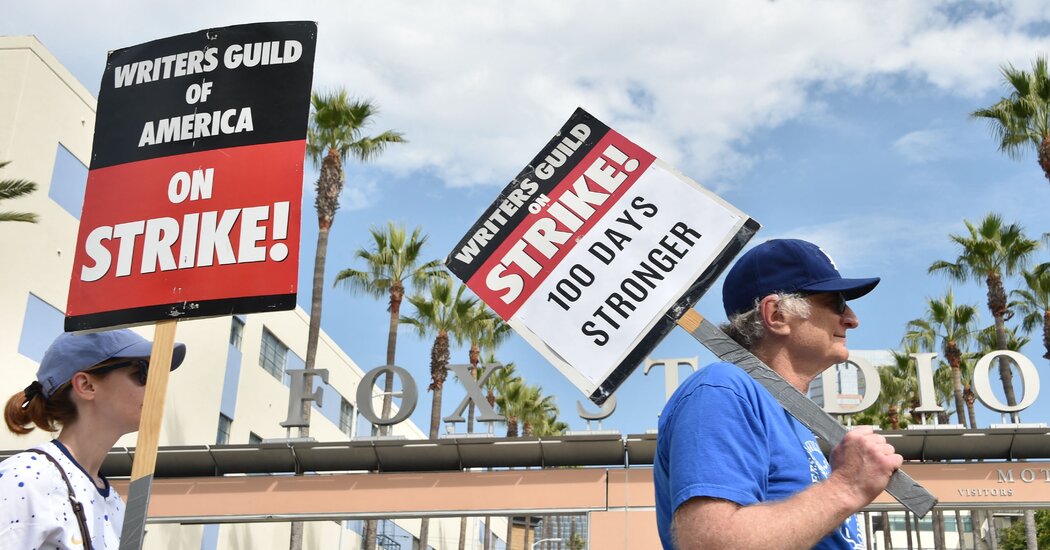
The Writers Guild of America (WGA) and the Alliance of Motion Picture and Television Producers (AMPTP) have agreed to resume bargaining in an effort to end the ongoing writers' strike. The guild's negotiating committee will meet with AMPTP negotiators to discuss responses to WGA proposals. The strike, which recently passed the 100-day mark, is now longer than the guild's previous strike in 2007-08. The WGA remains resolved and united, calling on the studios to make a fair deal. The AMPTP declined to comment on the latest development.