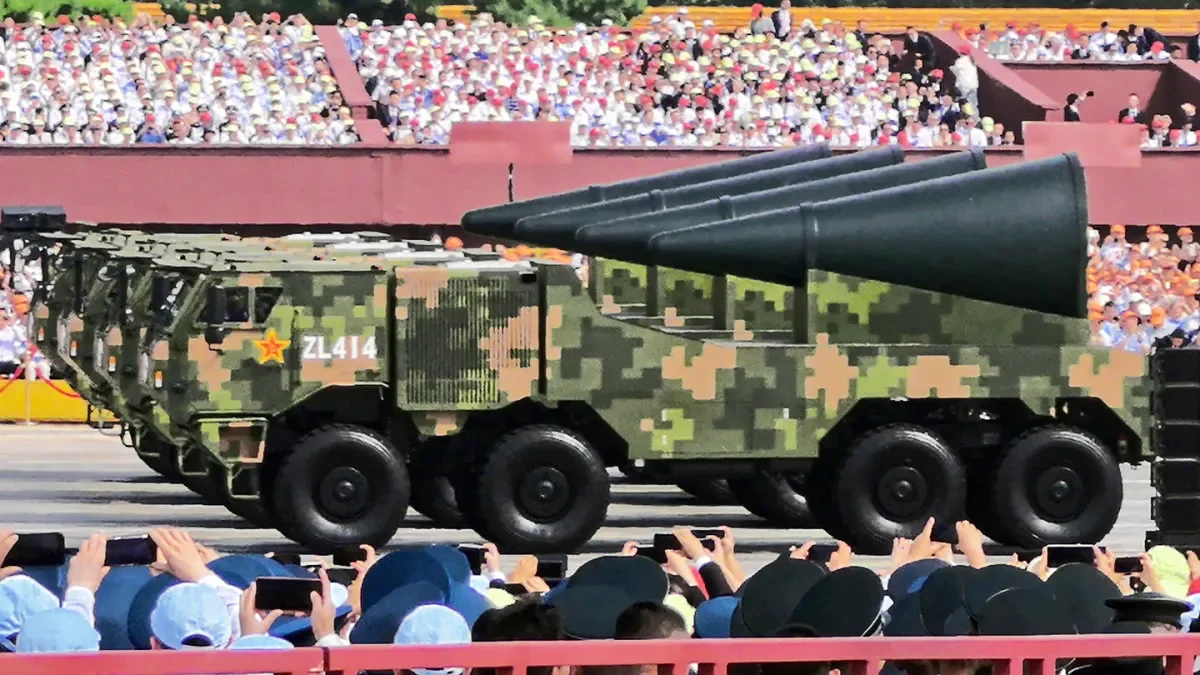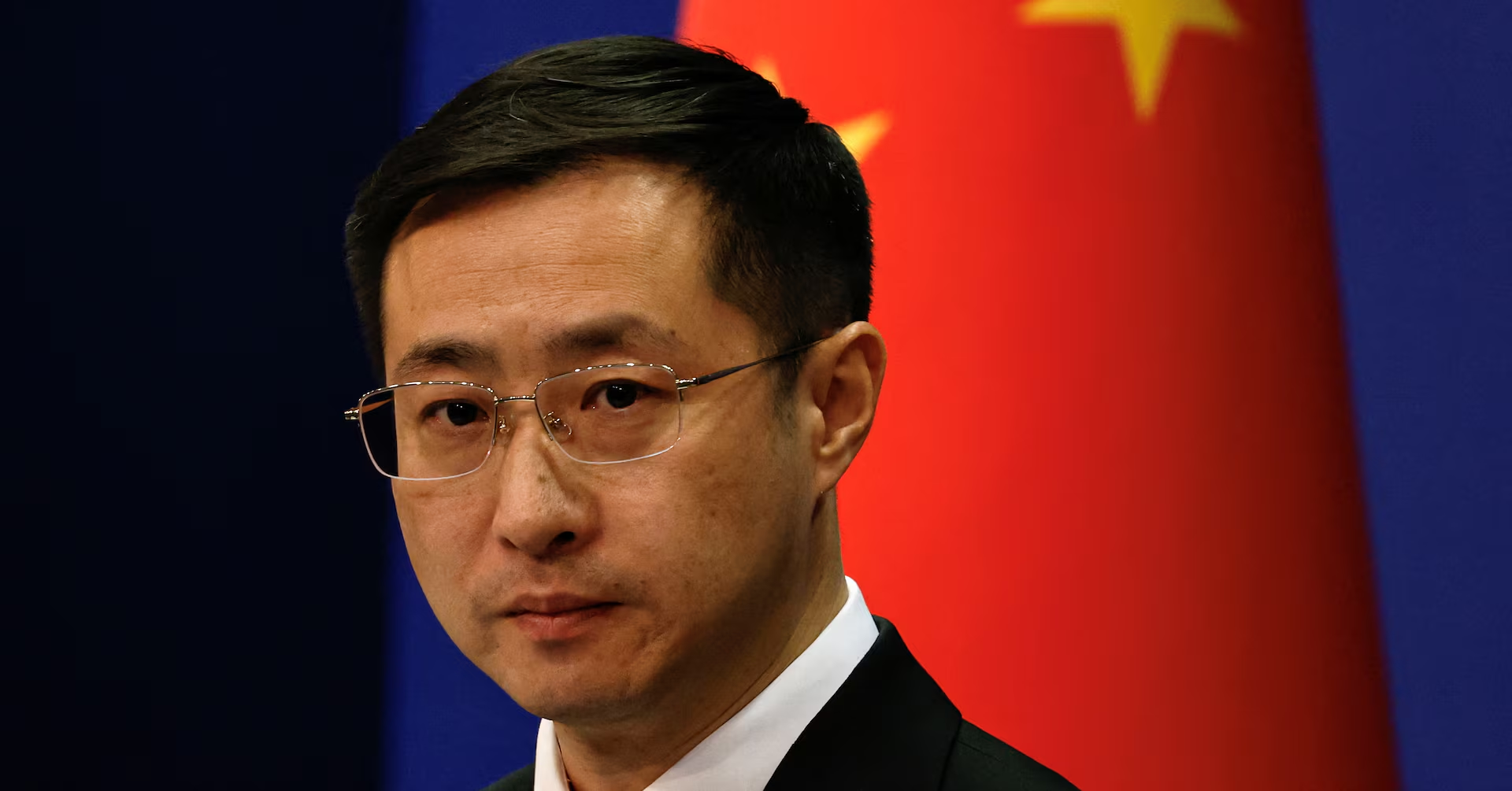
China criticized the US for hypocrisy over nuclear disarmament, urging the US to reduce its nuclear arsenal while accusing it of hyping China's military build-up, as a Pentagon report indicated China is expanding its nuclear forces near Mongolia, with China asserting it follows a no-first-use policy and does not seek an arms race.
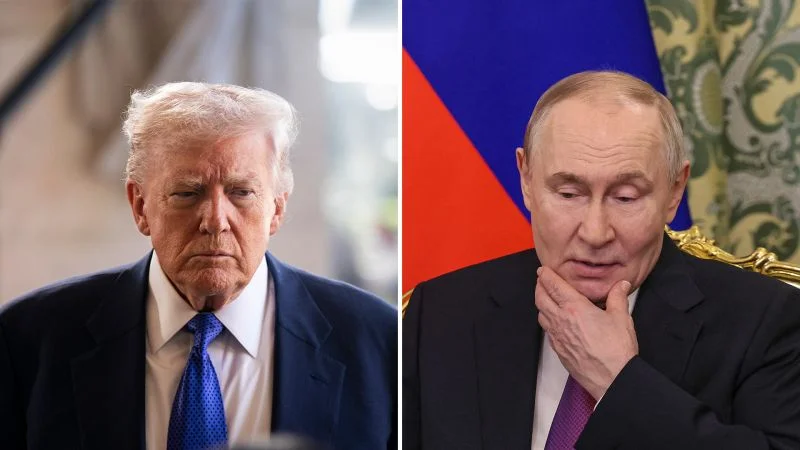
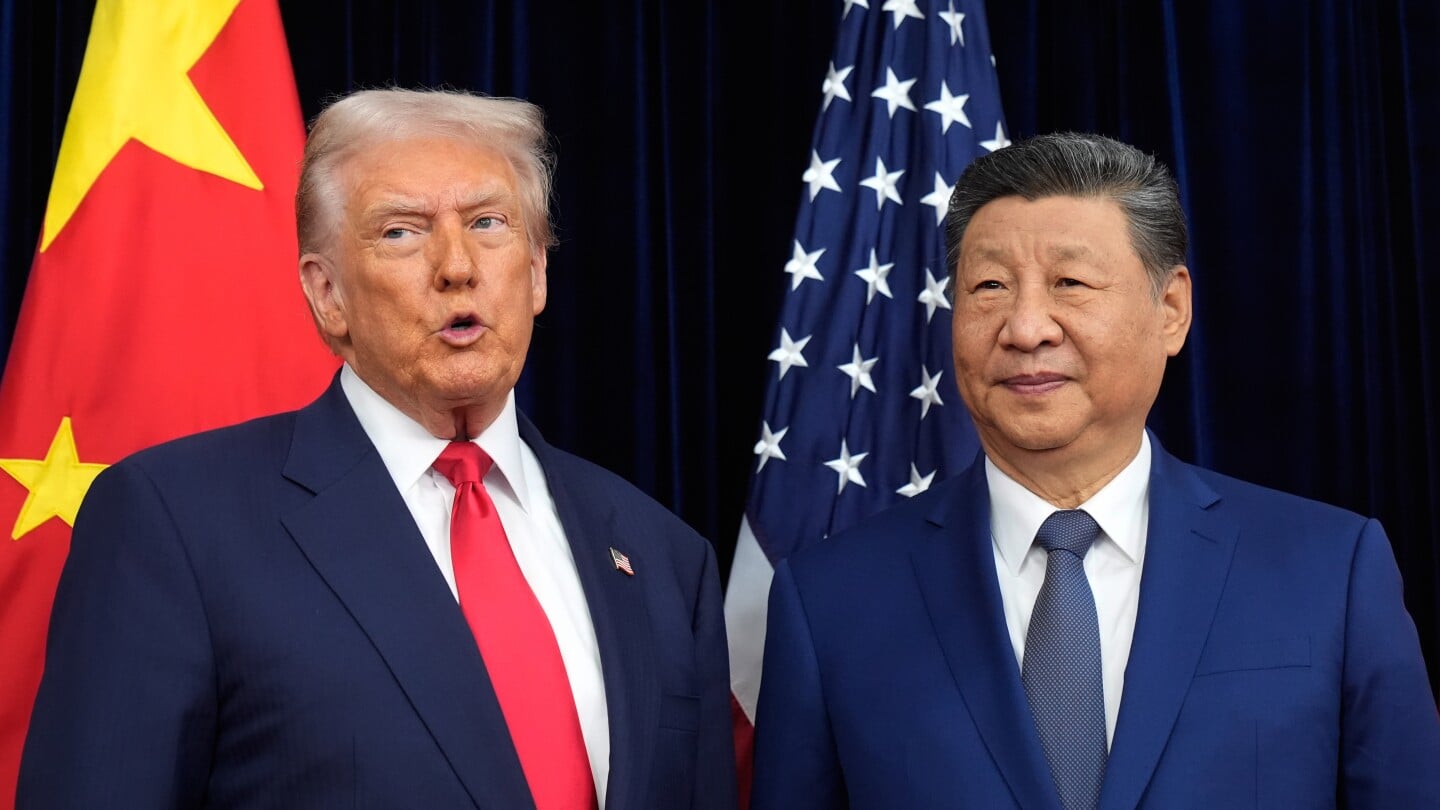
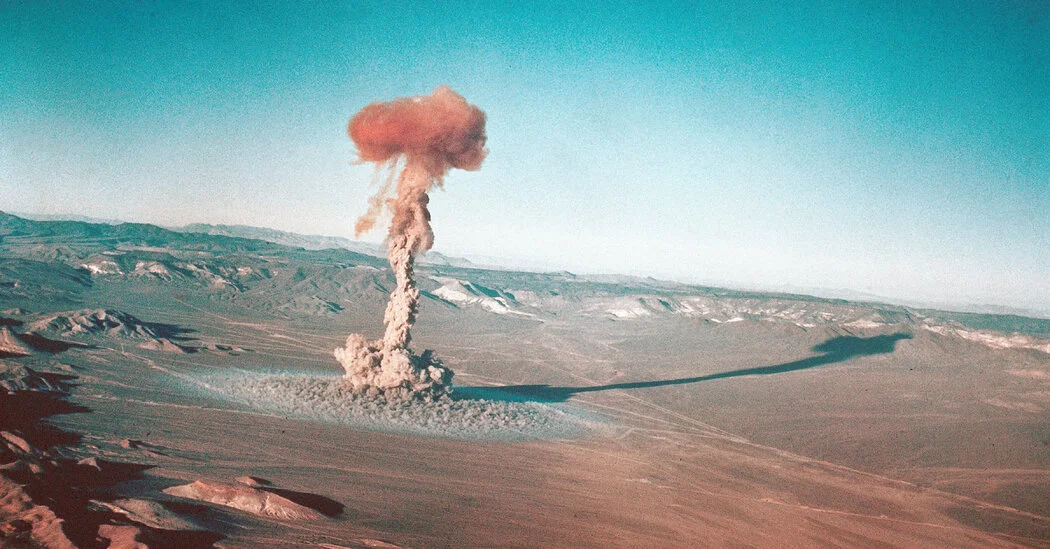
President Donald Trump suggested the U.S. might resume nuclear testing to match Russia and China's activities, prompting warnings from Russia and criticism from arms control advocates, amid ongoing global nuclear test bans and international concerns about escalation.
Experts review Netflix's 'A House of Dynamite', praising its authentic depiction of nuclear command systems and decision-making, while highlighting inaccuracies such as the portrayal of a surprise nuclear attack and missile defense capabilities, emphasizing the importance of global nuclear risk awareness and arms control.
Russia announced it will no longer abide by the INF Treaty, citing U.S. deployment of intermediate-range missiles in Europe and Asia, and accusing the U.S. of violating the treaty for over a decade. This move raises concerns of a renewed Cold War-style arms race amid tensions over Ukraine and NATO, with Russia deploying missiles to Belarus and the U.S. repositioning submarines in response.
President Joe Biden has approved the supply of antipersonnel land mines to Ukraine, reversing his previous policy, to aid in defending against Russian forces. This decision, alongside the authorization of long-range missile systems for Ukraine, has faced criticism from arms control advocates.
An Australian magistrate has ruled that former U.S. Marine pilot Daniel Duggan can be extradited to the United States to face charges of training Chinese military pilots and breaking U.S. arms control laws. Duggan, who denies the allegations, has 15 days to seek a review of the ruling, with the final decision resting with Australia's Attorney General. Duggan's family plans to appeal to the Attorney General to refuse the extradition.
A nuclear risk expert shares his emotional reaction to the film "Oppenheimer," expressing how it brought him to tears as it depicted the devastating potential of nuclear weapons. The article delves into the current state of nuclear weapons, the risks associated with them, and the need for arms control efforts. It also critiques the film for its portrayal of the Manhattan Project and highlights the importance of acknowledging the individuals and organizations that have worked towards reducing nuclear weapons.
NATO Secretary General Jens Stoltenberg criticized Russian President Vladimir Putin for withdrawing from international nuclear agreements, including the New Strategic Arms Reduction Treaty (START) and the Intermediate-Range Nuclear Forces (INF) Treaty. Stoltenberg also highlighted Russia's recent withdrawal from the Treaty on Conventional Armed Forces in Europe (CFE). He accused Russia of undermining security in Europe and called for a responsible role from Russia. Stoltenberg also mentioned Russia's invasion of Ukraine and urged NATO members to continue providing military aid to Ukraine.
The U.S. and NATO have criticized Russia for withdrawing from the Conventional Armed Forces in Europe (CFE) treaty, accusing Moscow of undermining security on the continent. The treaty, signed in 1990, aimed to limit the deployment of military armor across Europe. In response to Russia's withdrawal, the U.S. and NATO have suspended the treaty. The decision comes amidst Russia's ongoing war of aggression against Ukraine and its disregard for arms control. This move further strains relations between Russia and the West, eroding progress made since the collapse of the Soviet Union.
NATO Allies condemn Russia's withdrawal from the Treaty on Conventional Armed Forces in Europe (CFE) and its aggression against Ukraine, which undermines Euro-Atlantic security. In response, Allied States Parties intend to suspend the operation of the CFE Treaty for as long as necessary. Allies emphasize their commitment to reducing military risk, building trust, and inviting other states to join efforts in increasing predictability and stability in the Euro-Atlantic area. NATO will continue to consult and assess the implications of the current security environment on arms control efforts.
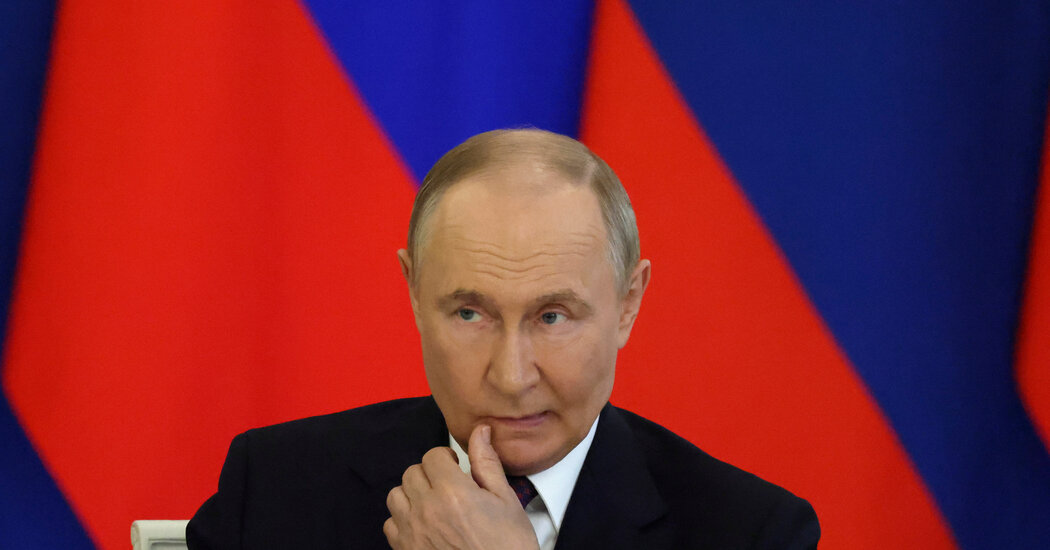
Russian President Vladimir Putin has signed a law withdrawing Russia's ratification of the Comprehensive Nuclear Test Ban Treaty (CTBT), a move condemned by the treaty organization. Moscow claims the decision is to align with the United States, which signed but never ratified the treaty. Russia states that it will not resume nuclear testing unless the US does, but Western experts express concerns that Russia may be moving towards a nuclear test amid the Ukraine conflict. The CTBT organization called Russia's decision "deeply regrettable," as the treaty aims to prevent nuclear tests through a global network of observation posts.
Russian President Vladimir Putin has revoked Russia's ratification of the Comprehensive Nuclear Test Ban Treaty (CTBT), citing the need to align with the United States. The move comes after Russia's upper house Federation Council unanimously approved the abandonment of the treaty. While it remains unclear if Russia will resume nuclear tests, Deputy Foreign Minister Sergei Ryabkov stated that Moscow would only do so if the US does. The US expressed concern over Russia's decision, accusing it of endangering the global norm against nuclear explosive testing. The abandonment of the CTBT leaves New START as the last remaining bilateral nuclear weapons treaty between the US and Russia.
Russia's parliament has passed a law withdrawing ratification of the Comprehensive Nuclear Test Ban Treaty (CTBT), mirroring the United States' position. The move reflects the strained relations between Russia and the US amid the ongoing conflict in Ukraine. Russia stated that it will not resume discussing nuclear issues with the US unless Washington drops its "hostile" policy. Experts warn that a nuclear test by either country could trigger a new arms race and more testing by other nations. The fate of the New START treaty, which limits strategic warheads, is also uncertain as Russia suspended it this year, leaving the two countries without a bilateral nuclear weapons agreement.
Russia's parliament, the Duma, has passed the first reading to revoke the ratification of the Comprehensive Nuclear Test Ban Treaty (CTBT), with the aim of restoring parity with the United States. While Russia claims it will not resume testing unless the US does, experts are concerned that this move could lead to a new era of big power nuclear testing. The swift passage of the deratification bill suggests Russia may be inching towards resuming testing. However, Russia has stated it will remain a signatory to the CTBT and continue to supply data to the global monitoring system.
The Strategic Posture Commission, a 12-member group appointed by Congress, has released a report calling for a broad nuclear build-up in the United States. The report recommends increasing the number of deployed warheads, production of bombers, missiles, submarines, and warhead production capacity. It also suggests deploying multiple warheads on intercontinental ballistic missiles and considering road-mobile ICBMs. The report ignores the potential consequences of an arms race with Russia and China and does not consider alternative steps to address the issue. Critics argue that the recommendations could exacerbate the arms race, hinder arms control efforts, and divert funding from other priorities.