Physicists have identified polarons—quasiparticles formed by electrons and atoms—as the cause behind the loss of electrical conductivity in certain quantum materials, specifically in a thulium-based compound. This discovery, made through detailed measurements and modeling, could advance the development of new materials like room-temperature superconductors.
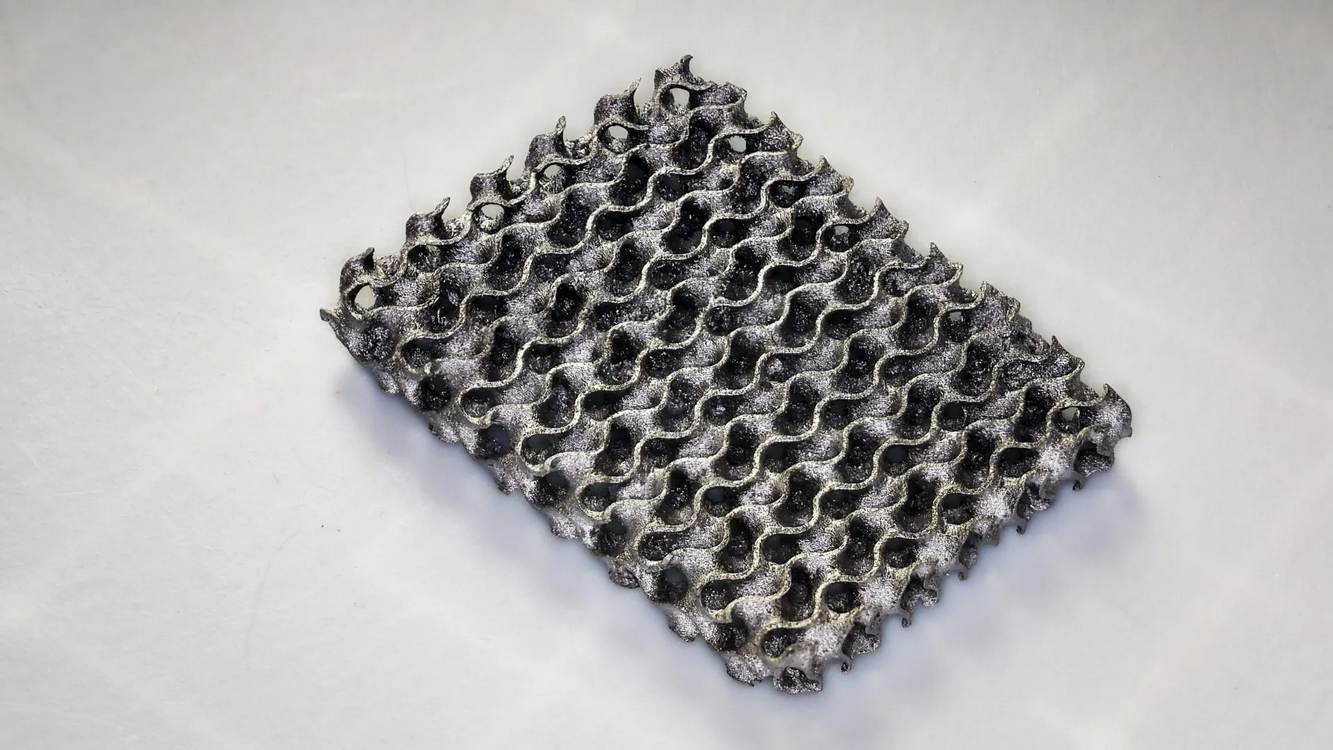
Swiss researchers have developed a novel method of 'cultivating' metal by infusing a hydrogel framework with metal salts and chemically converting them into dense, high-strength metal structures, which are significantly stronger and less shrinkage-prone than traditional 3D printed metals, with promising applications in energy and biomedical fields.
Researchers have studied chitons' highly durable, magnetite-based teeth to inspire the development of advanced, environmentally friendly materials for industrial and medical applications, revealing insights into nanoscale mineral formation and biological processes that could revolutionize manufacturing and material science.
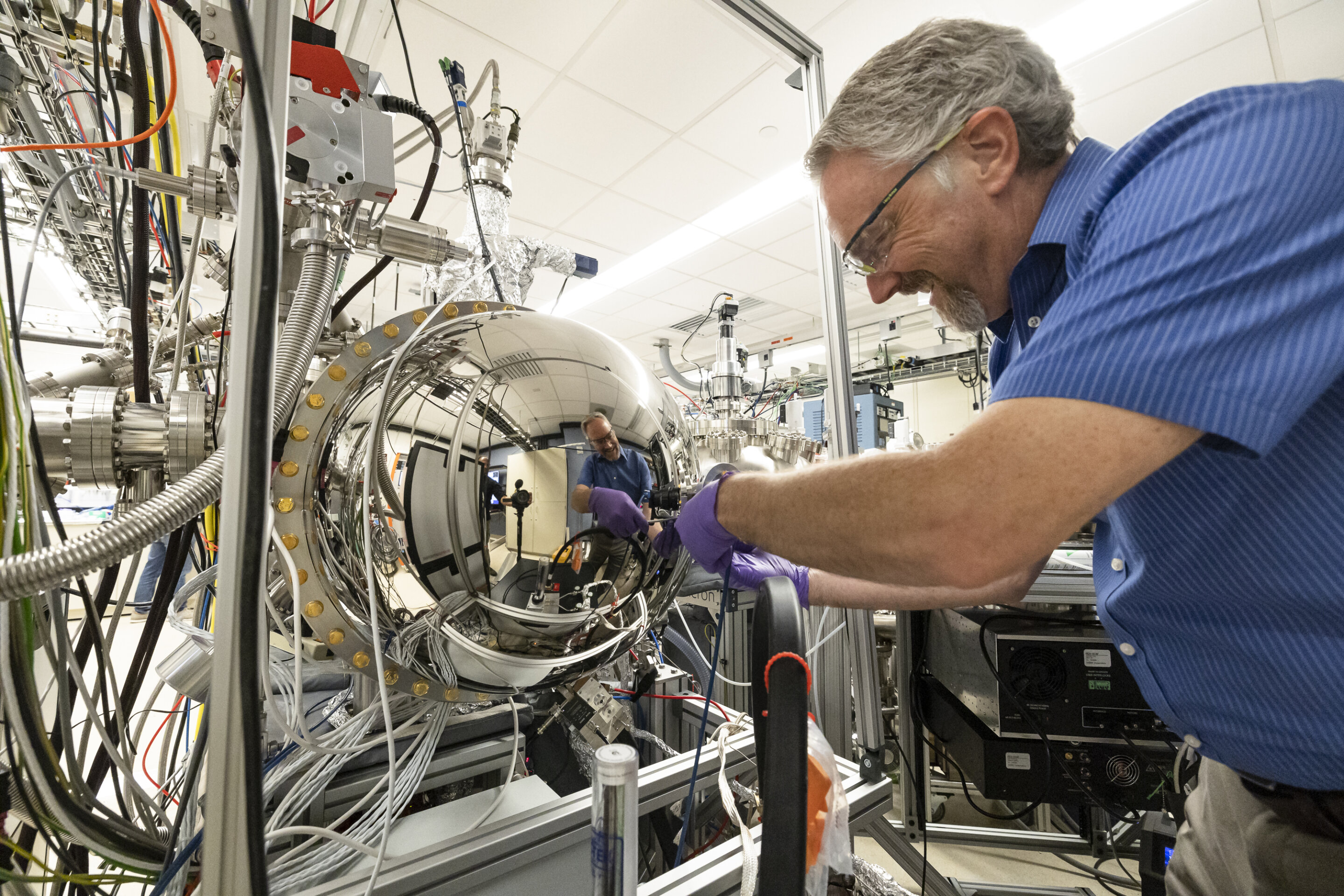
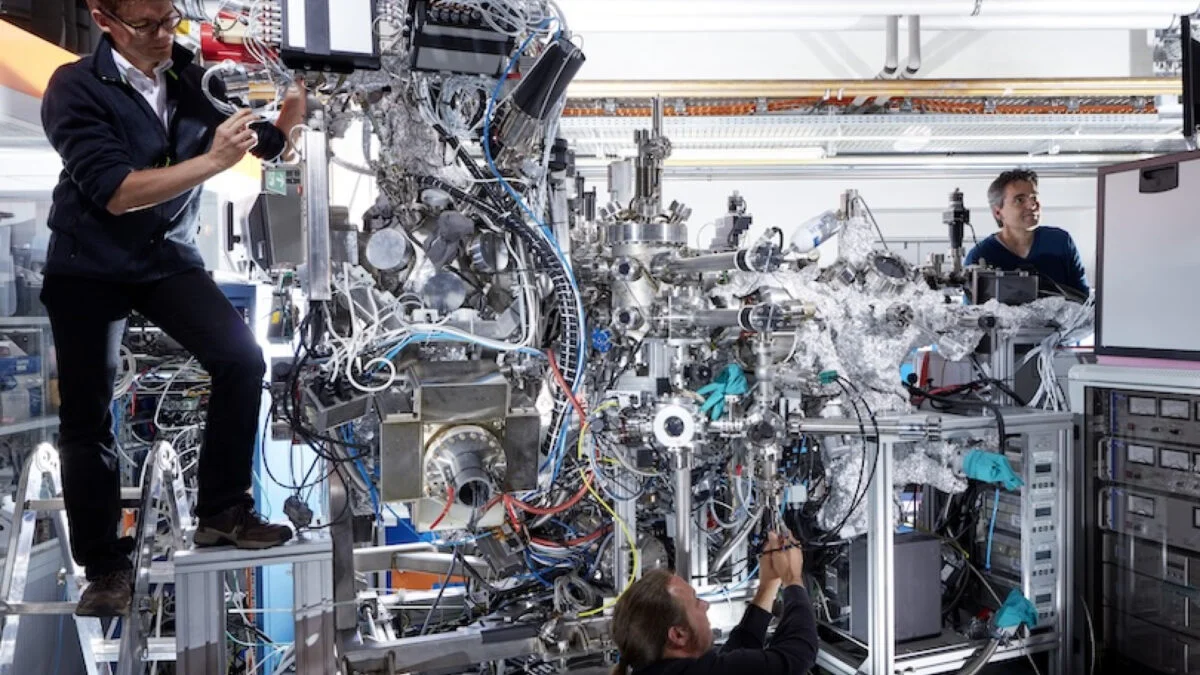
Researchers from Oak Ridge National Laboratory have made progress in developing topological superconductors for quantum computing. They created an atomically sharp interface between a superconductor and a topological insulator, which may give rise to exotic physics and host a unique quantum building block with potential as a superior qubit. By controlling the electronic structure on both sides of the interface, they aim to create Majorana particles, which could be used to encode quantum information and compute in new ways. The researchers used angle-resolved photoemission spectroscopy and molecular beam epitaxy to study and synthesize the materials, respectively. Challenges remain in improving and understanding the materials at the atomic level, but this research brings us closer to achieving qubits based on Majorana particles.
A study by researchers at the University of Cambridge challenges the conventional understanding of the charging process in electrochemical devices. The study focuses on conjugated polymer electrodes used in bioelectronics and reveals that the movement of "holes" (empty spaces for electrons) can be the limiting factor in the charging process, contrary to standard knowledge. By manipulating the material's microscopic structure, scientists can regulate the movement of holes and improve the charging speed. This discovery opens up new possibilities for advanced materials and improved performance in fields such as energy storage, bioelectronics, and brain-like computing.
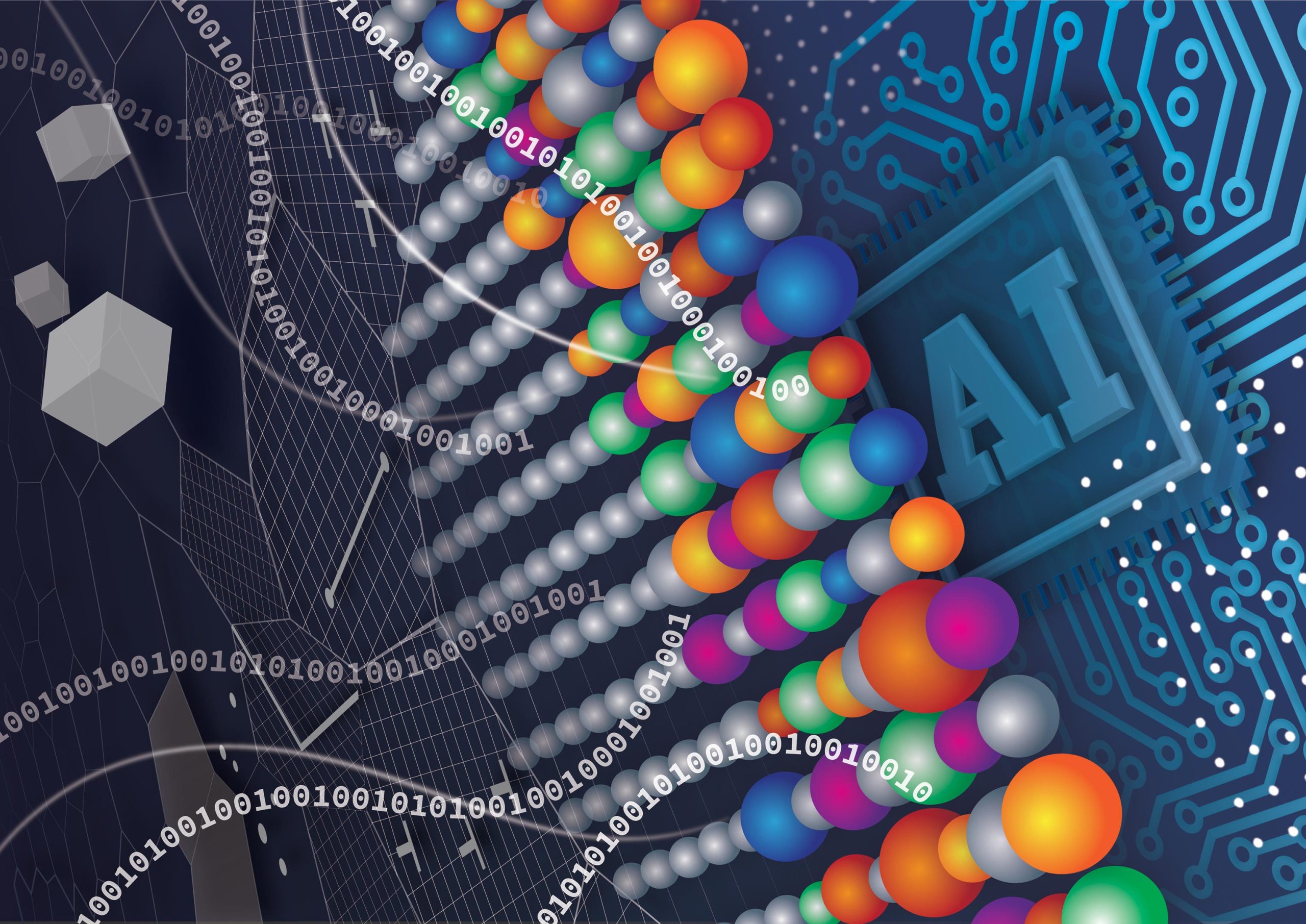
Max-Planck-Institut für Eisenforschung researchers have published a review in the journal Nature Computational Science, exploring the possibilities of artificial intelligence in materials science. The researchers discuss how combining physics-based simulations with AI can open untapped spaces for the design of complex materials. Advanced materials are urgently needed for everyday life, be it in high technology, mobility, infrastructure, green energy or medicine. However, traditional ways of discovering and exploring new materials encounter limits due to the complexity of chemical compositions, structures and targeted properties.