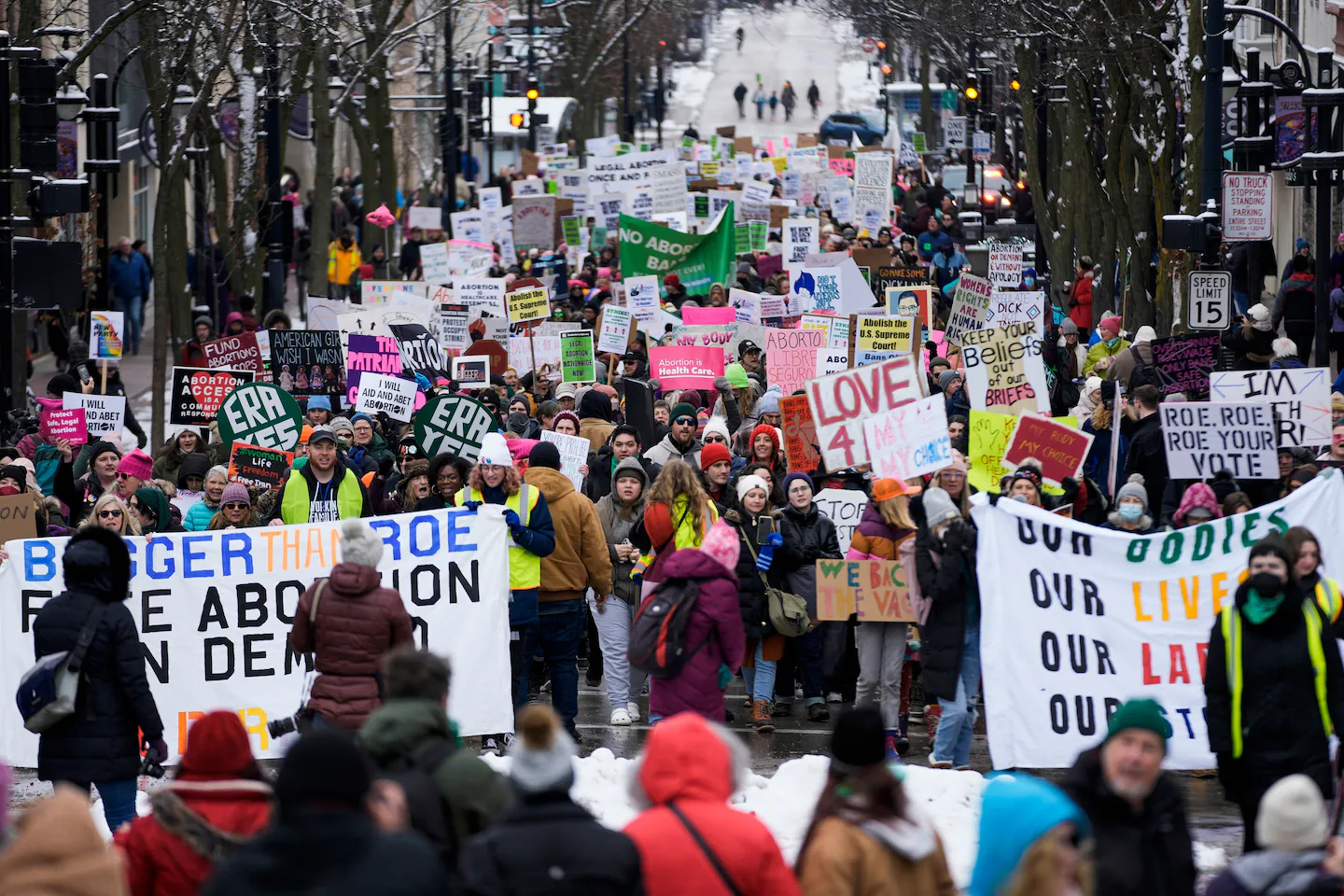
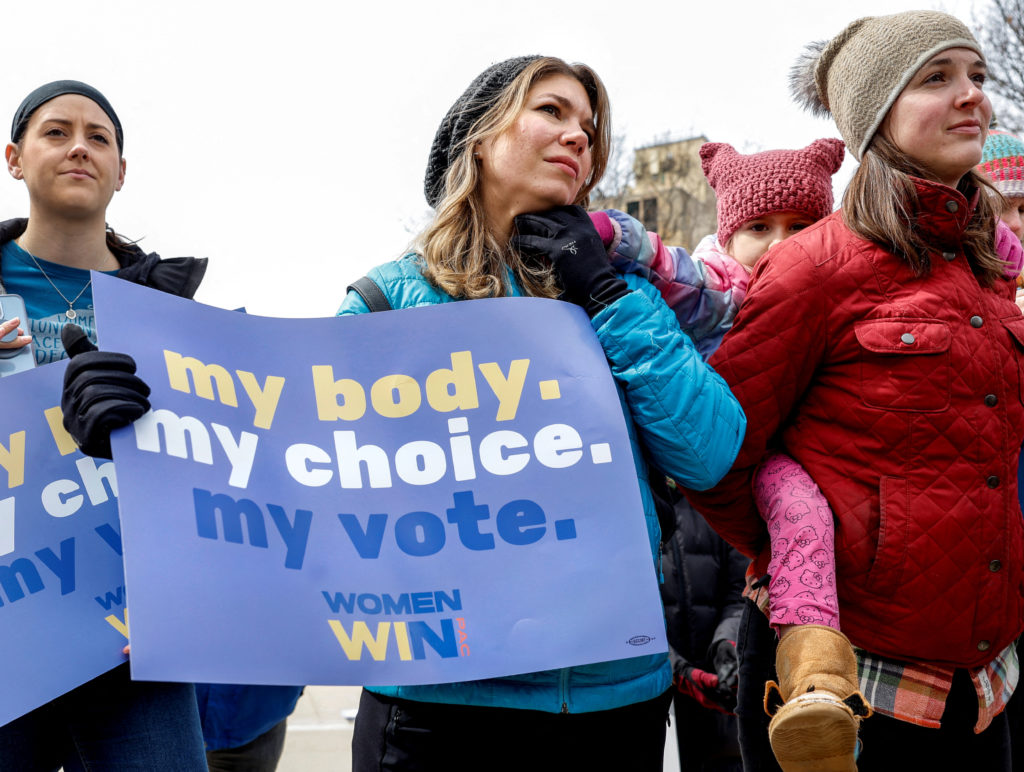
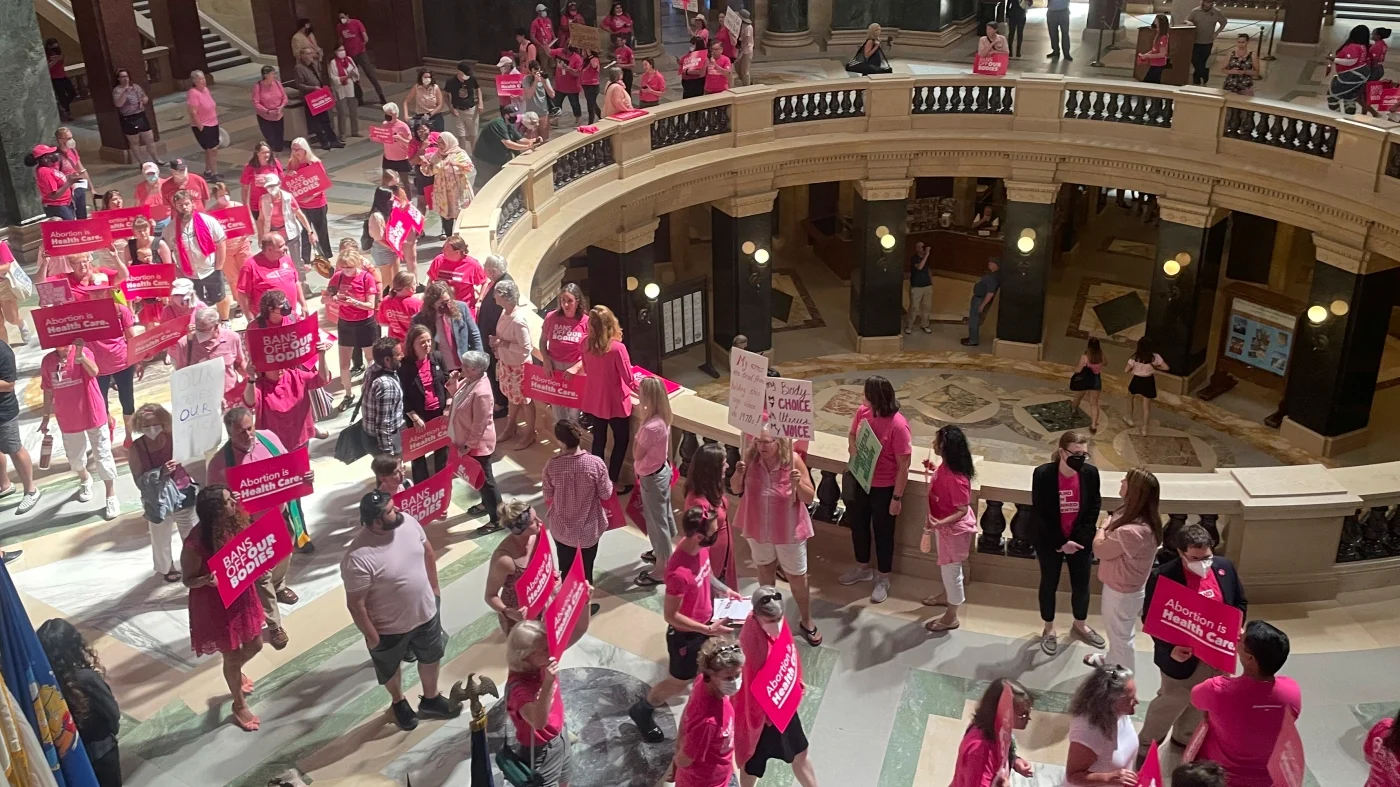
The Wisconsin Supreme Court struck down an 1849 abortion ban, affirming that recent legislation effectively repealed it, marking a victory for abortion rights activists in the state amidst ongoing legal and political battles over abortion laws.
The Wisconsin Supreme Court ruled that the state's 1849 law does not ban abortion, allowing abortion services to continue in the state, marking a significant legal victory for reproductive rights after years of litigation and uncertainty following the overturning of Roe v. Wade.
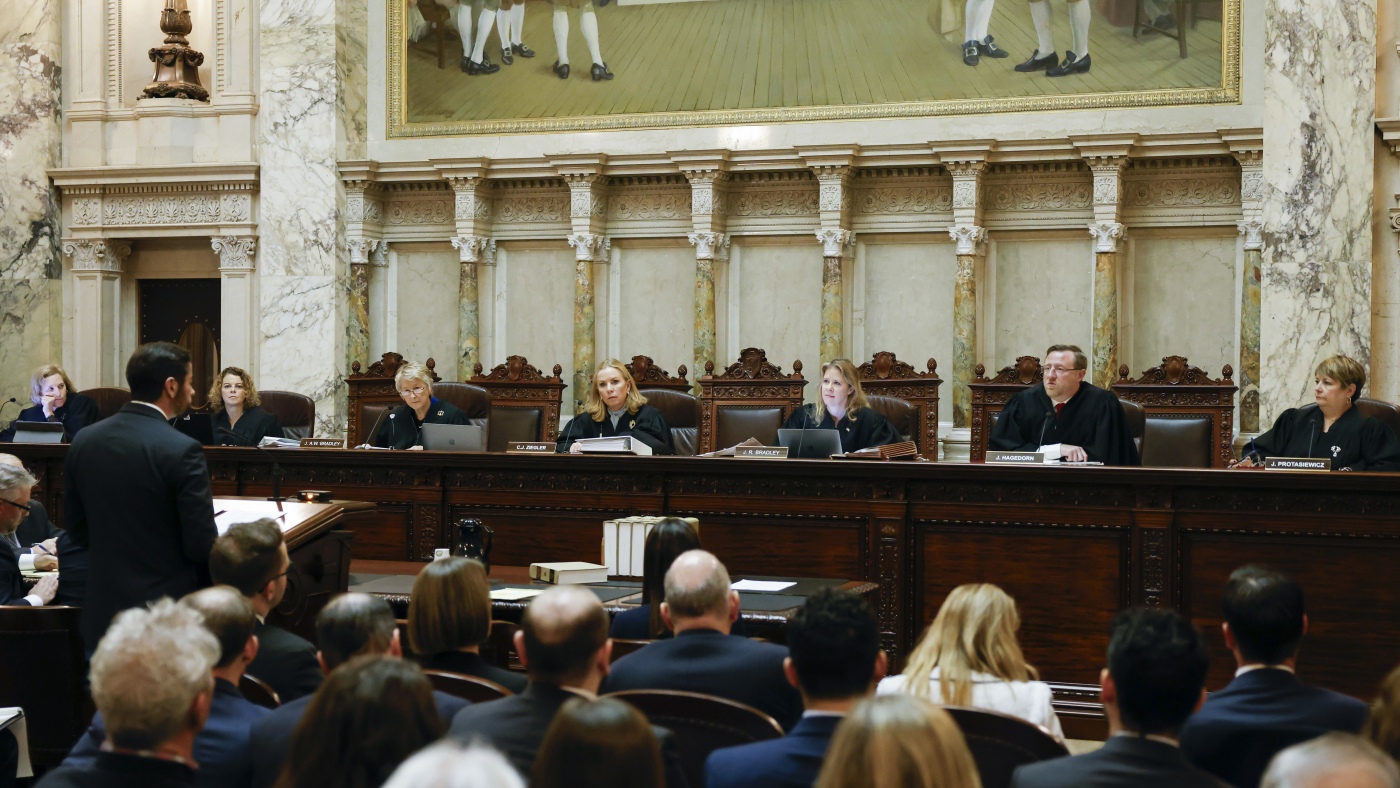
Wisconsin's Supreme Court is hearing a pivotal case on whether an 1849 law banning abortion is enforceable, following the overturning of Roe v. Wade. The court's liberal majority suggests a favorable outcome for abortion rights advocates, with a decision expected in 2025. The case highlights tensions over reproductive rights, with implications for medical professionals and victims of sexual assault. The ruling will determine if the old law, which lacks exceptions for incest or the mother's health, stands against more recent legislation.
The Wisconsin Supreme Court appears likely to rule against enforcing an 1849 law banning most abortions, following the overturning of Roe v Wade. The court, now with a liberal majority, is considering whether the old law was impliedly repealed by subsequent abortion regulations. Justice Janet Protasiewicz's election shifted the court's ideological balance, and the case has become a focal point in Wisconsin's political landscape. The court's decision could impact the legal status of abortion in the state, with arguments highlighting the law's lack of exceptions for rape, incest, and health concerns.
The Wisconsin Supreme Court is set to hear arguments on the validity of an 1849 abortion ban, with liberal justices likely to favor abortion rights. The ban, which predates the Civil War, was nullified by Roe v. Wade but never repealed. After Roe was overturned, conservatives argued for its enforceability. Democratic Attorney General Josh Kaul contends a 1985 law allowing pre-viability abortions supersedes the ban. A Dane County judge ruled the ban doesn't apply to consensual abortions, prompting Planned Parenthood to resume services. The court's decision is expected in weeks.
The Wisconsin Supreme Court is set to hear arguments on the enforceability of an 1849 abortion ban, which was nullified by Roe v. Wade but never repealed. With a liberal majority on the court, abortion rights advocates are optimistic about the outcome. The case, brought by Democratic Attorney General Josh Kaul, challenges the old law, arguing it is superseded by a 1985 statute allowing abortions before fetal viability. The court's decision is expected to take weeks, with liberal justices likely to oppose the ban.