
Revisiting Theories of Human Evolution: Insights from Ancient Burial Practices and Ape-Sized Brains.
TL;DR Summary
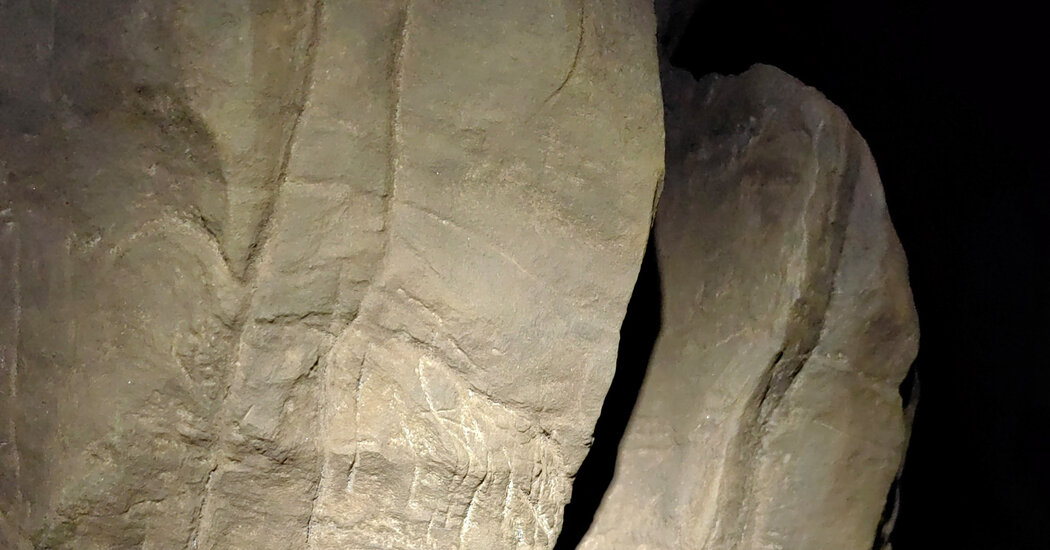
New research suggests that Homo naledi, a small-brained hominin species that lived around the time of the first humans, buried their dead in graves, lit fires to illuminate their way down the cave, and marked the graves with engravings on the walls. The discovery challenges the assumption that big brains are essential for complex thinking and suggests that Homo naledi may have had some form of language. However, some experts on ancient engravings and burials are skeptical of the evidence and suggest that the charcoal and engravings found in the cave might have been left by modern humans who entered long after Homo naledi became extinct.
- Ancient Human Relatives Buried Their Dead in Caves, New Theory Claims The New York Times
- Ancient species may have buried its dead, upending theories of human evolution The Washington Post
- What Does It Mean to Be Human? Ape-Sized Brain Relative Shakes Up Theories The Wall Street Journal
- Homo naledi had a brain one-third the size of humans but displayed intelligence far beyond, according to new discovery ABC News
Reading Insights
Total Reads
0
Unique Readers
1
Time Saved
8 min
vs 9 min read
Condensed
94%
1,748 → 106 words
Want the full story? Read the original article
Read on The New York Times