
Chinese Rover Reveals Ancient Martian Ocean and Carbon Dioxide Ice
TL;DR Summary
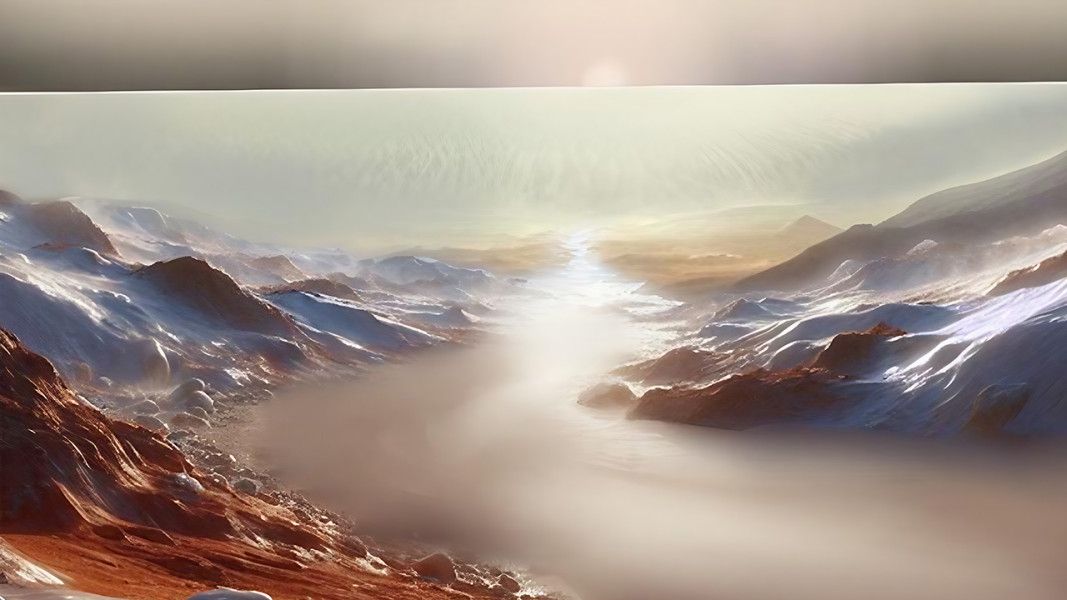
Researcher Peter Buhler has proposed a model explaining how ancient Mars maintained liquid water despite cooling and atmospheric thinning. His study suggests that carbon dioxide ice on Mars' south polar cap acted as an insulator and added pressure, allowing water to melt and form subglacial rivers. These rivers, which eventually froze, created eskers and contributed to the formation of large bodies of water like the Argyre Planitia ocean. This model relies on processes still observed on Mars today, without requiring unexplained warming events.
- On ancient Mars, carbon dioxide ice kept the water running. Here's how Space.com
- Chinese rover helps find evidence of ancient Martian shoreline Reuters
- China’s rover uncovers compelling evidence of 3.5 billion-year-old Mars ocean Yahoo! Voices
- A probable ancient nearshore zone in southern Utopia on Mars unveiled from observations at the Zhurong landing area Nature.com
- Flowing Martian Water was Protected by Sheets of Carbon Dioxide Universe Today
Reading Insights
Total Reads
0
Unique Readers
5
Time Saved
5 min
vs 6 min read
Condensed
93%
1,162 → 83 words
Want the full story? Read the original article
Read on Space.com