
Warped spacetime powers flickering light in newborn magnetars
TL;DR Summary
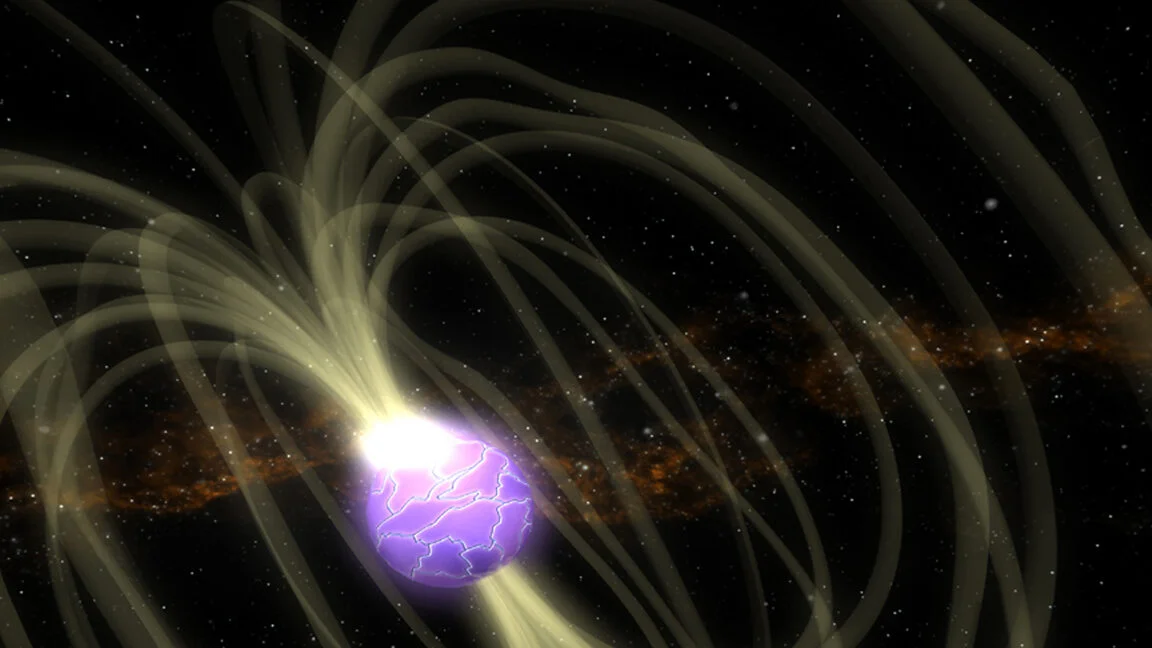
Astrophysicists propose a magnetar+Lense-Thirring model to explain the zigzag, chirped light curves of Type I superluminous supernovae, like SN 2024afav. A newborn magnetar’s rapid spin twists spacetime; a misaligned, shrinking accretion disk precesses and intermittently blocks or redirects radiation, producing regular brightness bumps and a shrinking period. The model fits the observed data, yields a 4.2-millisecond spin and strong magnetic field, and could unify explanations for several such supernovae; future Rubin Observatory discoveries will test it.
Topics:science#accretion-disk#frame-dragging#lense-thirring#magnetars#space#superluminous-supernovae
- Magnetars drag spacetime to power superluminous supernovae Ars Technica
- Astronomers capture birth of a magnetar, confirming link to some of universe’s brightest exploding stars University of California, Berkeley
- Astronomers witness colossal supernova explosion create one of the most magnetic stars in the universe for the first time Space
- Lense–Thirring precessing magnetar engine drives a superluminous supernova Nature
- Astrophysicists figure out what caused a super-bright supernova KSL.com
Reading Insights
Total Reads
0
Unique Readers
5
Time Saved
8 min
vs 9 min read
Condensed
96%
1,763 → 76 words
Want the full story? Read the original article
Read on Ars Technica