
Ring-Shaped Sulfur Molecule Detected in Interstellar Space, Linking Space Chemistry to Life's Origins
TL;DR Summary
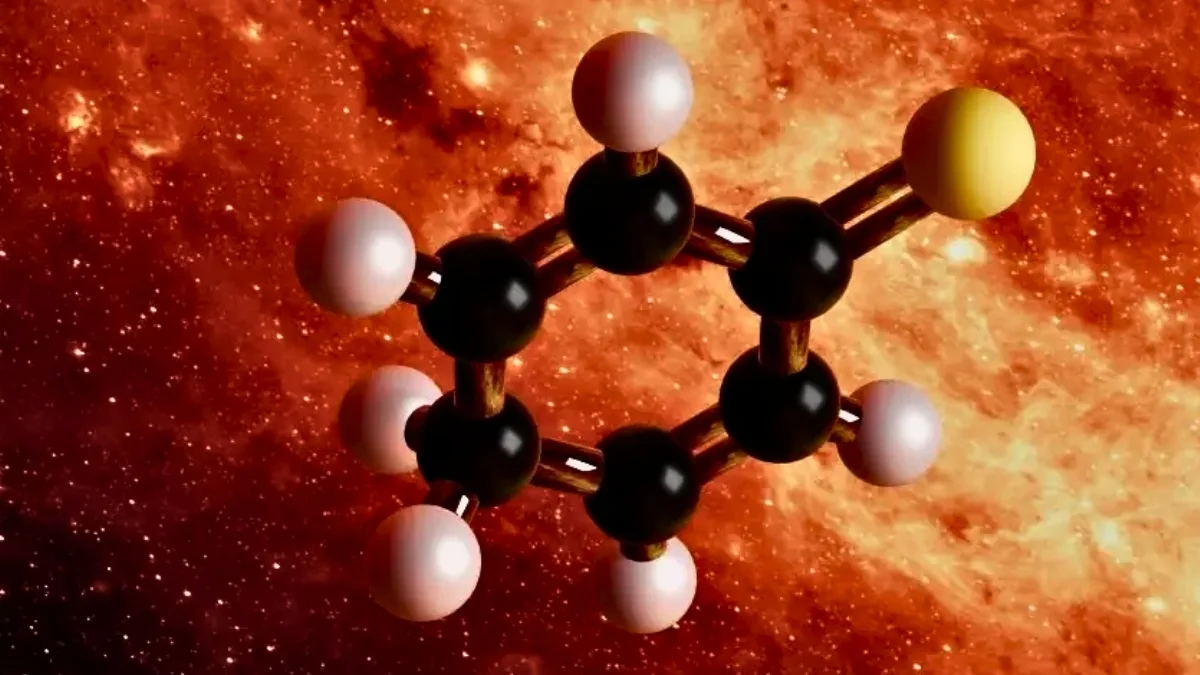
Astronomers detected thiepine (C6H6S), the largest sulfur-bearing molecule observed in interstellar space, in the G+0.693–0.027 molecular cloud near the Galactic center. By lab-synthesizing the molecule and matching its spectral fingerprint with observations from the IRAM 30m and Yebes 40m telescopes, researchers confirmed its presence and reinforced the idea that complex sulfur chemistry in star-forming regions could lay the groundwork for prebiotic molecules, linking space chemistry to the origins of life. The finding, published in Nature Astronomy, expands known interstellar sulfur chemistry and suggests more complex molecules await discovery.
- It's Official: Astronomers Detect Complex Sulfur Molecule in Interstellar Space ScienceAlert
- A student made cosmic dust in her lab—what she found could help us understand how life started on Earth Phys.org
- Catch a falling star: cosmic dust may reveal how life began, and a Sydney lab is making it from scratch The Guardian
- 🧬 The molecules of life may form even before planets Techno-Science.net
- Molecule Hinting at Signs of Life Discovered in Space The Daily Beast
Reading Insights
Total Reads
1
Unique Readers
1
Time Saved
3 min
vs 4 min read
Condensed
88%
727 → 88 words
Want the full story? Read the original article
Read on ScienceAlert