
New interstellar sulfur molecule reshapes the tale of life’s origins
TL;DR Summary
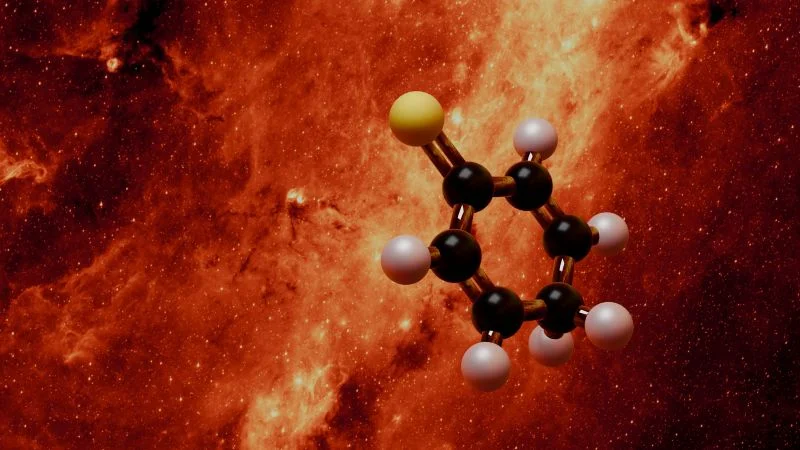
Astronomers have detected the largest sulfur-bearing molecule in interstellar space—a 13-atom compound called 2,5-cyclohexadiene-1-thione—inside a molecular cloud about 27,000 light-years away, bridging a gap between simple space chemistry and the complex molecules linked to life. The molecule was synthesized in the lab from thiophenol, its radio fingerprint matched observations from the IRAM-30m and Yebes telescopes, and researchers say sulfur-containing compounds could be more common in space than previously thought, potentially seeding early Earth’s chemistry via comets and meteorites.
- Scientists discover molecule in space that hints at origin of life CNN
- A detection of sulfur-bearing cyclic hydrocarbons in space Nature
- New Research Reveals the Ingredients for Life Form on Their Own in Space Universe Today
- Proteins before planets: How space ice may have created the 1st building blocks of life Space
- New study of chemical reactions in space 'could impact the origin of life in ways we hadn't thought of' Live Science
Reading Insights
Total Reads
0
Unique Readers
14
Time Saved
326 min
vs 327 min read
Condensed
100%
65,362 → 78 words
Want the full story? Read the original article
Read on CNN