
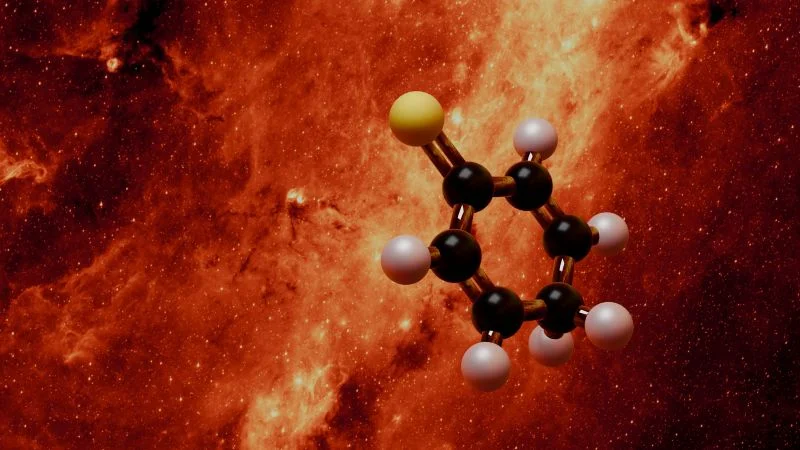
New interstellar sulfur molecule reshapes the tale of life’s origins
Astronomers have detected the largest sulfur-bearing molecule in interstellar space—a 13-atom compound called 2,5-cyclohexadiene-1-thione—inside a molecular cloud about 27,000 light-years away, bridging a gap between simple space chemistry and the complex molecules linked to life. The molecule was synthesized in the lab from thiophenol, its radio fingerprint matched observations from the IRAM-30m and Yebes telescopes, and researchers say sulfur-containing compounds could be more common in space than previously thought, potentially seeding early Earth’s chemistry via comets and meteorites.