
Martian solar storm sparks record electron surge observed by ESA orbiters
TL;DR Summary
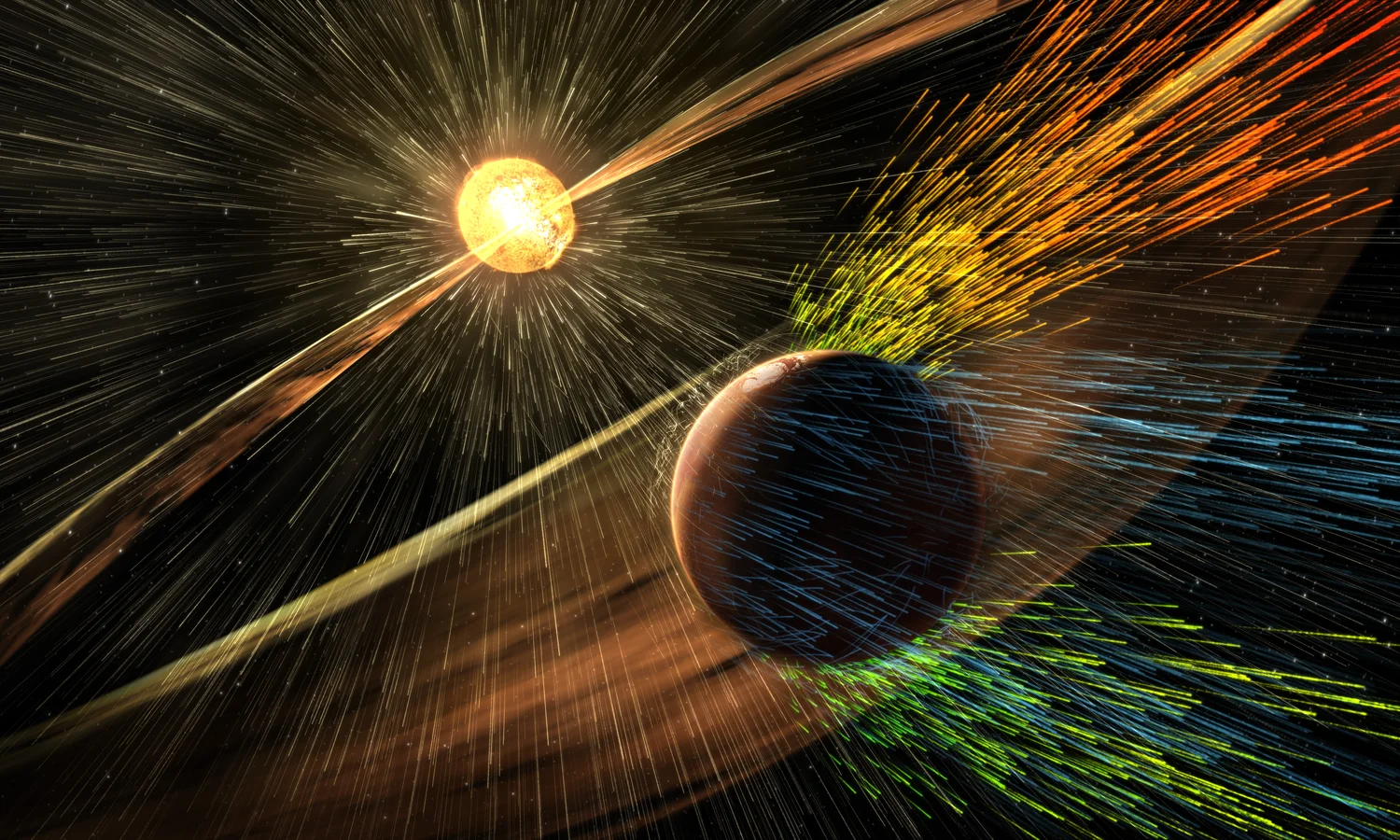
Two ESA Mars-orbiting missions, Mars Express and the ExoMars Trace Gas Orbiter, observed a powerful solar superstorm that also struck Earth in May 2024 and hit Mars, flooding the planet’s upper atmosphere with electrons (about 45% at ~110 km and 278% at ~130 km) and causing radiation-induced glitches in the spacecraft. Using a radio occultation technique, scientists mapped the atmospheric response and noted that Mars—lacking a global magnetic field—reacts differently to space weather than Earth; the observations were unusually well-timed after a large solar flare, and the results were published in Nature Communications.
Reading Insights
Total Reads
0
Unique Readers
2
Time Saved
55 min
vs 56 min read
Condensed
99%
11,123 → 93 words
Want the full story? Read the original article
Read on Space