
Enceladus: A Promising Moon for Life
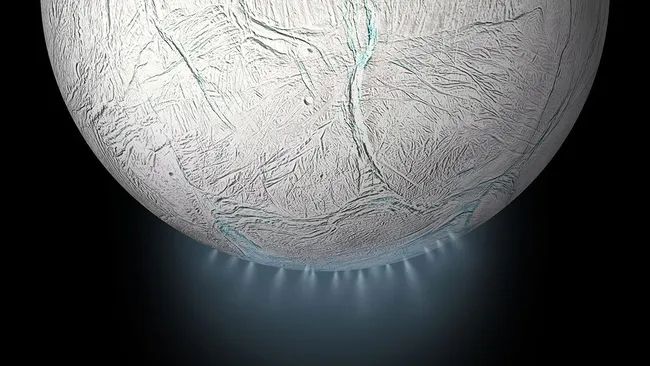
New research suggests that spacecraft could land on Saturn's moon, Enceladus, and collect pristine traces of organic molecules, potentially indicating the presence of life. Previous understanding was that the freshest material from Enceladus' subsurface oceans could only be sampled by flying through plumes of material erupting through fissures in the moon's surface. However, scientists now believe that landing on the moon's surface can provide relatively pristine plume organics sourced from the ocean. The study also found that damaging ultraviolet (UV) photons only penetrate the top 100 micrometers of the icy surface, meaning that deeper grains remain unexposed and can act as a shield for the underlying material.
- Finding life on Saturn's moon Enceladus might be easier than we thought Space.com
- NASA finds key ingredient for life gushing out of Saturn's icy moon Enceladus Livescience.com
- Poison Gas Hints at Potential for Life on an Ocean Moon of Saturn The New York Times
- NASA Study Finds Life-Sparking Energy Source and Molecule at Enceladus NASA
- New Evidence Discovered That Saturn's Moon Could Support Life Scientific American
Reading Insights
0
4
4 min
vs 5 min read
87%
843 → 107 words
Want the full story? Read the original article
Read on Space.com