
Webb’s 17-hour stare at Uranus uncovers baffling auroras
TL;DR Summary
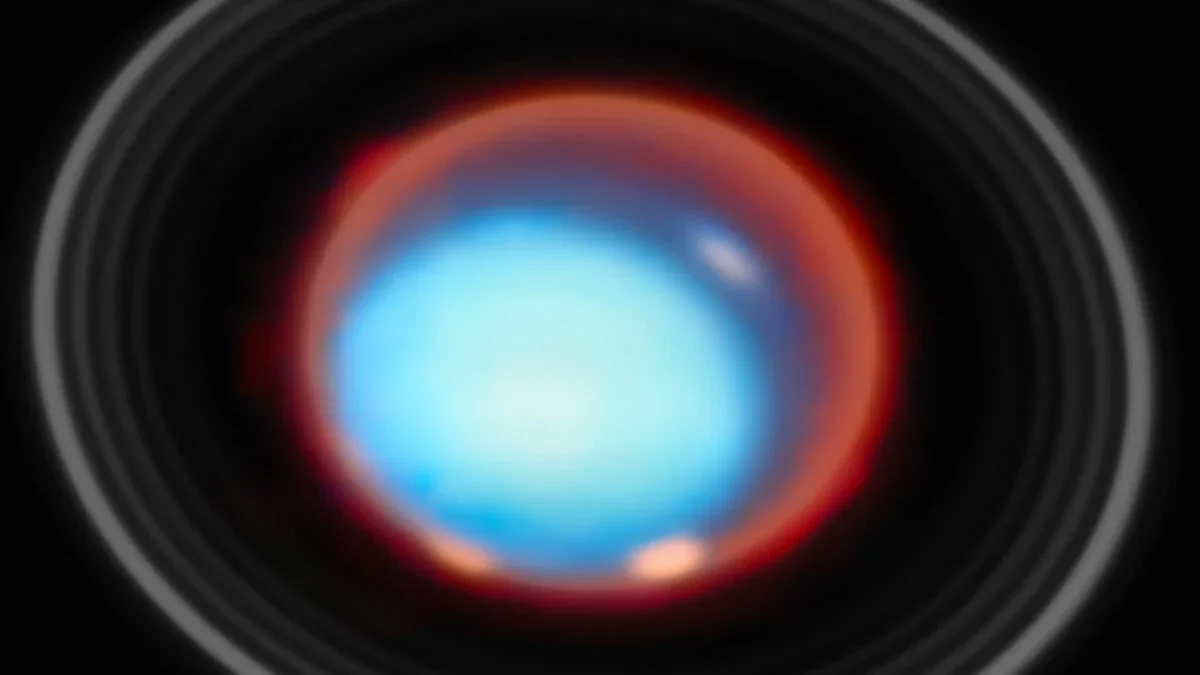
The James Webb Space Telescope spent 17 hours peering at Uranus to map its upper atmosphere in three dimensions, revealing two bright auroral bands near the planet’s unusual magnetic poles and a depletion of ions between them. The observations show how Uranus’s tilted, offset magnetosphere shapes energy flow and auroral activity, with the upper atmosphere still cooling since the 1986 Voyager flyby, providing new insights into the dynamics of ice-giant atmospheres.
- Webb Just Spent 17 Hours Staring at Uranus—and Found Its Auroras Are Even Weirder Than We Thought Gizmodo
- The James Webb Space Telescope just mapped auroras on Uranus in 3D for the 1st time, and scientists are thrilled Space
- Webb maps Uranus's mysterious upper atmosphere European Space Agency
- First-ever 3D map of Uranus’ upper atmosphere shows how magnetic field shapes auroras Interesting Engineering
- Watch the Webb telescope's timelapse of Uranus' bizarre auroras Mashable
Reading Insights
Total Reads
1
Unique Readers
3
Time Saved
16 min
vs 17 min read
Condensed
98%
3,226 → 71 words
Want the full story? Read the original article
Read on Gizmodo