
New Insights Reveal How Supermassive Black Holes Defy Physics
TL;DR Summary
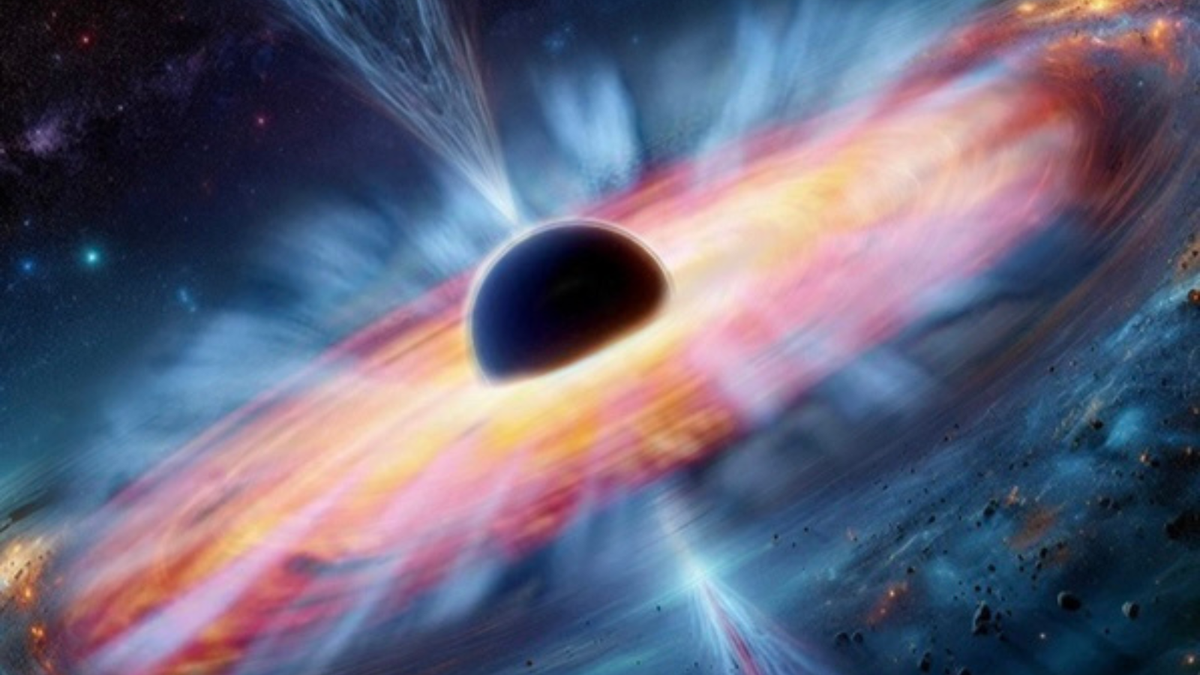
Scientists have discovered that supermassive black holes in the early universe may have grown rapidly by defying the Eddington limit, a rule that typically restricts their growth. Using X-ray data from the XMM-Newton and Chandra telescopes, researchers found evidence of "super-Eddington accretion," where these black holes consumed matter at rates that should have been impossible, allowing them to reach massive sizes less than a billion years after the Big Bang. This finding could help solve the mystery of how such large black holes formed so quickly.
Topics:science#early-universe#eddington-limit#quasars#science#supermassive-black-holes#x-ray-astronomy
- Supermassive black holes bent the laws of physics to grow to monstrous sizes Space.com
- Unlocking the secrets of the first quasars: How they defy the laws of physics to grow Phys.org
- 'Webb has shown us they are clearly wrong': How astrophysicist Sophie Koudmani's research on supermassive black holes is rewriting the history of our universe Livescience.com
- The Biggest Black Holes May Start From The Tiniest Seeds Universe Today
- Why is Webb seeing black holes that shouldn't exist? A team of scientists may have found an explanation Sky at Night Magazine
Reading Insights
Total Reads
0
Unique Readers
1
Time Saved
4 min
vs 5 min read
Condensed
91%
954 → 86 words
Want the full story? Read the original article
Read on Space.com