
Einstein Zig-Zag Lens Discovery Offers New Insights into Cosmic Expansion
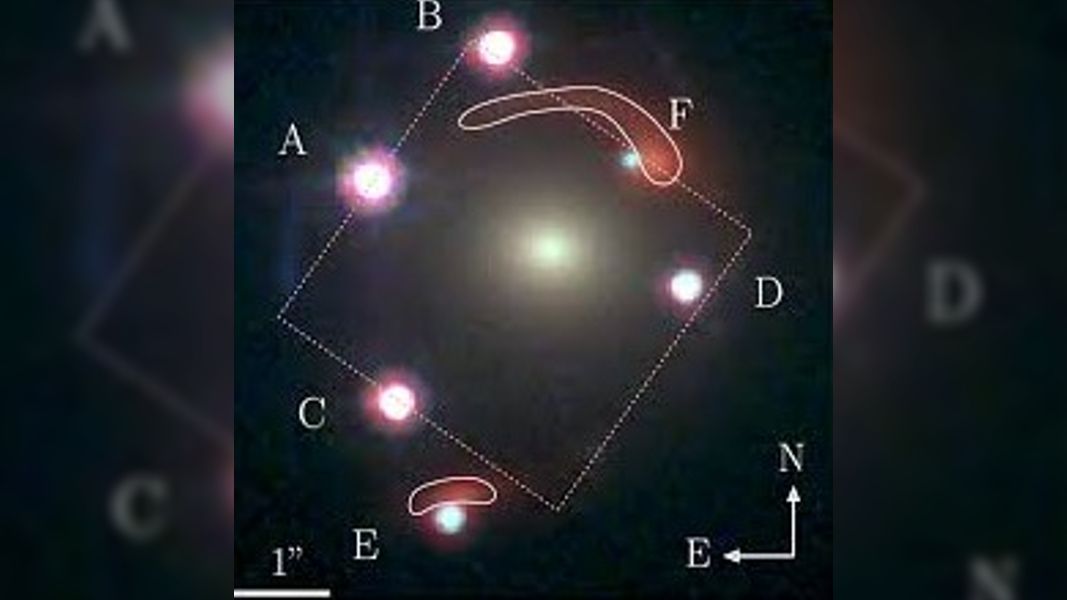
TL;DR Summary
Researchers using the James Webb Space Telescope have discovered the first example of an "Einstein zig-zag," a phenomenon where light from a distant quasar is bent through two regions of warped space-time, creating six mirror images. This discovery could help address the "Hubble tension" in cosmology by allowing precise measurements of the Hubble constant and dark energy, potentially resolving discrepancies in our understanding of cosmic expansion.
Topics:science#cosmology#dark-energy#einstein-zig-zag#gravitational-lensing#james-webb-space-telescope#science
- James Webb telescope uncovers 1st-ever 'Einstein zig-zag' hiding in plain sight — and it could help save cosmology Livescience.com
- First known double gravitational lens could shed light on universe’s expansion Science
- Astronomers discover two galaxies aligned in a way where their gravity acts as a compound lens Phys.org
- A unique pair of galactic lenses may help solve a cosmological riddle New Scientist
- First-Ever Discovery of Einstein Zig-Zag Lens Reshapes Our Understanding of the Universe The Daily Galaxy --Great Discoveries Channel
Reading Insights
Total Reads
0
Unique Readers
0
Time Saved
5 min
vs 5 min read
Condensed
93%
998 → 66 words
Want the full story? Read the original article
Read on Livescience.com