
"Ancient Microbial Ancestors: Unveiling the Origins of Multicellular Life"
TL;DR Summary
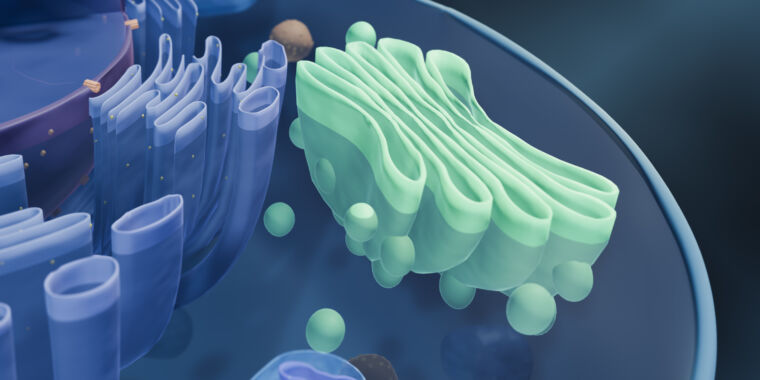
Researchers have discovered 1.64 billion-year-old eukaryote microfossils with surprisingly sophisticated features, suggesting that eukaryotes have a much deeper history than previously thought. The fossils, found in Australia, exhibit advanced characteristics such as protective cysts and complex cellular structures, indicating the presence of Golgi bodies. These findings shed new light on the complexity and diversity of eukaryotes, pushing back our understanding of their evolution by hundreds of millions of years.
- Our oldest microbial ancestors were way ahead of their time Ars Technica
- Microbes that gave rise to all plants and animals became multicellular 1.6 billion years ago, tiny fossils reveal Science
- 1.6-billion-year-old fossils push back origin of multicellular life by tens of millions of years Livescience.com
- Even The Oldest Eukaryote Fossils Show Dazzling Diversity And Complexity - Astrobiology Astrobiology News
- Oldest fossils of multicellular eukaryotes found in north China Xinhua
Reading Insights
Total Reads
0
Unique Readers
1
Time Saved
3 min
vs 4 min read
Condensed
91%
735 → 69 words
Want the full story? Read the original article
Read on Ars Technica