
"Greening Food Production with Artificial Photosynthesis"
TL;DR Summary
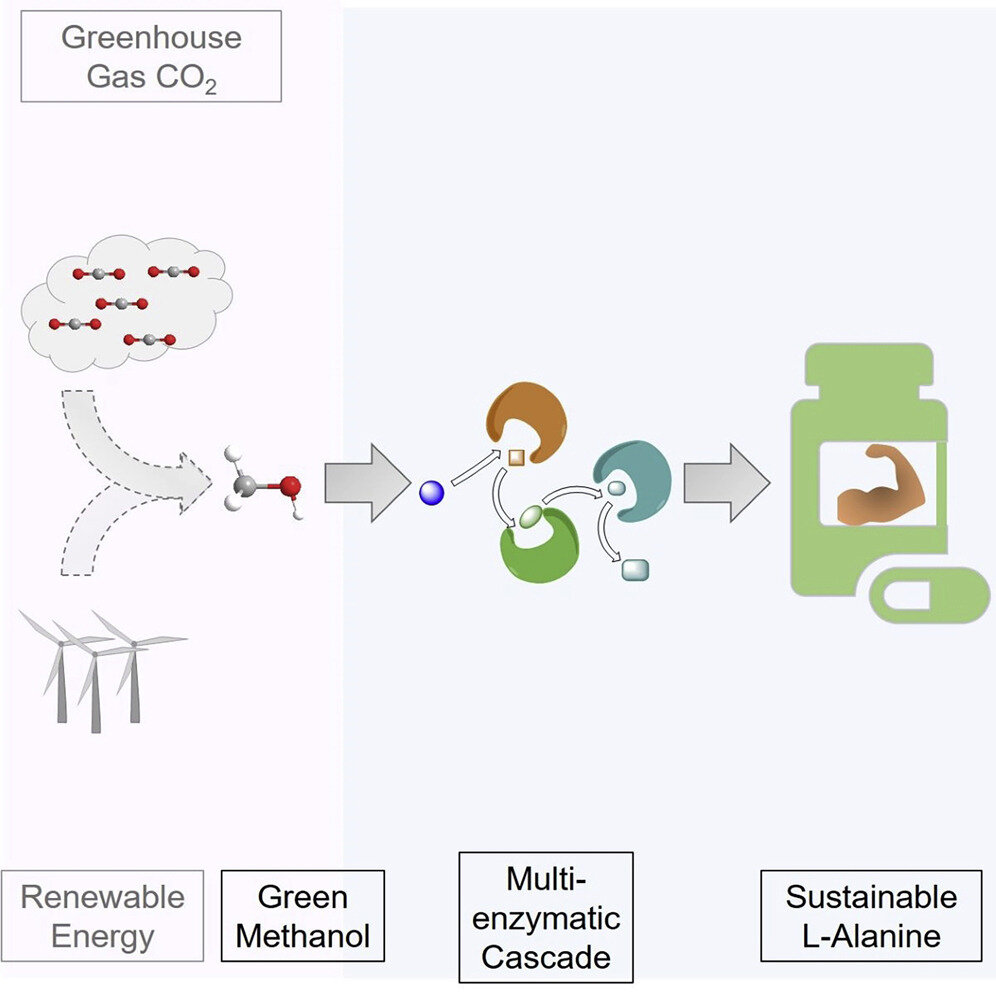
Researchers at the Technical University of Munich have developed a method for the synthetic manufacture of nutritional protein using a type of artificial photosynthesis. The method involves converting CO2 into methanol using green electricity and hydrogen, and then converting the methanol into L-alanine, an essential building block in proteins, using synthetic enzymes. The process is extremely effective and generates very high yields, requiring far less space than traditional methods of protein production. The researchers aim to produce other amino acids from CO2 using renewable energy and to further increase efficiency in the realization process.
Topics:science#artificial-photosynthesis#co2#food-production#renewable-energy#science-and-technology#sustainability
Reading Insights
Total Reads
0
Unique Readers
1
Time Saved
2 min
vs 3 min read
Condensed
79%
454 → 94 words
Want the full story? Read the original article
Read on Phys.org