
"Early Universe Quasar Challenges Black Hole Formation Theories"
TL;DR Summary
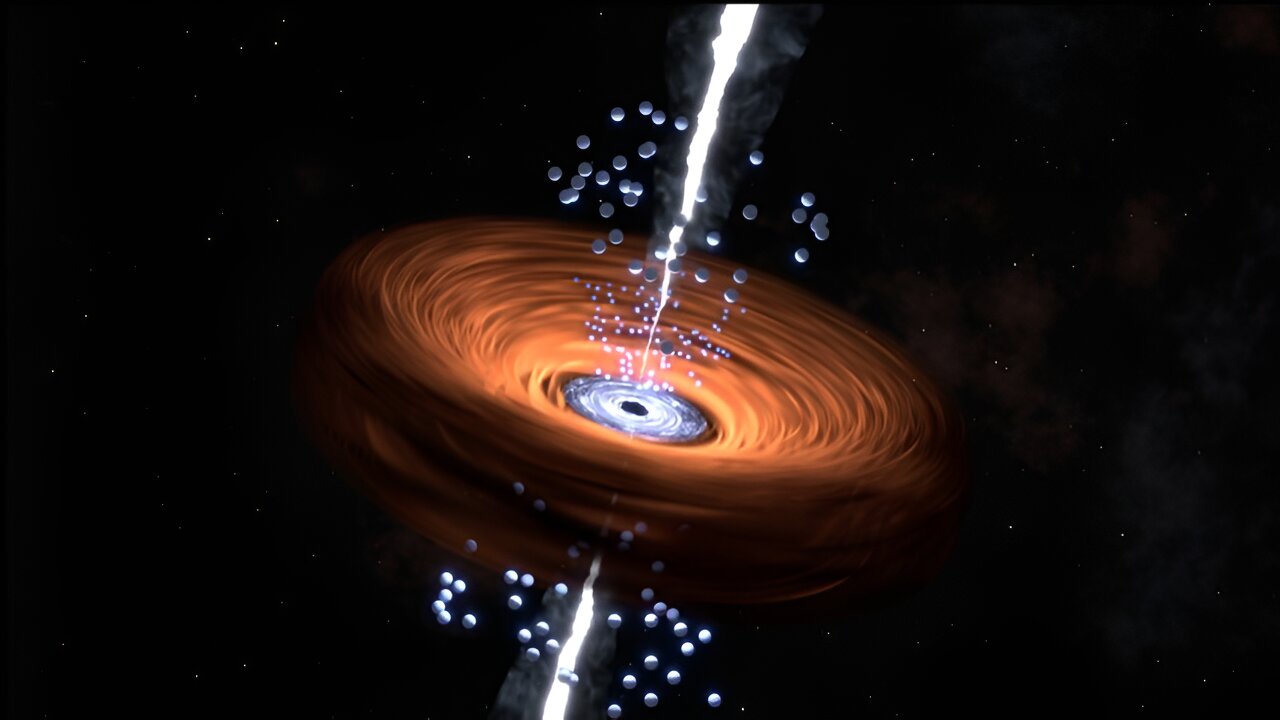
The James Webb Space Telescope has observed a mature quasar, J1120+0641, from the early universe, revealing a supermassive black hole with over a billion solar masses. This challenges current models of galaxy evolution, as the black hole's growth mechanisms appear similar to those of modern quasars, suggesting that supermassive black holes may have formed with considerable initial masses.
Topics:science#black-holes#cosmic-dawn#galaxy-evolution#james-webb-space-telescope#quasars#science-and-technology
- A black hole of inexplicable mass: JWST observations reveal a mature quasar at cosmic dawn Phys.org
- How huge black holes sprouted just after the Big Bang Nature.com
- Quasar from early universe upends theory about SMBH formation Interesting Engineering
- Black holes formed quasars less than a billion years after Big Bang Ars Technica
- The seeds that formed the garden of massive black holes Astrobites
Reading Insights
Total Reads
0
Unique Readers
2
Time Saved
7 min
vs 7 min read
Condensed
96%
1,360 → 58 words
Want the full story? Read the original article
Read on Phys.org