
James Webb Space Telescope Uncovers Secrets of TRAPPIST-1 Exoplanet
TL;DR Summary
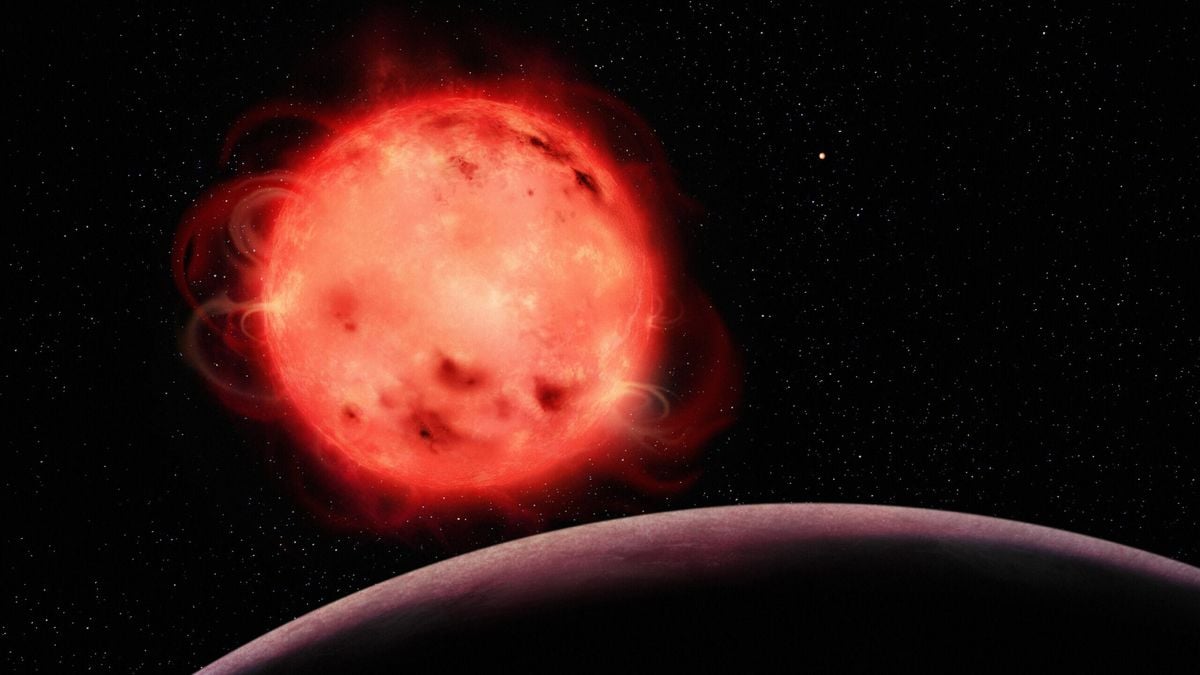
Observations from the James Webb Space Telescope (JWST) suggest that the TRAPPIST-1 exoplanet, TRAPPIST-1b, may lack a thick hydrogen atmosphere and instead be a bare rock with a surface temperature of 232 degrees Celsius. The active surface of the red dwarf star at the center of the TRAPPIST-1 system is interfering with efforts to observe the planet's atmosphere. Stellar activity, including bright faculae, dark star-spots, and flares, creates contrasting lines that mimic absorption lines in the planet's spectrum. Mitigating this interference will be crucial for future observations of the other planets in the system.
Topics:science#atmosphere#exoplanet#james-webb-space-telescope#science-and-astronomy#stellar-activity#trappist-1
- TRAPPIST-1 exoplanet seems to have no atmosphere — the truth may hide in its star, James Webb Space Telescope reveals Space.com
- James Webb analyzes atmosphere of first TRAPPIST planet New Atlas
- JWST just scanned the skies of potentially habitable exoplanet TRAPPIST-1 b Popular Science
- ‘Ghost Signals’ from Trappist-1 Exoplanetary System Revealed by James Webb Space Telescope The Debrief
- Stellar Contamination and Ghostly Atmospheres: Webb Reveals New Insights Into TRAPPIST-1 Exoplanet SciTechDaily
- View Full Coverage on Google News
Reading Insights
Total Reads
0
Unique Readers
1
Time Saved
4 min
vs 5 min read
Condensed
89%
849 → 94 words
Want the full story? Read the original article
Read on Space.com