
Trilobite Fossils Unveil New Insights into Defensive Enrollment
TL;DR Summary
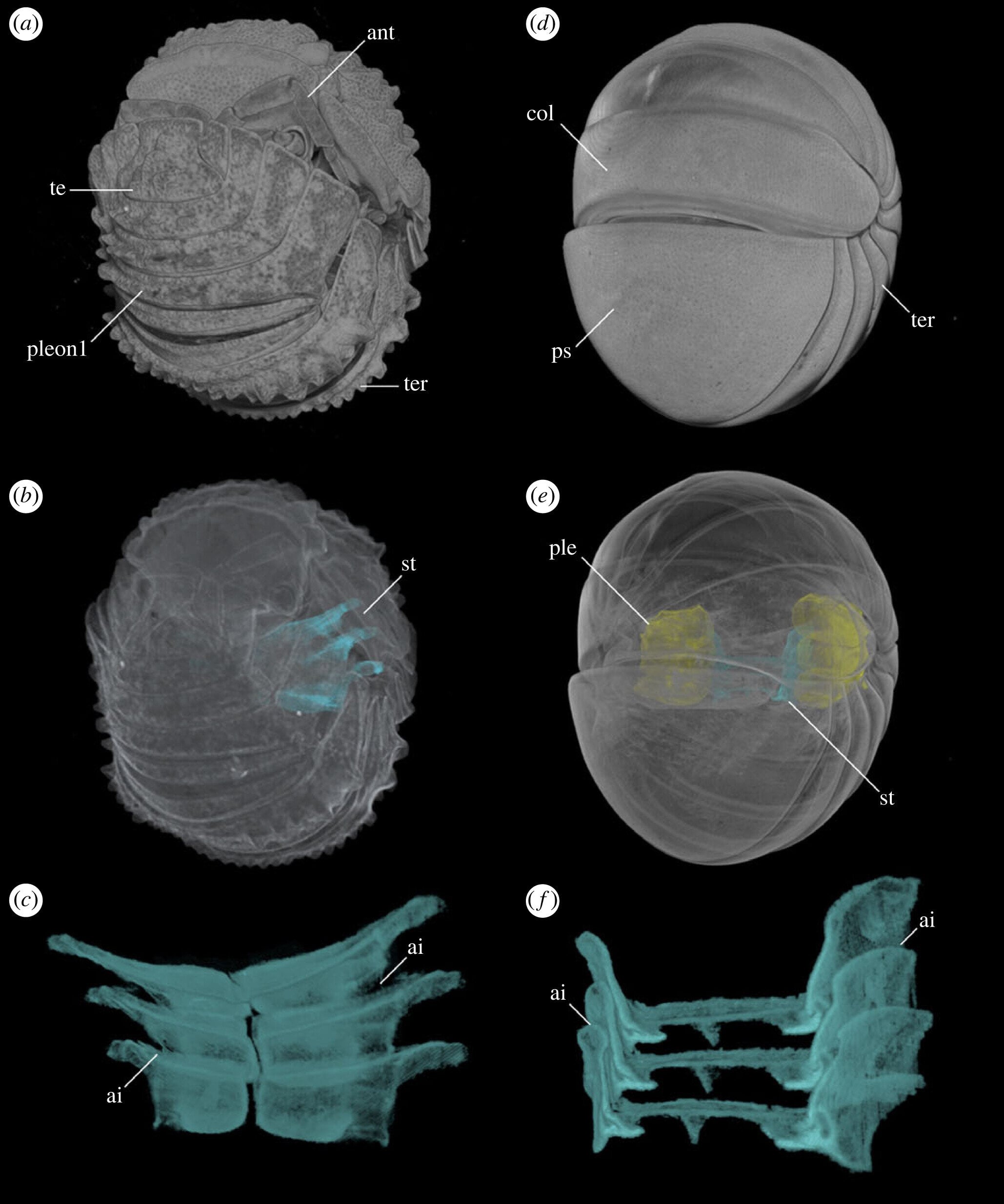
A rare specimen found in Harvard University's Museum of Comparative Zoology has provided new insights into how trilobites curled themselves into a ball for protection. Using micro-CT scanning, researchers were able to study the internal organs of the ancient sea creature, revealing the interaction between its stomach plates and appendages. The study showed that trilobites flexed their entire bodies to allow for rolling, with the plates sliding past each other and locking in place. This mechanism is similar to that observed in modern enrolling creatures like pill bugs and armadillos.
- Rare museum specimen reveals new insights into how trilobites curled themselves into a ball Phys.org
- Ever Want to Curl Into a Ball? Here's How Trilobites Did It. The New York Times
- Unveiling ancient secrets: 3D preservation of trilobite soft tissues sheds light on convergent evolution of defensive enrollment EurekAlert
- Harvard Researcher Unearths 3D Trilobite Fossils: A Breakthrough BNN Breaking
Reading Insights
Total Reads
0
Unique Readers
1
Time Saved
2 min
vs 3 min read
Condensed
84%
563 → 90 words
Want the full story? Read the original article
Read on Phys.org