
"Robotic Dinosaur Reveals How Feathers Helped Dinosaurs Hunt Prey"
TL;DR Summary
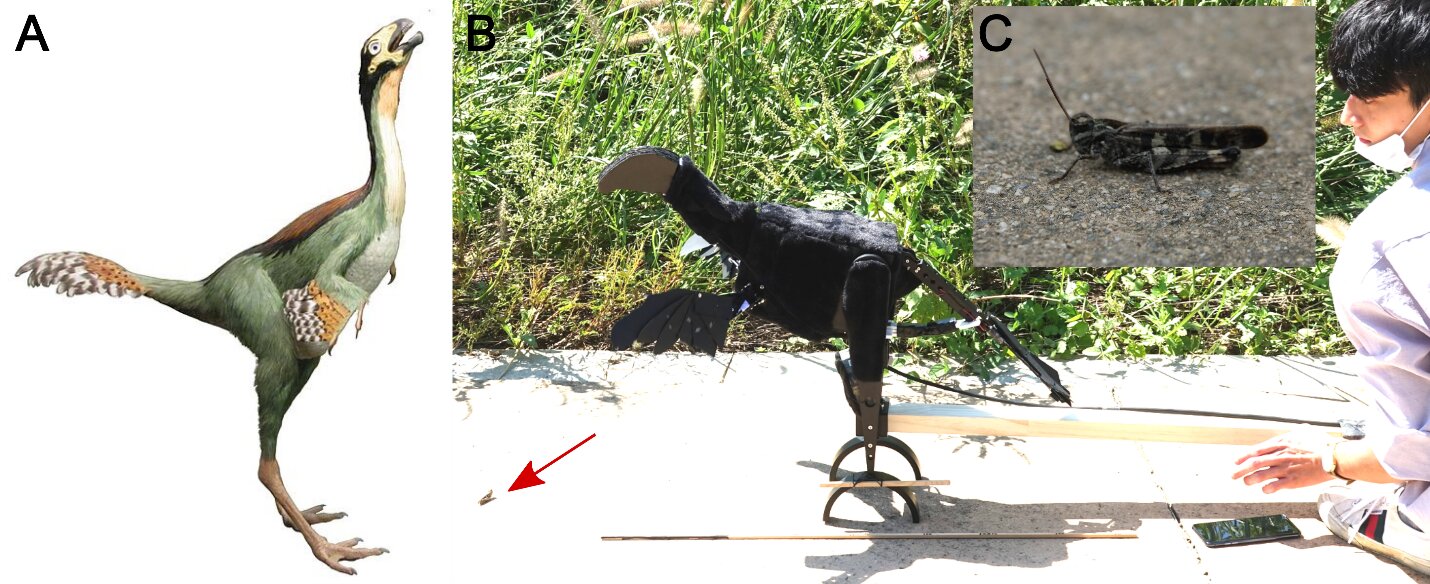
Biologists propose the "flush-pursue hypothesis," suggesting that small dinosaurs with proto-wings may have used their feathers on forelimbs and tails to visually flush out hiding prey and pursue them, similar to the foraging strategy employed by some birds. This idea is rooted in detailed field-ornithological studies and neurobiological research, and was presented in a recent scientific collaboration's paper published in Scientific Reports. The hypothesis provides a new perspective on the potential functions of feathers in the ancestors of birds.
- Dinosaurs might have used feathers on forelimbs and tails to flush and pursue their prey, say biologists Phys.org
- Scientists Use Robotic Dinosaur to Study Evolution of Wings The New York Times
- Scientists use robot dinosaur in effort to explain origins of birds’ plumage The Guardian
- Robot dinosaur tests theory about the evolution of feathers New Scientist
- Escape behaviors in prey and the evolution of pennaceous plumage in dinosaurs | Scientific Reports Nature.com
Reading Insights
Total Reads
0
Unique Readers
1
Time Saved
4 min
vs 5 min read
Condensed
91%
838 → 79 words
Want the full story? Read the original article
Read on Phys.org