
Unveiling the Host Galaxies of Ancient Quasars in the Early Universe
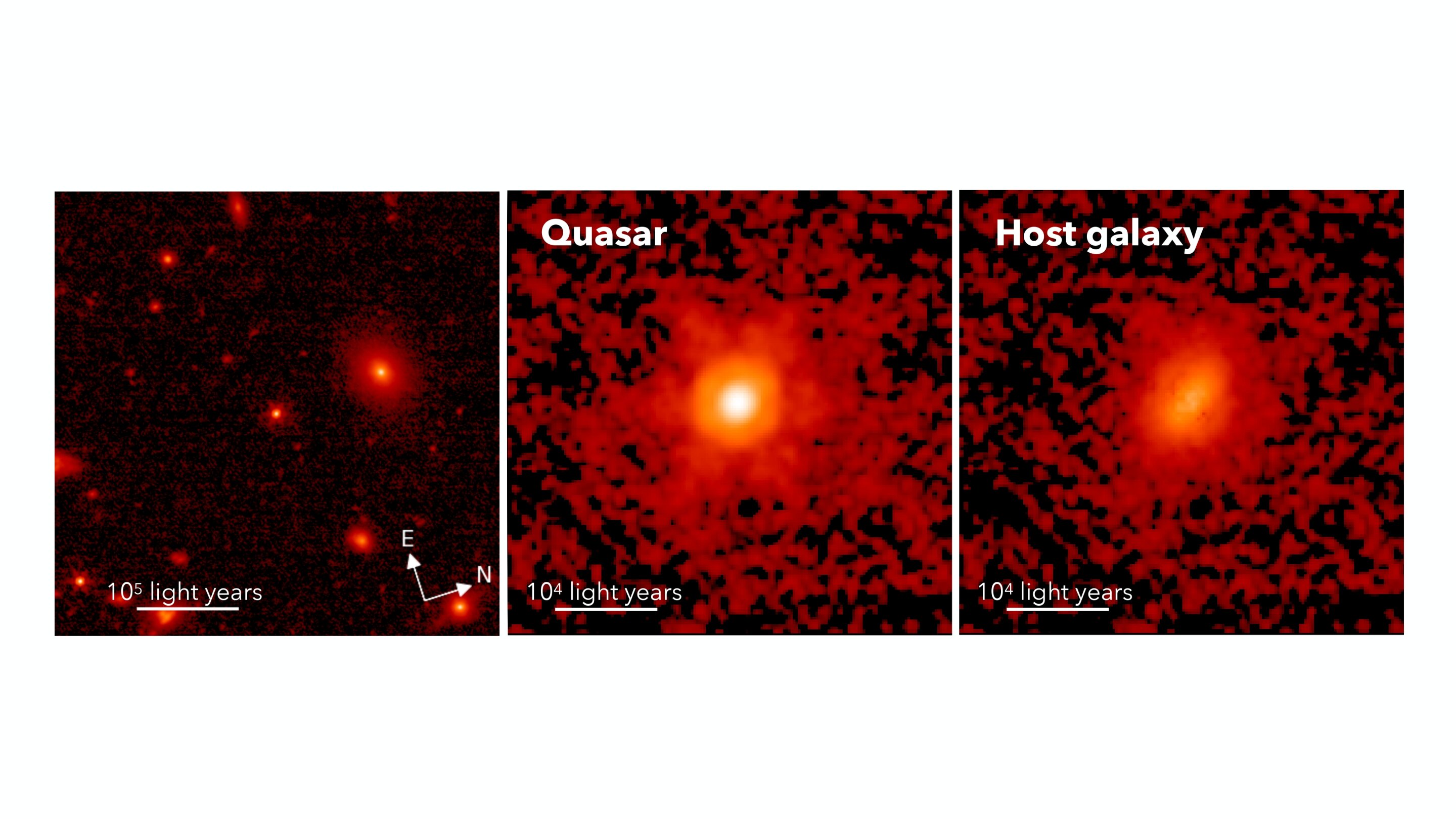
The James Webb Space Telescope (JWST) has captured images revealing starlight from two massive galaxies hosting quasars, or actively growing black holes, less than a billion years after the Big Bang. The black holes have masses close to a billion times that of the sun, while the host galaxies are almost one hundred times larger. This discovery raises questions about how these black holes grew so large in the early universe and the relationship between black holes and galaxies. The JWST's infrared capabilities allowed researchers to detect the faint light of the host galaxies, providing insights into the formation of black holes and their connection to galaxies.
- Starlight and the first black holes: Researchers detect the host galaxies of quasars in the early universe Phys.org
- James Webb Space Telescope sees 1st starlight from ancient quasars in groundbreaking discovery Space.com
- Hawaii astronomer detects host galaxies of growing black holes in early universe Hawaii News Now
- The Starlight Around An Early-Universe Quasar Seen For First Time IFLScience
Reading Insights
0
0
4 min
vs 5 min read
87%
845 → 107 words
Want the full story? Read the original article
Read on Phys.org