
"Unexplained 'Cat Tail' Phenomenon Spotted by James Webb Telescope"
TL;DR Summary
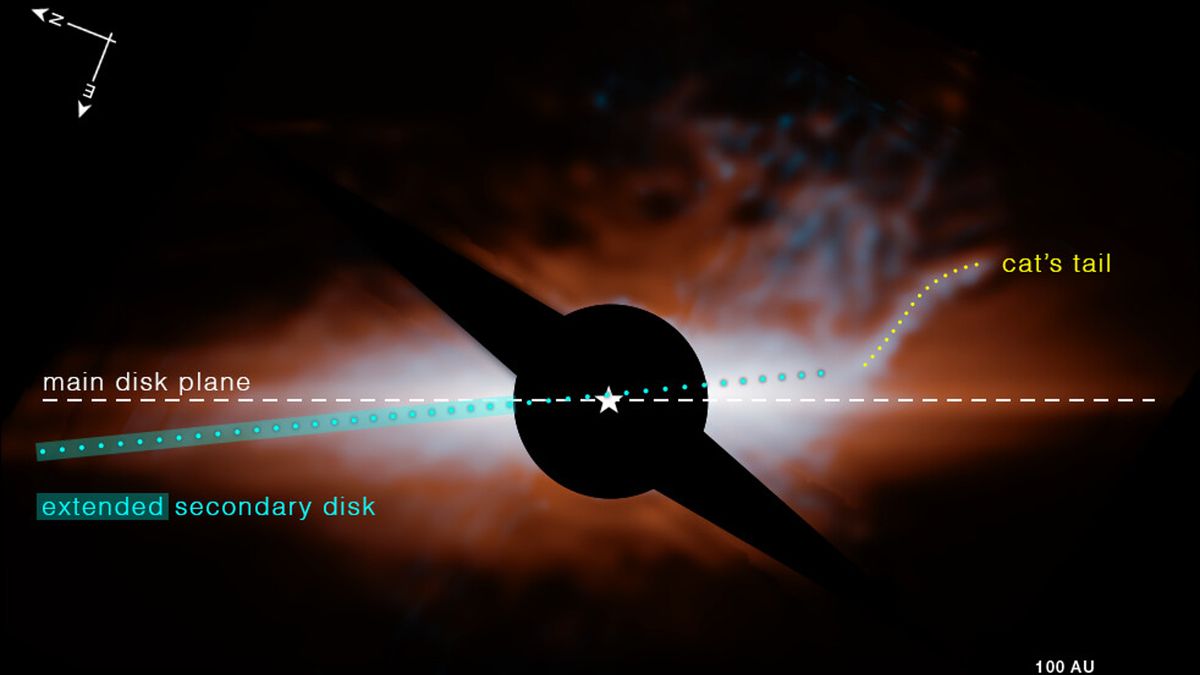
The James Webb Space Telescope has captured new images of a peculiar "cat's tail" of gas and dust flowing from the Beta Pictoris star's secondary planetary disk, located 63 light-years away. This unusual structure, difficult to explain, suggests a more active and chaotic system than previously thought. Researchers speculate that it may have formed from an asteroid-protoplanet collision, with the star's light shaping the displaced material. Additionally, the telescope revealed that the secondary disk is hotter and likely composed of organic matter, providing new insights into the star's environment.
Topics:science#astronomy#astrophysics#beta-pictoris#cats-tail#james-webb-space-telescope#protoplanetary-disk
Reading Insights
Total Reads
0
Unique Readers
0
Time Saved
4 min
vs 5 min read
Condensed
89%
821 → 89 words
Want the full story? Read the original article
Read on Livescience.com