
Possible Discovery of Universe's First Massive Stars
TL;DR Summary
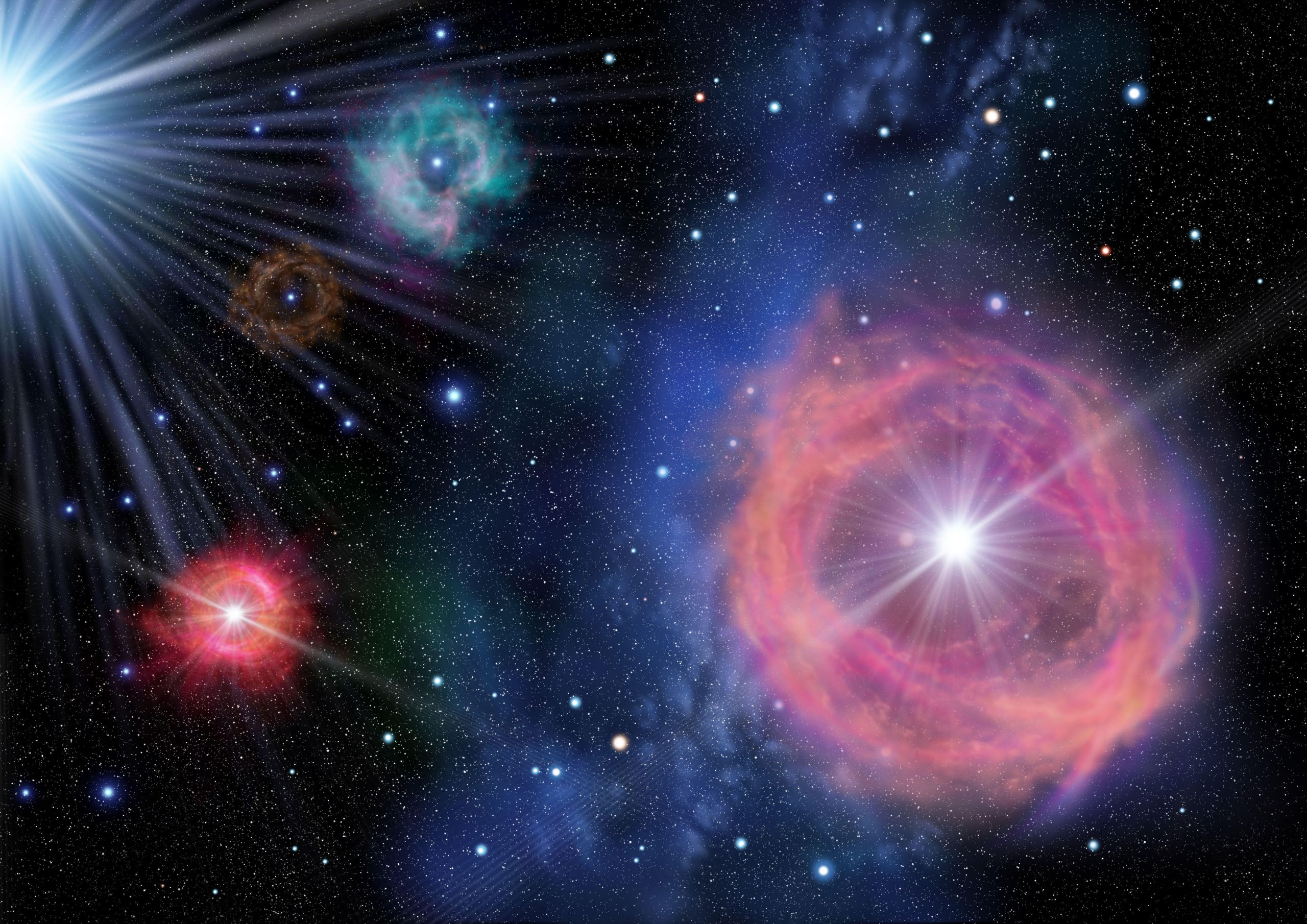
A recent study published in Nature has found evidence of massive first-generation stars in the early universe. The team looked at a distant star known as J1010+2358, which is low in metals, and found it had extremely low abundances of sodium and cobalt, but higher abundances of magnesium and nickel. This split between even and odd abundances is exactly the kind of thing you would expect to see in the remnant of a pair-instability supernova. Based on the observations, the team estimates that J1010+2358 formed from the remnant of a 260 solar mass progenitor, which was likely a first-generation Population III star.
Topics:science#astronomy#early-universe#j10102358#pair-instability-supernova#population-iii-stars#supernova-remnants
- More Evidence of Massive First Generation Stars Universe Today
- Are These the First-Ever Stars? Popular Mechanics
- At Last, Astronomers May Have Seen the Universe’s First Stars Scientific American
Reading Insights
Total Reads
0
Unique Readers
1
Time Saved
2 min
vs 3 min read
Condensed
82%
555 → 102 words
Want the full story? Read the original article
Read on Universe Today