
"James Webb Telescope Reveals Primeval Galaxy Formed Just 430 Million Years After Big Bang"
TL;DR Summary
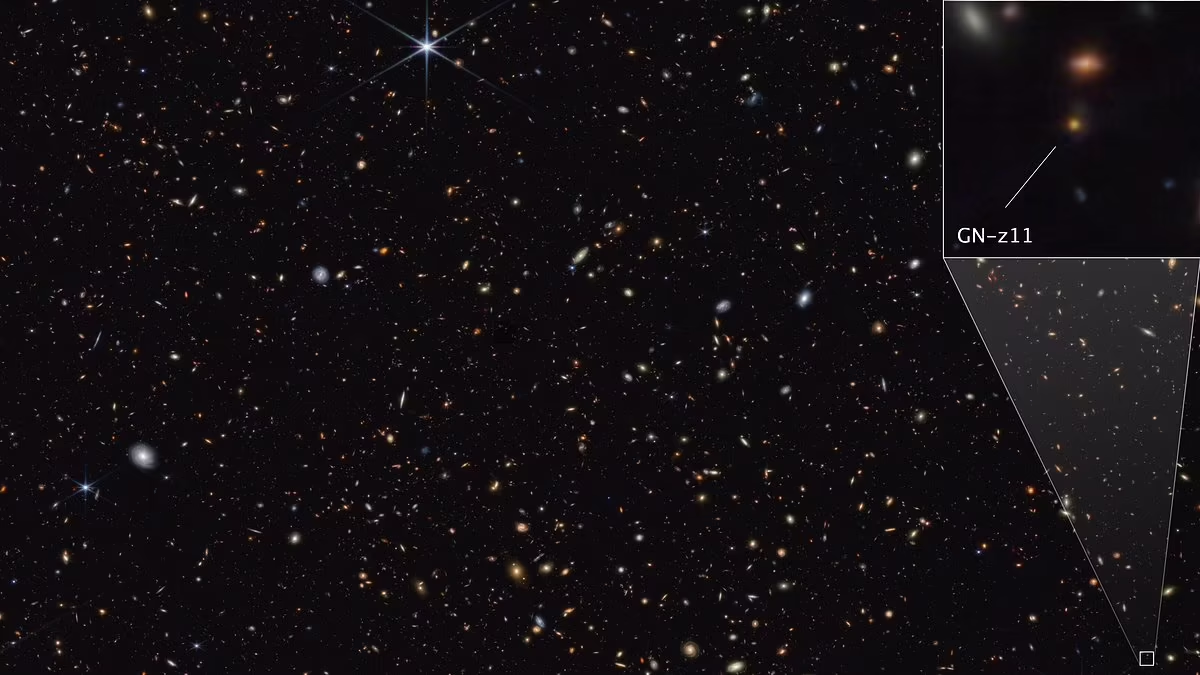
NASA's James Webb Space Telescope has observed galaxy GN-z11, one of the oldest in existence, just 430 million years after the big bang. This galaxy, with a supermassive black hole at its center, is a potential nursery for ancient Population III stars. The telescope's infrared imaging revealed ionized chemical elements and a strong 'wind' typical of supermassive black holes, explaining the galaxy's exceptional brightness. The discovery suggests that the telescope is well-equipped to deliver on its promises, providing insights into the early universe's formation. However, some researchers argue that conventional explanations may account for the findings.
Topics:science#astronomy#early-universe#galaxy-gn-z11#james-webb-space-telescope#nasa#supermassive-black-hole
- NASA's James Webb spots one of the very first galaxies in the universe that formed just 430 million years afte Daily Mail
- The James Webb Space Telescope may have found some of the very 1st stars Space.com
- Webb Unlocks Secrets of One of the Most Distant Galaxies Ever Seen Science@NASA
- Webb unlocks secrets of primeval galaxy Phys.org
- Did the James Webb telescope 'break the universe'? Maybe not Science News Magazine
Reading Insights
Total Reads
0
Unique Readers
5
Time Saved
4 min
vs 5 min read
Condensed
89%
867 → 96 words
Want the full story? Read the original article
Read on Daily Mail