
Unveiling Bronze Age Cuisine through Ancient Cauldron Analysis
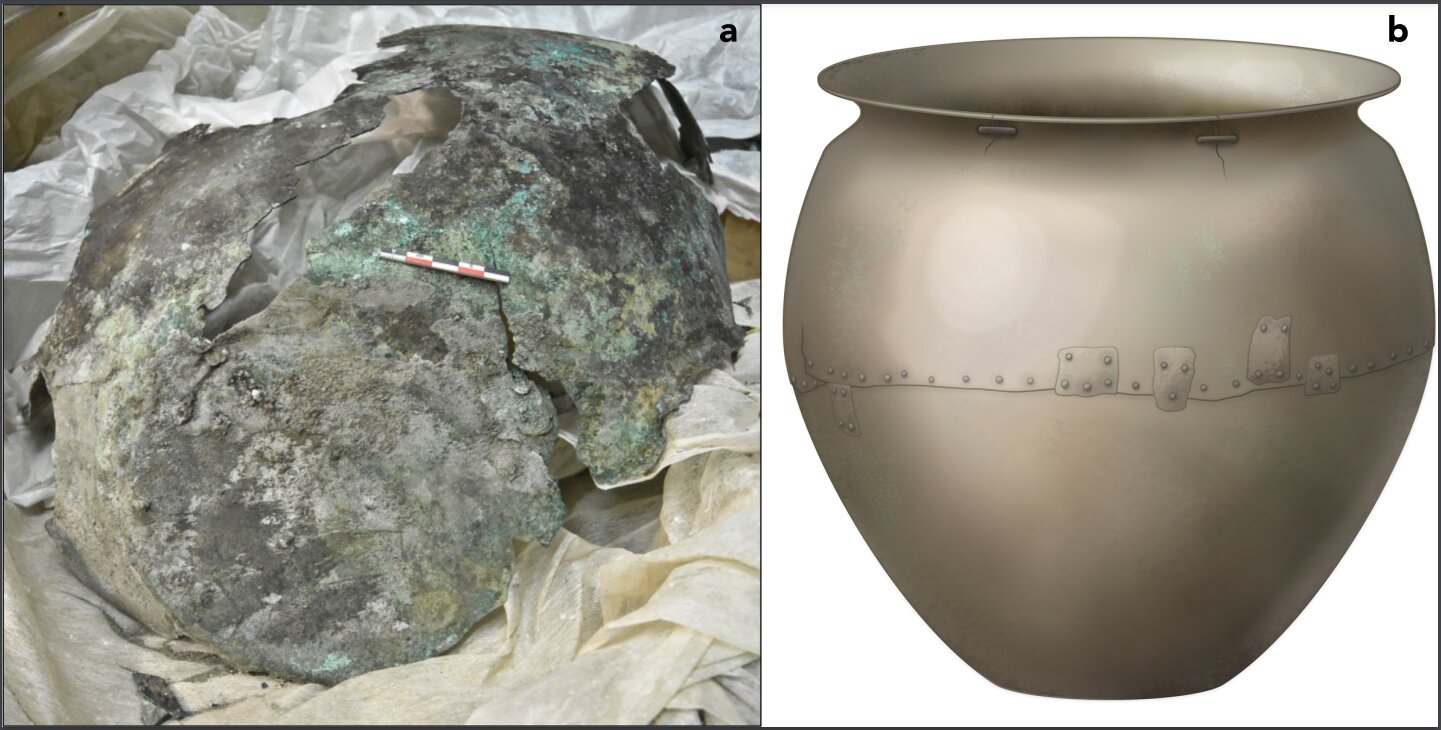
A new study published in the journal iScience analyzed protein residues from ancient cooking cauldrons and found that people in the Caucasus region during the Bronze Age (Maykop period, 3700–2900 BCE) consumed deer, sheep, goats, and members of the cow family. The cauldrons, which are over 3,000 years older than any previously analyzed vessels, were found to have preserved proteins due to the antimicrobial properties of the metal alloys. The study provides insights into the meals cooked in these cauldrons and highlights their significance as symbols of wealth and social position. The researchers hope to further explore food preparation practices across different regions and time periods.
- Ancient metal cauldrons give us clues about what people ate in the Bronze Age Phys.org
- What People Ate 5,000 Years Ago Revealed in Ancient Cauldron Analysis Newsweek
- Savoring the Past: Bronze Age Cauldrons' Residues Unveil Caucasus Cuisine Ancient Origins
- Bronze Age cauldrons show we’ve always loved meat, dairy, and fancy cookware Popular Science
- View Full Coverage on Google News
Reading Insights
0
1
3 min
vs 4 min read
85%
728 → 106 words
Want the full story? Read the original article
Read on Phys.org