
"Uncovering Ancient Diets: Bacteria in Bronze Age Teeth Shed Light on Human Health"
TL;DR Summary
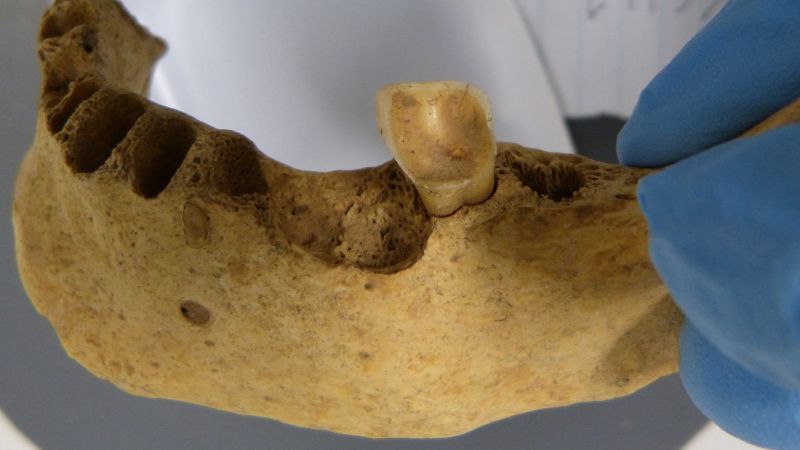
Two 4,000-year-old teeth discovered in Ireland contained an abundance of cavity-causing bacteria, shedding light on the impact of changes in the human diet on oral health. The presence of Streptococcus mutans, rare in ancient teeth due to its acid-producing nature, suggests a connection between dietary changes and tooth decay. Analysis of the ancient bacteria's traits and comparison to modern samples revealed its evolution alongside changes in human diet, particularly the popularization of sugar and cereal grains. The findings highlight the impact of dietary change on oral health and provide insight into the evolution of the human oral microbiota.
- Rare ancient bacteria found on Bronze Age teeth reveals the impact a key dietary shift had on human health CNN
- Tooth decay bacteria found in Bronze Age molars BBC.com
- Metagenomic analysis of Mesolithic chewed pitch reveals poor oral health among stone age individuals | Scientific Reports Nature.com
- Genetic secrets from 4,000-year-old teeth illuminate the impact of changing human diets over the centuries Phys.org
- Decay bacteria in ancient molars found in Limerick cave RTE.ie
Reading Insights
Total Reads
0
Unique Readers
6
Time Saved
4 min
vs 5 min read
Condensed
89%
895 → 98 words
Want the full story? Read the original article
Read on CNN