
Protein-scarce diets recruit gut microbes to turn white fat beige via bile acids and ammonia
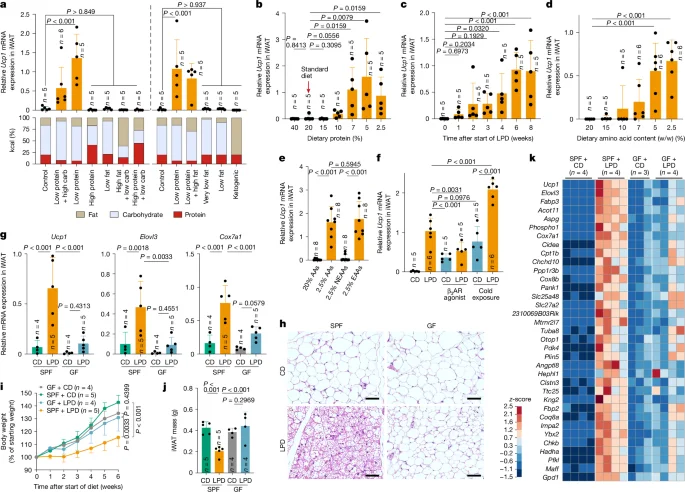
Low-protein diets reshape the gut microbiota to drive white adipose tissue browning through two non-redundant pathways: microbiota-derived bile acids activate FXR in adipose progenitors, while microbial ammonia triggers hepatic FGF21 production; together these signals promote browning and sympathetic innervation. This effect is microbiota-dependent, reversible, and transferable to germ-free mice via defined bacterial consortia that require both ammonia production and bile-acid modification. In humans, FDG-PET–positive browning signals linked to specific microbes can induce browning in mice on an LPD, with four key hu4 strains identified as essential. Inhibiting microbial ammonia production or FXR/FGF21 pathways blocks browning, highlighting a diet–microbiota–host axis shaping adipose remodeling and metabolic responses.
- Microbiota-mediated induction of beige adipocytes in response to dietary cues Nature
- How gut bacteria and diet can reprogram fat to burn more energy Medical Xpress
- Takeshi Tanoue (IMAGE) EurekAlert!
- Kenya Honda (IMAGE) EurekAlert!
- Study Reveals How Gut Bacteria and Diet Can Reprogram Fat to Burn More Energy Yahoo Finance
Reading Insights
0
3
104 min
vs 105 min read
99%
20,982 → 105 words
Want the full story? Read the original article
Read on Nature