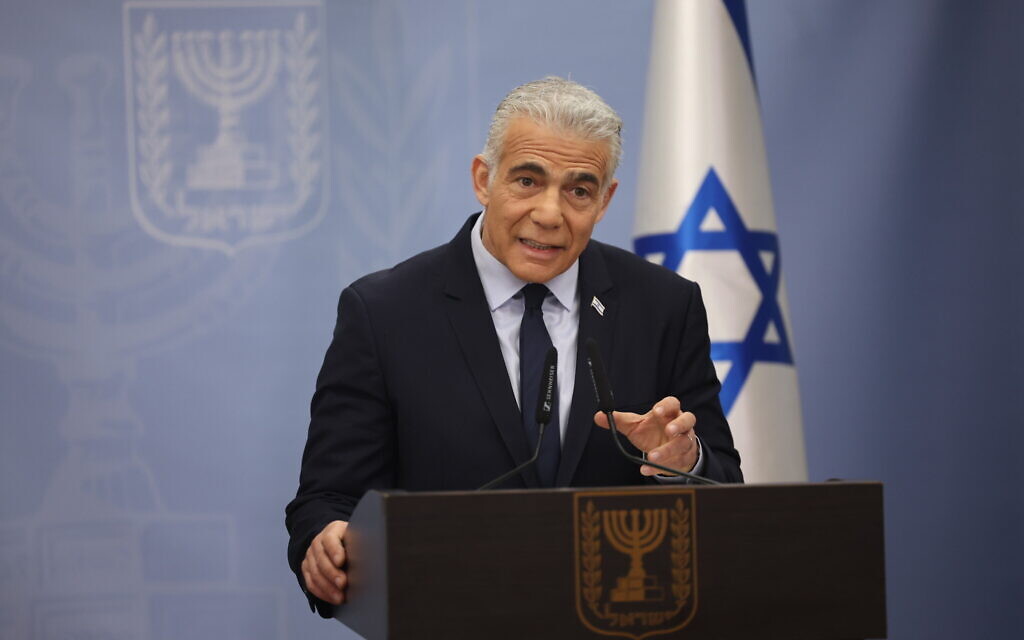
The Knesset approved US President Trump's 20-point Gaza peace plan through a vote initiated by opposition leader Yair Lapid, despite the absence of coalition members who boycotted the session, highlighting political divisions over the plan's section on Palestinian statehood.
Israel's municipal elections saw a significant drop in voter turnout, with only 41% of eligible Israelis voting by 7:00 p.m., compared to 49% in the previous elections. Opposition leader Yair Lapid expressed support for Orna Barbivay, who is running against incumbent mayor Ron Huldai in Tel Aviv. The elections were held amidst wartime, with incidents including fights, arrests for voter bribery, and confrontations with former mayors. President Isaac Herzog urged citizens to vote, emphasizing the impact of local government on their lives, while Labor Party leader Merav Michaeli voiced support for Huldai's leadership during the challenging times.
Yair Lapid, leader of the opposition party Yesh Atid, is willing to join Netanyahu's government to facilitate a deal for the release of 136 hostages held by Hamas in Gaza, on the condition that far-right parties Otzma Yehudit and Religious Zionist Party leave the government in opposition. This move comes amid tensions within the government over the proposed hostage deal, with Ben-Gvir threatening to leave if it proceeds. Lapid emphasizes the urgency of reaching a deal to bring the hostages home, while the Likud accuses him of prioritizing politics over achieving victory in the conflict.
Israeli Prime Minister Benjamin Netanyahu has offered opposition leader Yair Lapid and former defense minister Benny Gantz the opportunity to join an emergency government to manage the ongoing conflict with Hamas. This comes after Israel faced a surprise attack from Hamas, with thousands of rockets fired and militants crossing the border. More than 100 people have been killed, and some Israelis have been kidnapped. Lapid expressed openness to joining the emergency government, emphasizing the need for unity in the face of strategic challenges. Gantz is considering the option, and opposition leaders have expressed support for the government's response to the attack.
Yisrael Beytenu chief Avigdor Liberman claimed that the political chaos surrounding this week’s vote for the Judicial Selections Committee was one big show that Prime Minister Benjamin Netanyahu and a top political ally staged with opposition leaders. Liberman alleged Yair Lapid and Benny Gantz coordinated the vote with Netanyahu and Shas chief Aryeh Deri. Netanyahu and Deri were concerned about public backlash over selecting an opposition representative to the committee, so they decided to work in full coordination with Gantz and Lapid.
Yair Lapid, the opposition leader of Israel, criticized the proposed state budget for allocating funds to the Haredi community while allowing Haredi men to avoid employment. He argued that the budget fails to tackle the cost of living crisis or stimulate economic growth. The discretionary funds allocated by the government would be better spent achieving those goals. The budget includes NIS 3.7 billion for stipends for full-time Haredi yeshiva students who receive exemptions from military service and NIS 1.2 billion for private, non-supervised Haredi educational institutions. Lapid argued that the failure to require Haredi schools to teach core curriculum subjects meant that Haredi men would continue to face severe difficulties entering the job market even if they wanted to.
Yair Lapid, the opposition leader of Israel, urged Diaspora Jews to support Israel despite their dissatisfaction with the current government's judicial overhaul plan. The Jewish Federations of North America's General Assembly was held in Israel during a time of intense protests against the government's plan. Lapid praised the protesters and called them "patriots." He also reiterated his call for a constitution for Israel and emphasized the importance of democracy.
The 15th week of judicial reform protests in Israel began on Saturday evening in Tel Aviv despite the government's announcement that legislation won't begin again until after May. Protestors gathered at Habima Square ahead of a planned march toward Kaplan where various activists were set to speak after Shabbat. The protests have continued the last few weeks despite Prime Minister Benjamin Netanyahu announcing a freeze of the legislation and the beginning of negotiations at President Isaac Herzog's residence in Jerusalem.