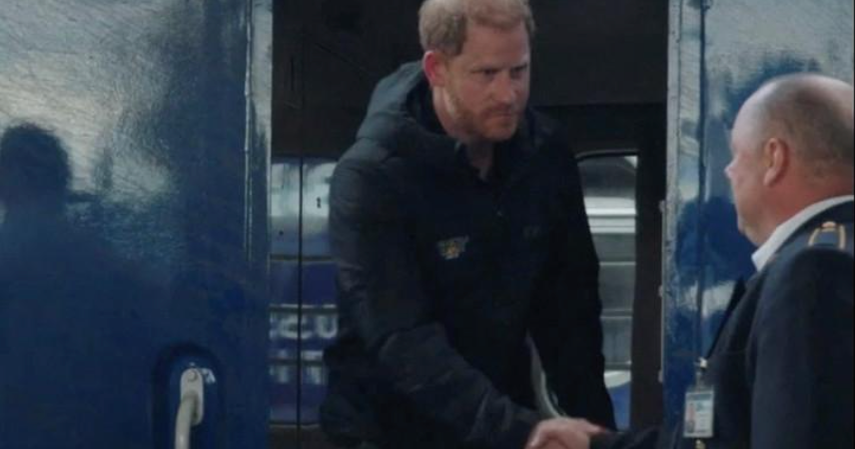
Prince Harry made a surprise visit to Kyiv, Ukraine, to support wounded soldiers and meet with veterans amid ongoing Russia-Ukraine conflict, reaffirming his commitment to aid and solidarity with Ukraine.
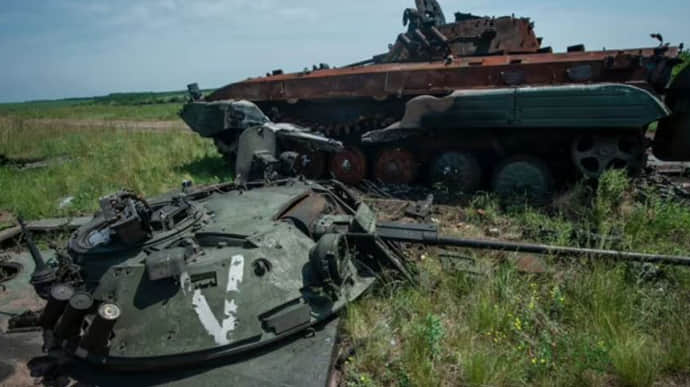
Drone footage and Ukrainian reports reveal that Russian soldiers are increasingly killing their own wounded on the battlefield due to lack of proper evacuation systems, with instances of execution either by shooting or beating, highlighting severe issues in troop management and battlefield conduct.
UK intelligence warns that a further increase in military spending in Russia will force the government to make difficult decisions, such as freezing spending on education and health, which will lead to a real reduction in these sectors due to inflation. The government will need to allocate more funds for the increasing number of wounded soldiers and families of those killed in the war against Ukraine. The constant increase in military spending is likely to contribute to inflationary pressure and increase financial strain on Russian businesses. However, reducing military spending could eliminate the main driver of Russian economic activity in the face of sanctions. UK intelligence estimates that Russia has suffered significant losses in dead and seriously wounded personnel, with up to 290,000 people affected.
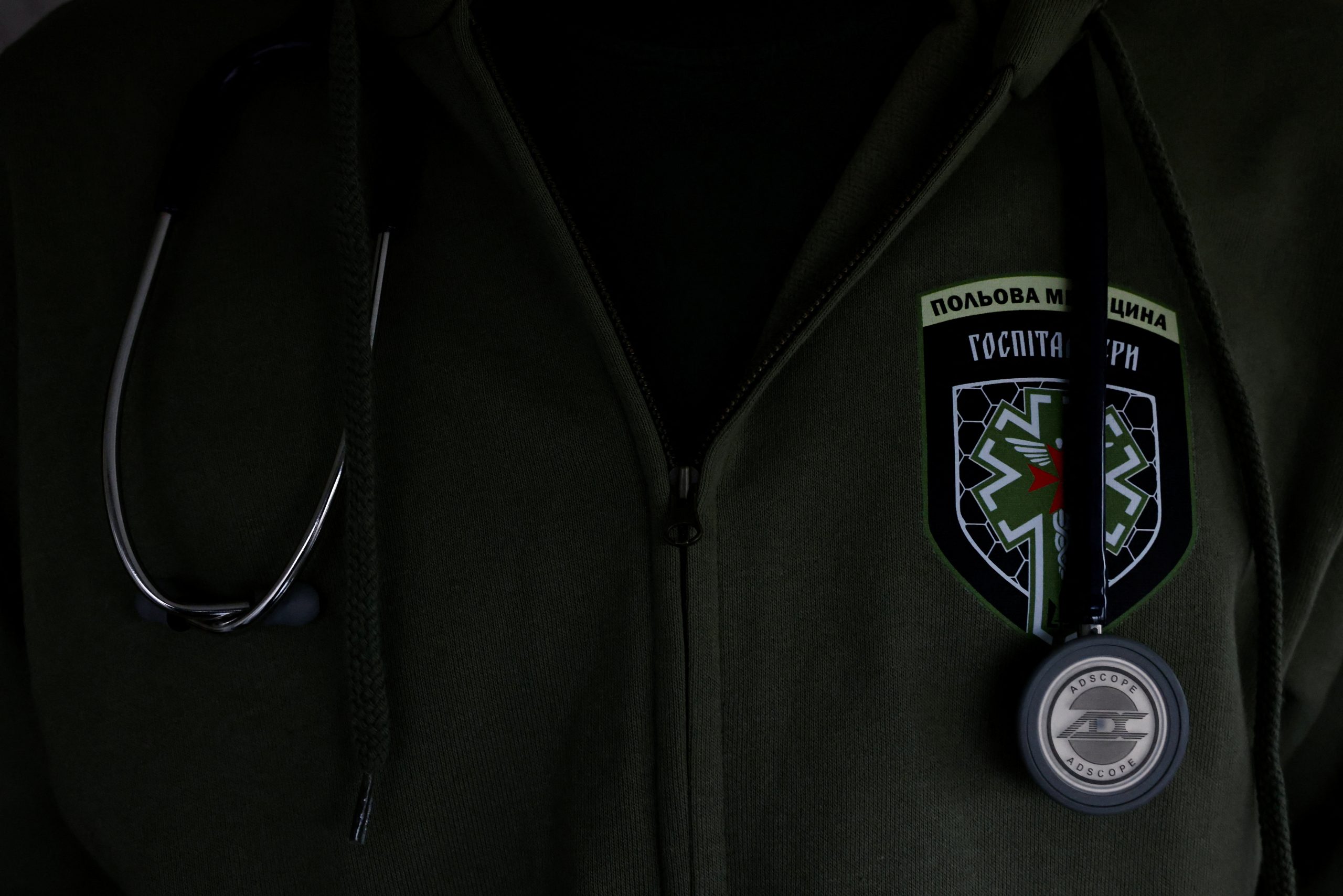
A female frontline medic in Ukraine shares her experiences of the war, describing the overwhelming emotional toll and horrifying sights she has witnessed. She highlights the challenges of helping critically ill civilians, including the elderly and children with their pets, and emphasizes the difficulty of evacuating wounded soldiers. Despite the horrors of war, she finds solace in the support of her crew and the ability to save lives. She reflects on the parallel reality of everyday life and the sense of horror that lingers, but remains committed to her work and grateful for each day she is alive.
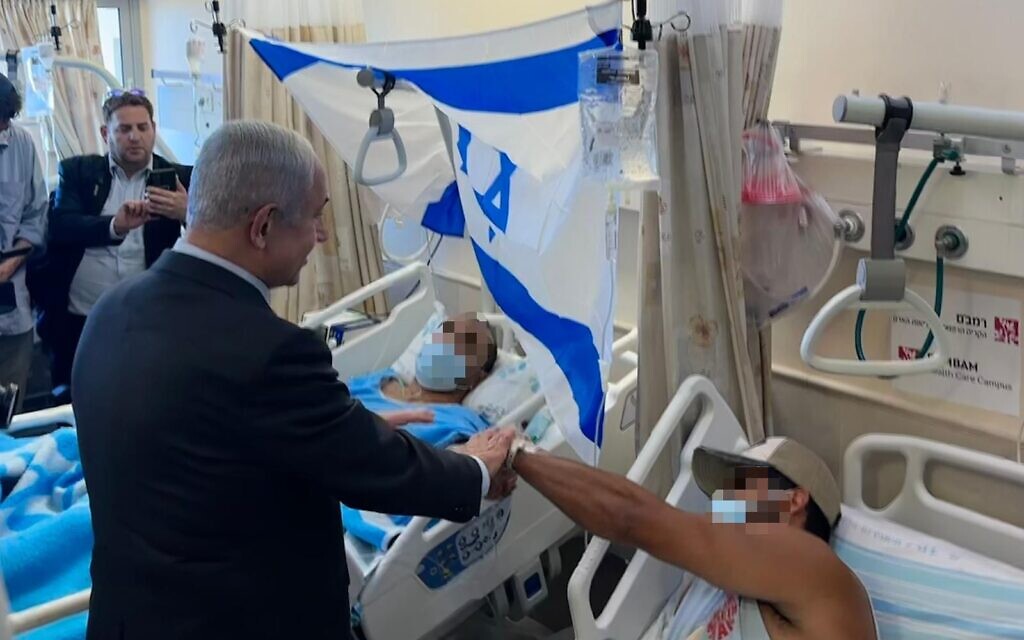
Israeli Prime Minister Benjamin Netanyahu visited wounded soldiers at Haifa’s Rambam Medical Center and praised their conduct during the intense firefight with Palestinian gunmen in Jenin. Five Palestinians were killed during the raid, and eight Israeli soldiers and a dog were wounded. The injured soldiers were being treated at Rambam and Sheba hospitals. Netanyahu said Israel is striking terrorism with strength and determination, and the police commissioner also hailed the soldiers' conduct. The Palestinian Islamic Jihad claimed responsibility for the attack, and since the beginning of the year, Palestinian attacks in Israel and the West Bank have killed 20 people.
Japan will accept wounded Ukrainian soldiers for medical treatment at the Self-Defense Forces Central Hospital in Tokyo as early as next month, in response to a Ukrainian request. The move is aimed at showing a stronger commitment to Ukraine ahead of the Group of Seven summit and may be discussed when the Japanese Defense Minister meets with the Ukrainian Ambassador to Japan.
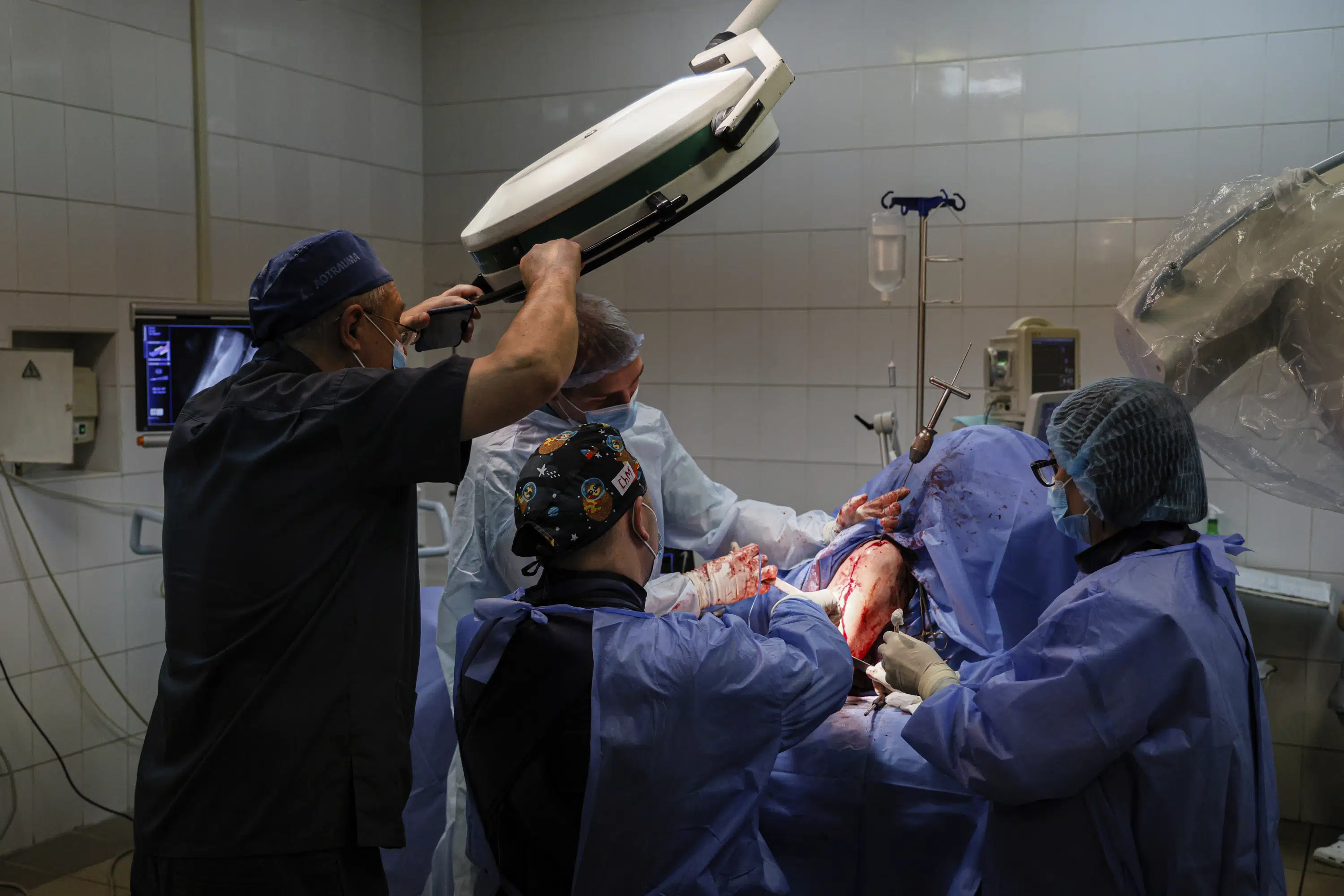
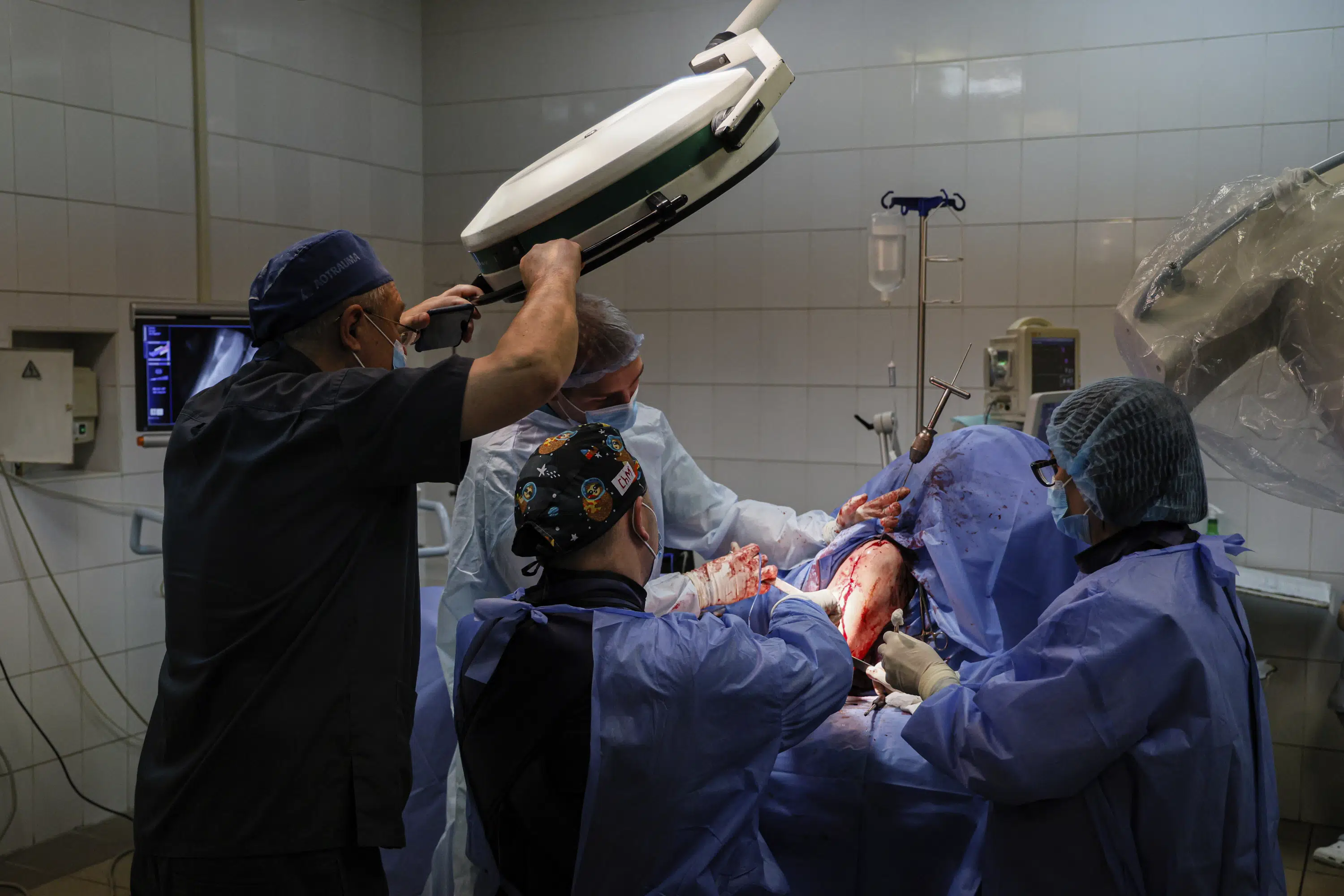
Petro Nikitin, the lead trauma surgeon at a military hospital in Kyiv, Ukraine, operates on soldiers all day long amid Russia's war. The hospital is short-staffed because physicians were pulled away to work in field hospitals closer to the front. Nikitin has become familiar with a range of traumatic injuries, including explosive weapons such as landmines, artillery shells, and grenades. He tries to return these people to a normal life, but sometimes they are forced to amputate a soldier's arm or leg.
Petro Nikitin, the lead trauma surgeon at a military hospital in Kyiv, Ukraine, operates on soldiers all day long amid Russia's war. The hospital is short-staffed because physicians were pulled away to work in field hospitals closer to the front. Nikitin has become familiar with a range of traumatic injuries, including explosive weapons such as landmines, artillery shells, and grenades. He tries to return these people to a normal life, but sometimes they are forced to amputate a soldier's arm or leg.
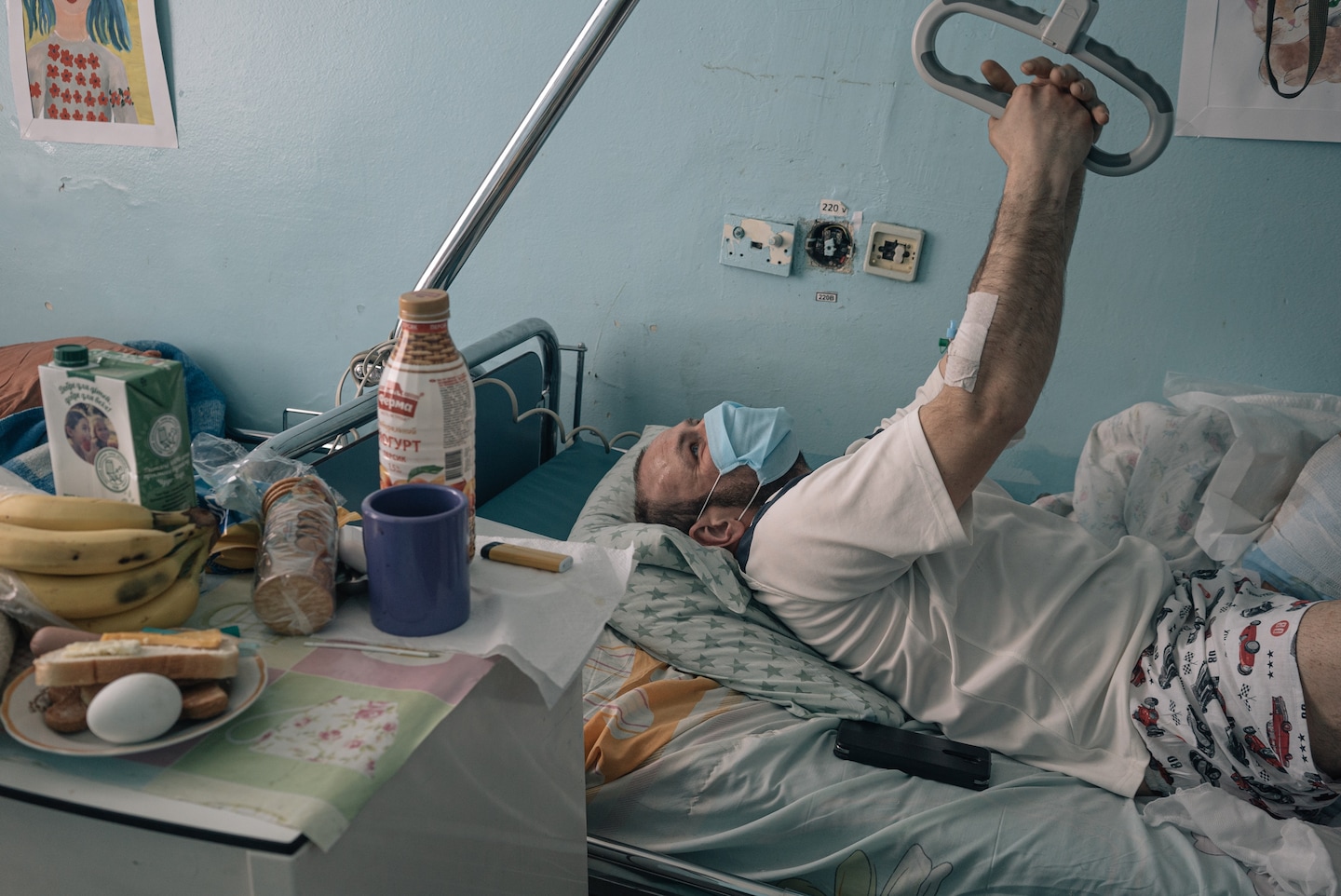
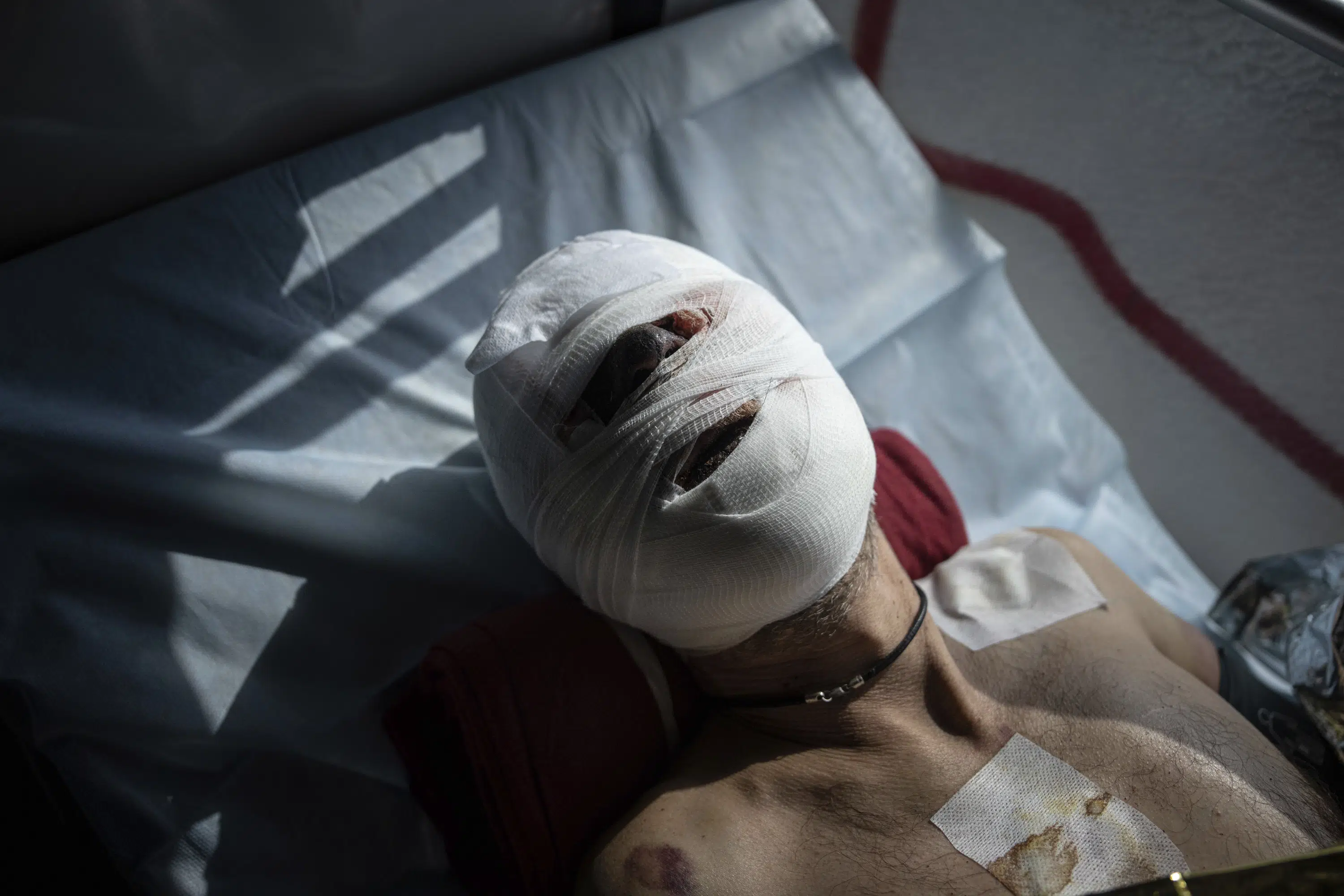
The Washington Post visited a military hospital in Ukraine where soldiers wounded in the ongoing war with Russia are treated. The hospital receives wounded soldiers 24 hours a day, with some arriving already stabilized and others near death. The doctors work to stabilize the most severely wounded soldiers before transferring them to hospitals further from the front to free up beds for new arrivals. The soldiers have gruesome wounds, including shrapnel injuries, and cope with the pain through humor.
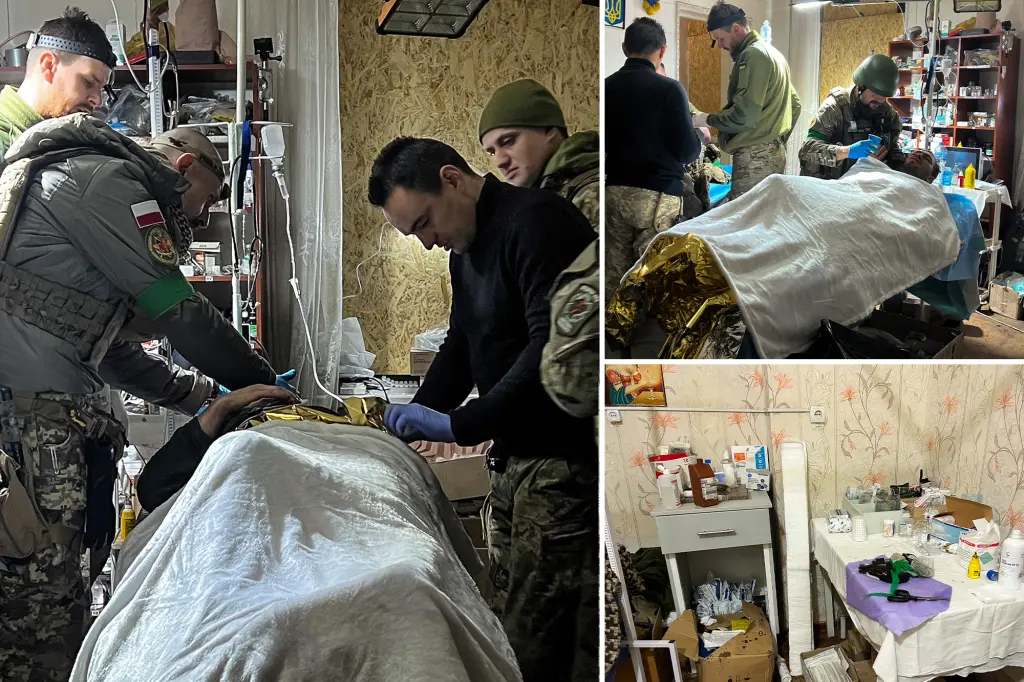
An abandoned building near Bakhmut has been transformed into a frontline hospital to treat Ukrainian soldiers wounded in the months-long battle. About 90% of casualties have come from shrapnel injuries, with another 4-5% from bullet wounds. The makeshift hospital is staffed by 20 medics, some of whom have not left the basement for over a month. Despite suffering between 100-200 casualties per day, Ukraine has continued to hold the city of Bakhmut.
Wounded soldiers, including a Russian national fighting on the side of Ukraine, were evacuated from the eastern Donetsk region, where Russian forces have been making advances. The soldiers were stretchered into a medical evacuation bus by members of the Hospitallers, a Ukrainian organization of volunteer paramedics who work on the front lines. The battle in Bakhmut, a city now encircled on three sides by Russian troops, has been particularly bloody, with soldiers describing endless days of combat, often at close quarters. The medically equipped bus can carry six severely wounded patients on stretchers, and several more walking wounded.
Wounded soldiers, including a Russian national fighting on the side of Ukraine, were evacuated from the eastern Donetsk region, where Russian forces have been making advances. The soldiers were stretchered into a medical evacuation bus by members of the Hospitallers, a Ukrainian organization of volunteer paramedics who work on the front lines. The battle in Bakhmut, a city now encircled on three sides by Russian troops, has been particularly bloody, with soldiers describing endless days of combat, often at close quarters. The medically equipped bus, named “Austrian,” can carry six severely wounded patients on stretchers, and several more walking wounded.