The World Economic Forum announced its 2025 Technology Pioneers, highlighting companies innovating in areas like AI, robotics, quantum computing, and sustainable solutions to address global challenges such as climate change, food security, and energy. These startups are developing breakthrough technologies to shape the future, with a focus on reducing environmental impact and advancing space and energy solutions.
A video of elites at the World Economic Forum discussing the environmental impact of coffee production has sparked outrage on social media, with many criticizing the discussion as an attempt to regulate something people love. Swiss banker Hubert Keller's comments on the CO2 emissions from coffee production and the potential impact on coffee growers have drawn sharp criticism and accusations of a power grab. Critics argue that the discussion is part of a larger plan to make people feel guilty for existing and to change their purchases to products owned by WEF-connected billionaires.
Georgia Governor Brian Kemp opposes a state Senate investigation into Fulton County District Attorney Fani Willis' alleged misconduct, instead advocating for tweaking the law that created the Prosecutors' Oversight Commission. Meanwhile, Kemp discussed his trip to the World Economic Forum in Davos, Switzerland, where he promoted Georgia to potential investors and emphasized his legislative agenda focused on the budget, pay raises for state employees, teachers, and law enforcement, income tax cuts, and infrastructure repair.
Tech executives at the World Economic Forum discussed the potential arrival of artificial general intelligence (AGI), with some believing it could be developed in the near future. However, there is uncertainty about what AGI will look like and how it will be integrated into society. Concerns were raised about the risks and opportunities presented by AI, including lack of transparency, job losses, social manipulation, surveillance, and data privacy. Executives also emphasized the need for responsible stewardship of AI technology and the importance of addressing safety and ethical concerns. Some experts cautioned that while AI has made significant progress, it still lacks common sense and reasoning abilities.
The CEOs of Qualcomm, HP, and Workday, along with Black Eyed Peas star will.i.am, discussed the future of AI at the World Economic Forum in Davos. They foresee AI becoming integrated into workplaces and the internet in 2024, leading to profitability for AI companies and increased dominance for tech giants like Microsoft, Alphabet, and Amazon. The CEOs highlighted AI co-pilots, AI-powered PCs, and AI applications in automotive and music, while emphasizing the potential for AI to transform various industries.
The World Economic Forum in Davos showcased the shifting global power dynamics, with India and the Middle East making a strong presence, while China made a subdued impression. Discussions revolved around topics such as artificial intelligence and the disruption to global shipping caused by Houthi attacks on vessels in the Red Sea. The event also highlighted concerns about the impact of technology on jobs and inequality, as well as the potential for a pickup in dealmaking and the uncertain future of global monetary policies.
The World Economic Forum in Davos concluded with a panel discussing the state of the global economy, acknowledging that while most countries have outperformed expectations, there are challenges ahead. The global economy is facing fractures, with a grim struggle for economic supremacy between Washington and Beijing, widening gaps between north and south, and challenges to liberal democracy. Despite this, globalisation is not dead, but is evolving into "glocalisation," characterized by shorter supply chains, emphasis on domestic manufacturing, and a more strategic role for government. The shift towards onshoring previously outsourced production has been accelerated by recent events, leading to a growing interest in industrial policy and green growth plans.
During a panel at the World Economic Forum, Singapore President Tharman Shanmugaratnam called for a global carbon tax as a solution to climate change, emphasizing the need for a coordinated system of carbon taxes, subsidies for vulnerable households, and funding for developing countries. Saudi Arabia's finance minister expressed agreement with the need for solutions to address climate change but highlighted challenges in implementing a carbon tax and redirecting funds to low-income countries. Germany's finance minister suggested a carbon market as an alternative to a carbon tax, proposing that countries could invest in renewable energy production in developing countries as part of emissions compensation.
The World Economic Forum (WEF) and its founder, Klaus Schwab, have come under scrutiny for fostering cronyism and elitism, with concerns raised about the organization's future after Schwab. Critics argue that WEF has become an exclusive networking club for the mega-rich and super-powerful, perpetuating an unaccountable system that doesn't reflect the needs of all society. The organization's invite-only policy to its annual event has also drawn criticism, as well as its calls for a greener global economy juxtaposed with the use of private jets emitting high levels of carbon. Additionally, Schwab's association with the global elite and the concept of "the Great Reset" have sparked controversy amid widening wealth disparities.
At the Davos World Economic Forum, Argentina's President Javier Milei warned that the Western world is in danger due to the embrace of socialism, while Heritage Foundation President Kevin Roberts criticized the attendees for being part of the problem. Former President Trump found support from JPMorgan Chase CEO Jamie Dimon, who praised Trump's handling of the economy and China. Blackstone CEO Steve Schwarzman expressed doubts about the Biden administration's approach to various issues and its ability to handle a second term, while Greece's Prime Minister Kyriakos Mitsotakis cautioned against alienating populist voters. Open Society Foundations Chairman Alex Soros criticized the "Davos consensus" and discussed the potential return of Donald Trump to the presidency.
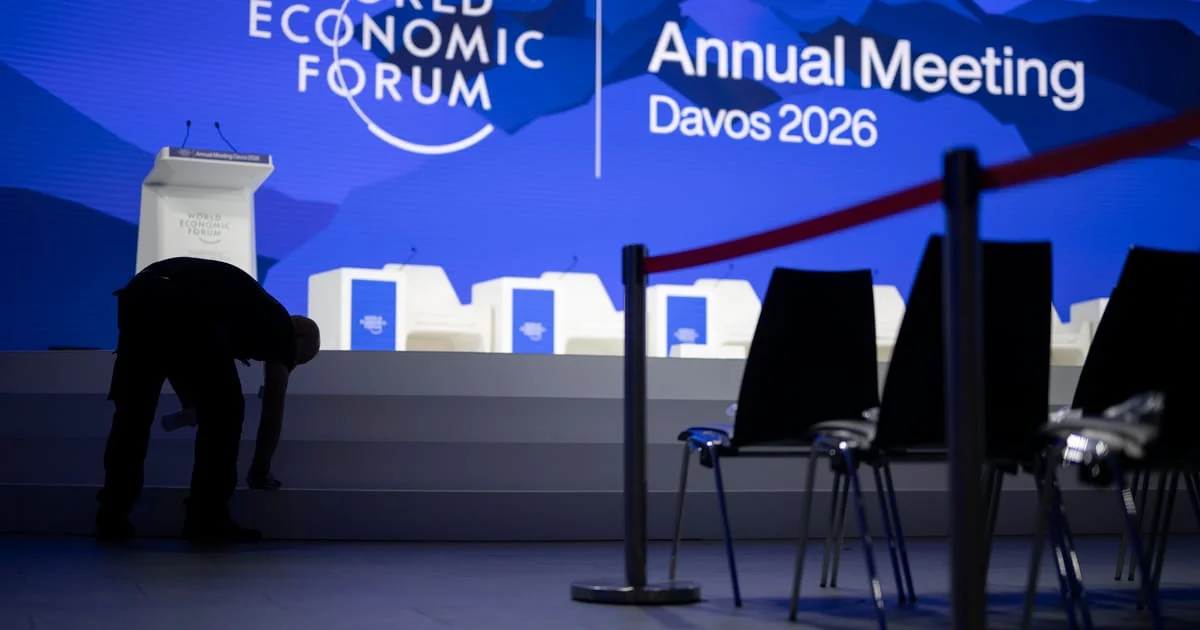
The 2024 World Economic Forum in Davos brought together 3,000 participants, including business leaders, heads of state, and academics, to discuss pressing global issues. Key takeaways included concerns about geopolitical instability, upcoming elections in democratic countries, the impact of climate change on human health, the importance of preparing data for artificial intelligence, and discussions around the future of AI, with OpenAI's CEO expressing hopes for significant advancements in the next decade.
WHO Director-General Tedros Adhanom Ghebreyesus has urged countries to sign a pandemic treaty to prepare for the potential arrival of Disease X, a future pandemic that could be 20 times deadlier than COVID-19. At the World Economic Forum, health officials warned that Disease X has the potential to kill 50 million people and emphasized the importance of proactive measures to save lives and costs. Disease X is not a specific illness but represents a potential unknown virus that could pose a serious threat, and the WHO has already begun implementing measures to prepare for another outbreak.
The annual meeting of the World Economic Forum in Davos, Switzerland, saw a significant focus on the regulation of artificial intelligence, with discussions emphasizing the need to proactively manage the potential risks and unintended consequences of new technologies, as highlighted by Microsoft CEO Satya Nadella.
The World Economic Forum in Davos, Switzerland, returned to its prepandemic form this year, with artificial intelligence emerging as a major theme, overshadowing the official theme of "rebuilding trust." Discussions centered on A.I.'s potential uses, risks including job losses and misinformation, and the financial opportunities in the climate transition, despite climate change not being a big focus of the event.
Corporate leaders are apprehensive about the upcoming global elections in 2024, particularly in countries with strong populist and nationalist sentiments, fearing potential instability and economic consequences. Despite concerns, there is a lack of concrete solutions from the business community to address societal polarization. The World Economic Forum highlighted worries about political polarization and its impact on global risks. The Davos crowd expressed unease about the potential return of Donald Trump and the uncertainty surrounding the U.S. election, with concerns about trade policies and investment decisions. Amidst the political climate, some business leaders are looking to renewable energy as an area where economic forces may overcome partisan resistance.