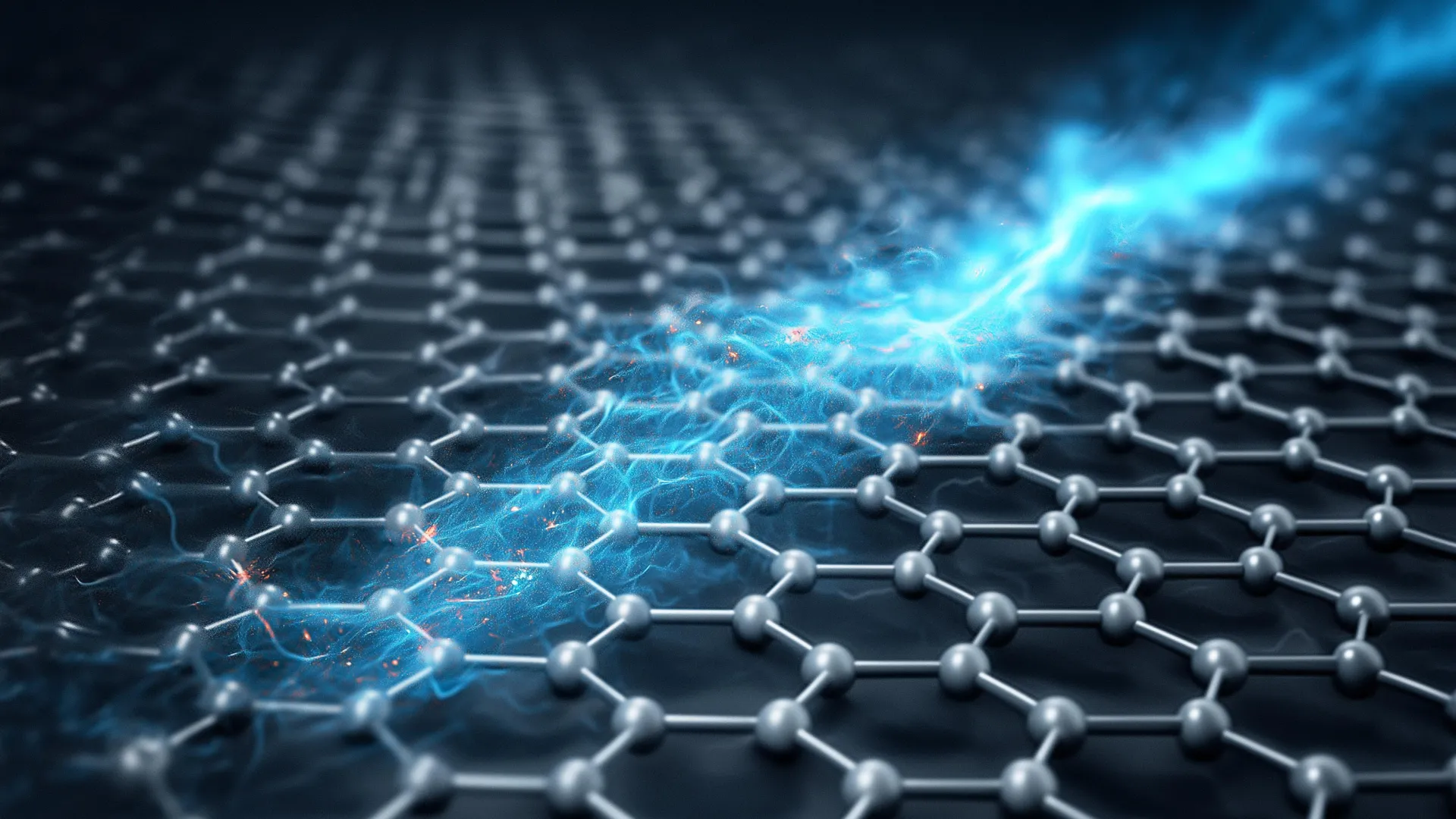
Scientists have discovered that when tuned to its Dirac point, graphene defies the Wiedemann–Franz law, showing an inverse relationship between thermal and electrical conductivity, and behaves like a nearly perfect quantum fluid, opening new avenues for research in high-energy physics and astrophysics.
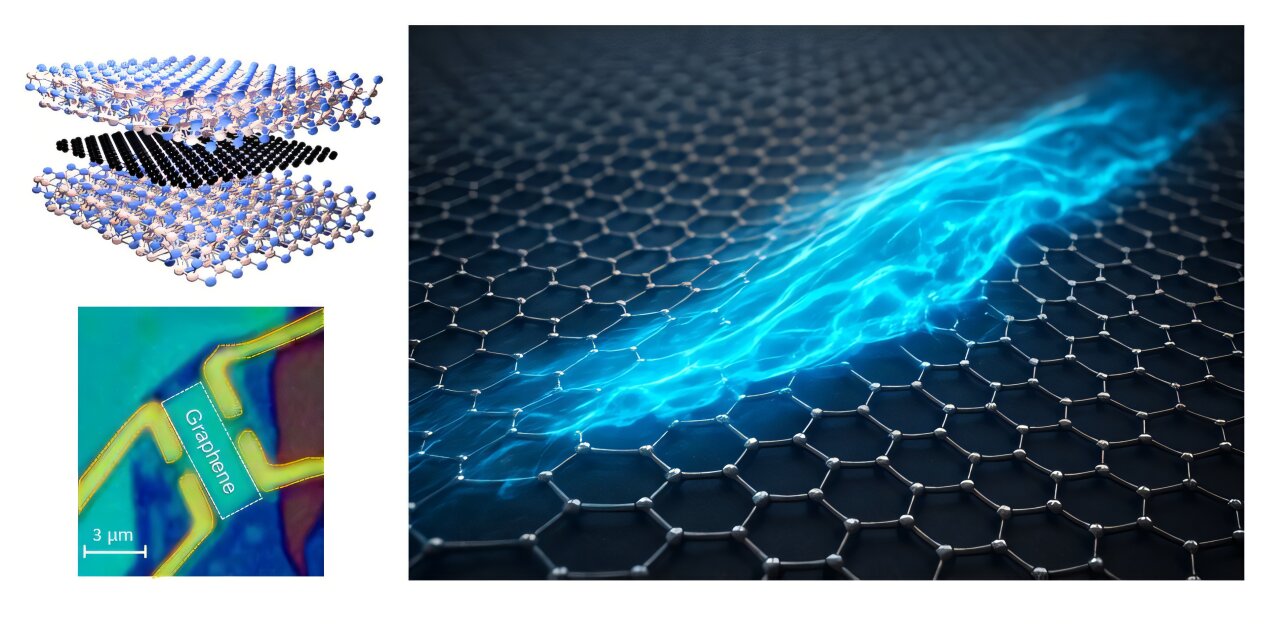
Researchers at IISc and collaborators have observed a quantum fluid of electrons in graphene, violating the Wiedemann-Franz law and revealing a Dirac fluid state with near-perfect fluidity, opening new avenues for quantum physics research and technological applications.
Scientists have discovered a 'Dirac fluid' in graphene, where electrons flow like a nearly perfect liquid, violating the traditional Wiedemann-Franz law and revealing a new exotic state of matter that could advance quantum technologies and fundamental physics research.
Researchers at IISc and collaborators have observed electrons in graphene behaving like a frictionless quantum fluid near the Dirac point, violating classical laws of conductivity and opening new avenues for quantum physics research and technological applications.
A theoretical study by researchers at SLAC National Accelerator Laboratory, Stanford University, and the University of Illinois suggests that the 170-year-old Wiedemann-Franz law, which relates the ratio of electronic conductivity to thermal conductivity in metals, still approximately holds for copper oxide superconductors (cuprates), a type of quantum material. The researchers propose that other factors, such as vibrations in the material's atomic lattice, may account for experimental results that make it seem like the law does not apply. This finding is significant for understanding unconventional superconductors and other quantum materials.