A new California law (AB 566) requires web browsers to offer an easy opt-out signal for users to prevent sharing or selling their personal data, potentially setting a national standard for online privacy and simplifying user control over data across the U.S.
The article discusses the recent surge of AI-powered browsers like ChatGPT Atlas, highlighting how AI is transforming traditional web browsing by enabling control over the browsing experience, and explores the broader implications for the tech industry, including device integration and corporate acquisitions.
California has enacted a law requiring web browsers to provide an easy-to-use, universal opt-out mechanism for consumers to prevent third-party data sales, making privacy controls more accessible and straightforward for Californians, alongside other privacy rights enhancements.
Originally Published 3 months ago — by Hacker News
Cap'n Web introduces a novel RPC system for browsers and web servers that leverages record-replay techniques and domain-specific languages to enable efficient, pipelined remote procedure calls, with special handling for arrays and functions, aiming to simplify distributed system communication while highlighting challenges like safety and protocol design.
Originally Published 3 months ago — by Hacker News
Cloudflare is supporting Ladybird and Omarchy, raising concerns about its intentions to promote approved browsers and potentially limit web access to a few dominant engines, which could threaten open standards and the open web. The article discusses the broader context of browser control, platform dependencies, and the influence of major tech companies like Google, Apple, and Microsoft on web standards and user choice.
Microsoft's Family Safety parental control service is mistakenly blocking Google Chrome and other browsers on Windows devices due to a bug, which also causes browsers to crash or shut down unexpectedly. The issue is linked to the web filtering tool and affects Windows 10 22H2 and Windows 11 22H2 or later. Microsoft is working on a fix and recommends enabling the 'Activity reporting' feature to mitigate the problem temporarily.
Mozilla has decided to remove the 'Do Not Track' feature from its Firefox browser, as it was largely ineffective and potentially counterproductive. The feature, which sent a request to websites not to track users, was often ignored and could even help websites identify and track users more effectively. This move follows Apple's similar decision to remove the feature from Safari in 2019, highlighting the ineffectiveness of self-regulation in online privacy.
The FBI has issued a warning to users of popular web browsers like Chrome, Safari, and Edge about a significant increase in online scams targeting holiday shoppers. With an 89% rise in fraudulent websites and 80% of shopping-related emails flagged as scams, the FBI advises vigilance during Black Friday and Cyber Monday. Common scams include non-delivery, non-payment, auction fraud, and gift card fraud, with significant financial losses reported. Shoppers are urged to be cautious of deals that seem too good to be true to avoid becoming victims.
As Firefox celebrates its 20th anniversary, Mozilla is refocusing efforts to restore the browser's market position, which has declined since the rise of Google Chrome. Interim CEO Laura Chambers emphasizes investing in Firefox's development and enhancing user experience, particularly through privacy-focused features and AI integration. Mozilla is also targeting younger users and leveraging the Digital Markets Act in Europe to increase mobile adoption. Despite financial reliance on a search deal with Google, Mozilla remains optimistic about its role in promoting competition and an open web ecosystem.
Twenty years ago, the Firefox browser, developed by the Mozilla Foundation, emerged as a significant competitor to Microsoft's Internet Explorer. Initially named Phoenix, the browser was rebranded due to trademark issues and officially launched as Firefox 1.0 on November 9, 2004. Its popularity grew due to fewer security vulnerabilities and innovative features like tabbed browsing and pop-up blocking. Firefox's release marked a shift in the browser market, challenging Internet Explorer's dominance and celebrating its 20th anniversary with new features and a special video.
The article discusses the author's long-term preference for Firefox over Chrome and Safari, highlighting Firefox's strong privacy features as a key reason. Unlike Chrome, which is criticized for its data tracking and advertising practices, Firefox, developed by Mozilla, prioritizes user privacy and is open source. The author also notes Firefox's cross-platform compatibility, which is a limitation for Safari, making Firefox the preferred choice for users who value privacy and use multiple operating systems.
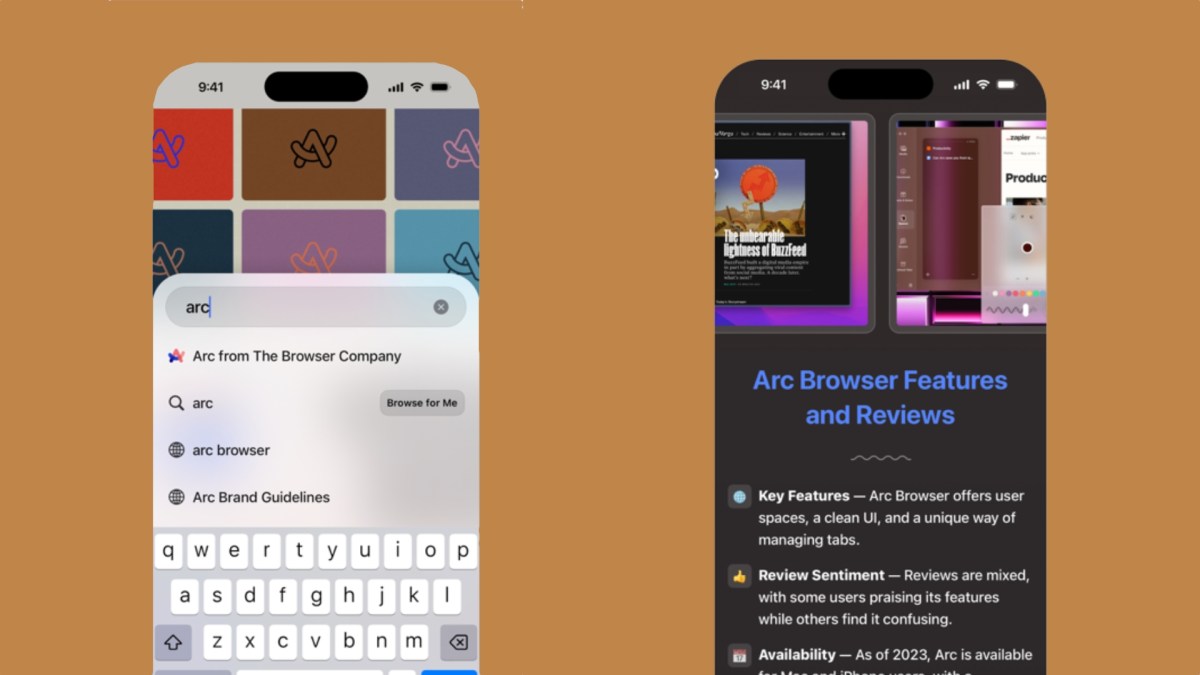
Apple may be planning to "sherlock" Arc Browser's AI-powered features like web page summaries with its upcoming "smart recaps" in iOS 18, potentially reducing the demand for alternative browsers. Despite this, The Browser Company remains optimistic and continues to innovate with new features.
Opera has integrated Google's Gemini AI models into its Aria AI extension, enhancing the browser's ability to provide up-to-date information and conversational responses. Aria, which already assists with tasks like answering queries and writing code, will now utilize various Gemini models, including the advanced Gemini Ultra, to optimize performance. This integration also introduces a read-aloud feature powered by Google's text-to-audio AI, similar to ChatGPT's Read Aloud. Aria is available on all Opera browsers, including Opera GX.
The latest edition of Installer No. 33 discusses the increasing presence of AI in web browsers, with Opera allowing users to download open-source AI models for local use, and Brave introducing its Mixtral-based chatbot, Leo, on iOS. The newsletter also features Jon Stewart's critique of AI hype, John Oliver's takedown of food delivery apps, and a recommendation for the Gotham City Lego set. Additionally, the community shares their current interests, including a transition from Artifact to Bulletin, a YouTube channel called Flavour Trip, and the game Peglin.
Google fixed two zero-day vulnerabilities in the Chrome web browser that were exploited during the Pwn2Own Vancouver 2024 hacking competition, addressing high-severity weaknesses in the WebAssembly and WebCodecs API. Mozilla also patched two Firefox zero-days exploited at the same event. The competition concluded with security researchers earning $1,132,500 for demonstrating 29 zero-day exploits and exploit chains over two days, with Manfred Paul emerging as the winner after taking down Apple Safari, Google Chrome, and Microsoft Edge web browsers.