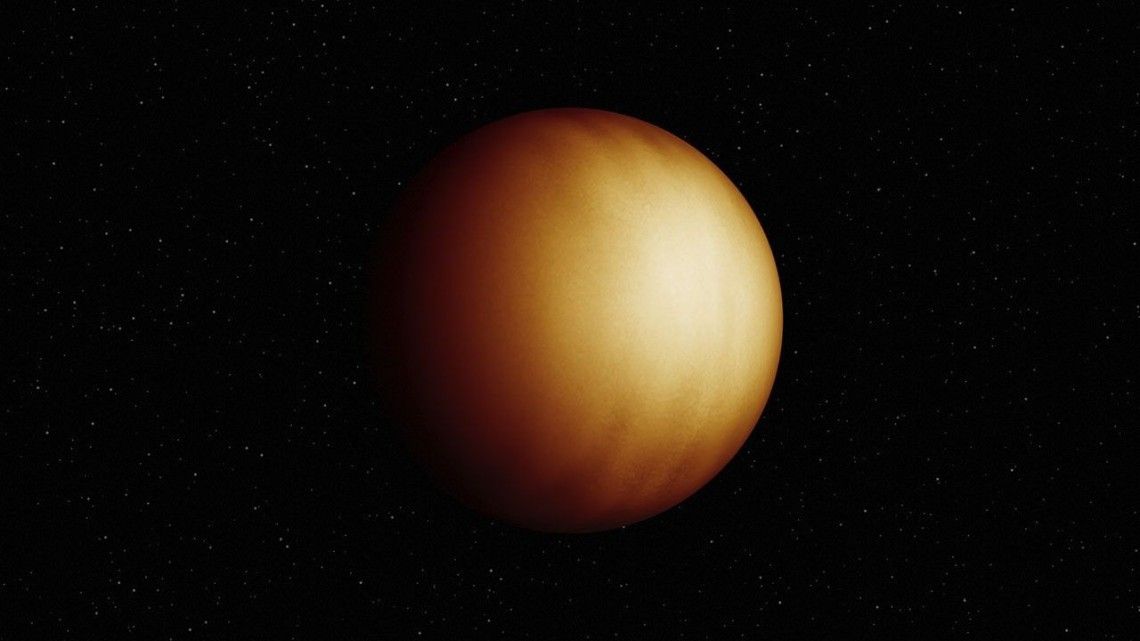
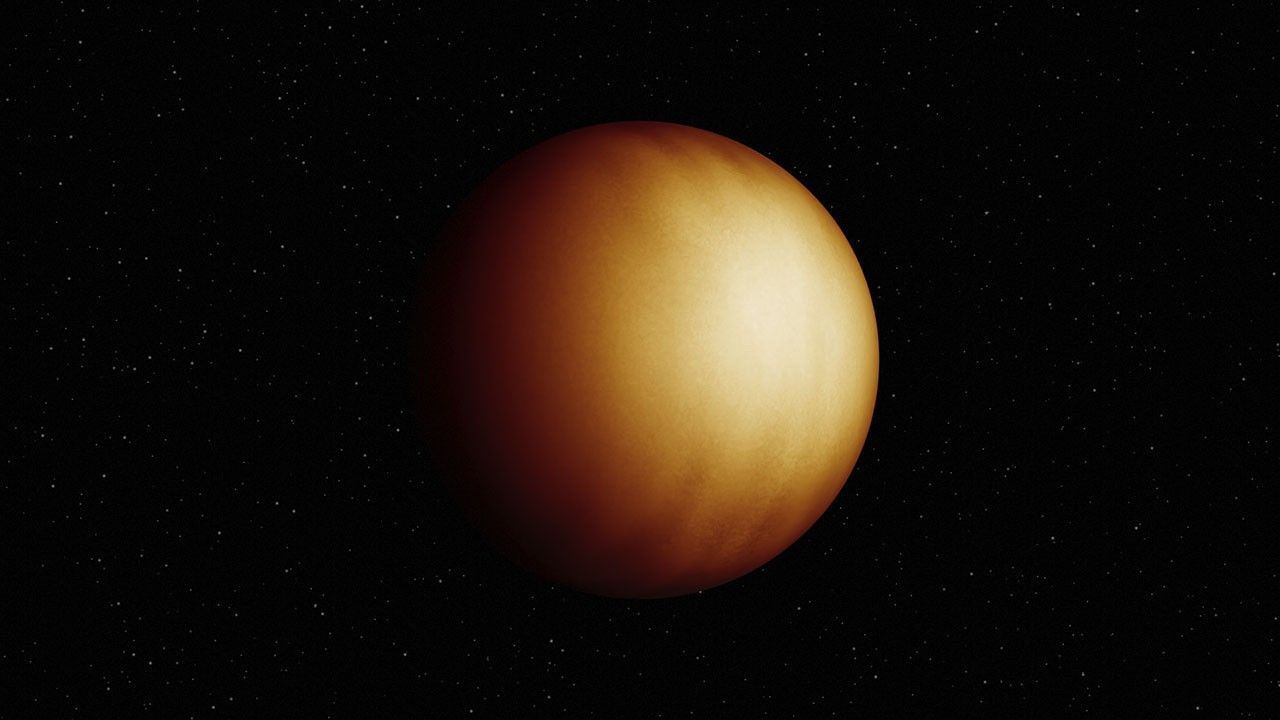
Scientists used the James Webb Space Telescope to create the first 3D map of an exoplanet's atmosphere, revealing temperature zones and water breakdown on WASP-18b, a hot, tidally locked gas giant 400 light-years away, with potential for mapping other distant planets.
Scientists used the James Webb Space Telescope to create the first 3D map of an exoplanet, WASP-18b, revealing extreme temperatures and water breakdown in its atmosphere, demonstrating a new technique for studying distant worlds.
The James Webb Space Telescope (JWST) has mapped the atmosphere of WASP-18b, an ultra-hot Jupiter, using its Near-Infrared Imager and Slitless Spectrograph (NIRISS). The researchers found that the planet is much cooler near the terminator line, indicating that winds are unable to spread heat efficiently to the planet’s nightside. The lack of winds moving the atmosphere around and regulating the temperature is surprising, and atmospheric drag has something to do with it. The researchers were also able to measure the atmosphere’s temperature at different depths and found water vapour at different depths. The JWST was able to reveal more about the star than just its temperature gradients and its water content. The researchers found that the atmosphere contains Vanadium Oxide, Titanium Oxide, and Hydride, a negative ion of hydrogen.