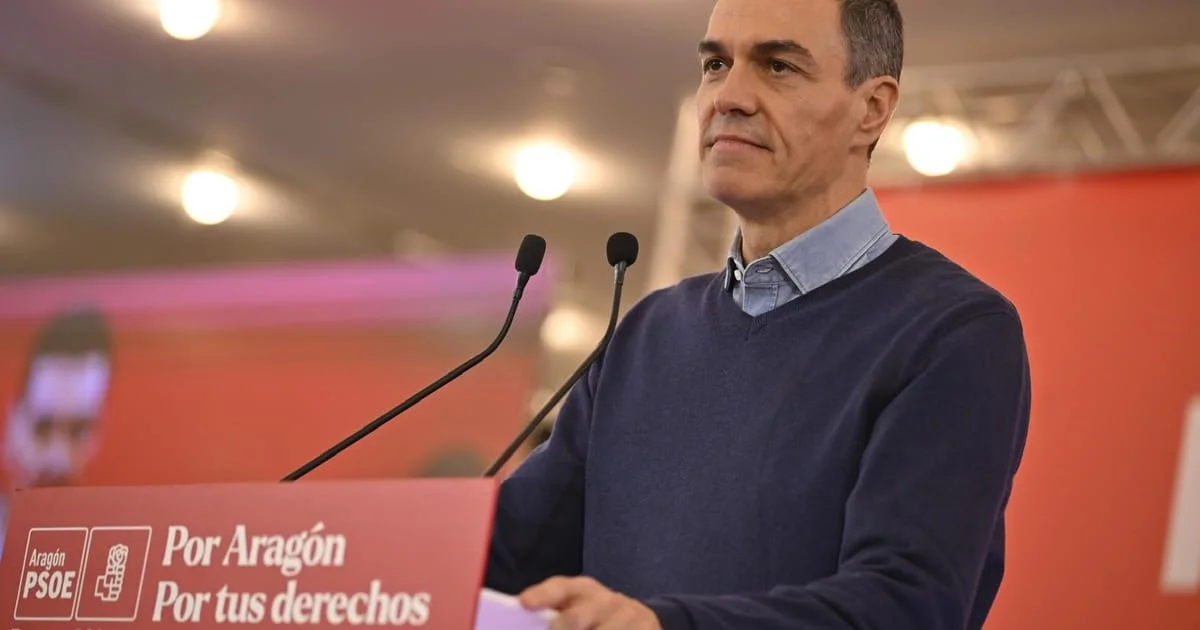
Spain's ruling Socialists suffered a historic defeat in the Extremadura regional election, losing ground to the conservative Popular Party and far-right Vox, amid corruption scandals and internal controversies, signaling challenges for the party's wider prospects.
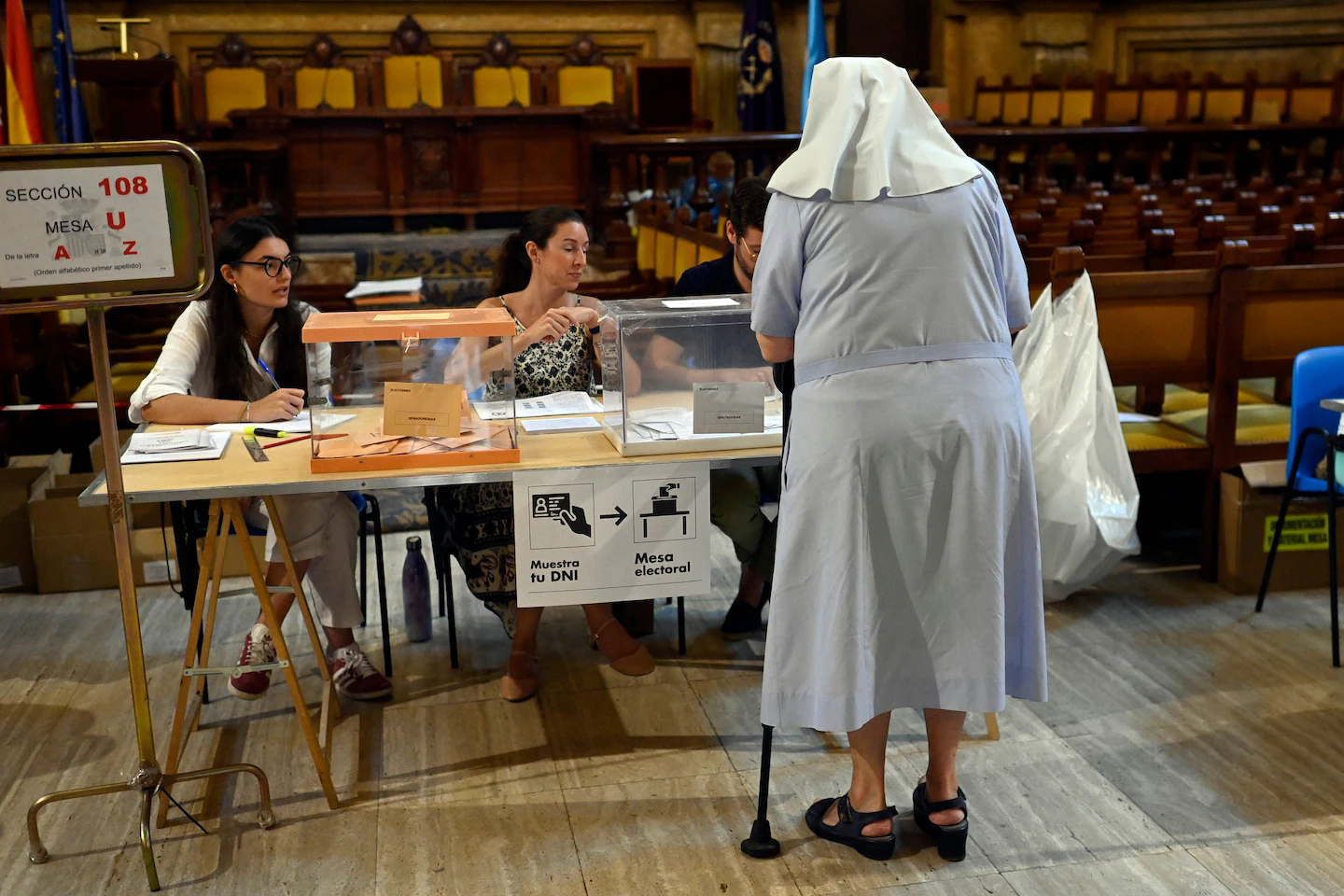
Extremadura's early regional elections, held on a rainy Sunday, are pivotal for Spain's political future, with polls favoring the PP and Vox, potentially shaping the national political landscape until 2027. Voter turnout and incidents at polling stations are notable, and the results could determine regional stability or coalition deals.
Vox's video recap of 2023 highlights major events such as the ongoing climate crisis, the Israel-Hamas war, and trends in entertainment like blockbuster movies and concert tours. The video serves as a reminder of the year's significant global shifts, celebrations, and tragedies. Additionally, Vox encourages reader contributions to support their mission of providing nuanced coverage and solutions to current issues, aiming for 95,000 individual contributions by year's end.
Spain has bucked the trend of the rise of far-right parties in Europe, as the recent elections showed a setback for the far-right Vox party. Despite forming coalitions with the conservative Popular Party in various regions, Vox lost seats and failed to form a coalition government at the national level. This contrasts with the success of far-right parties in other European countries. Experts suggest that Vox's radicalism and refusal to seek mainstream acceptance may have contributed to its decline in popularity, as it fueled a cultural war and targeted rights achieved in recent years.
Exit polls from Spain's parliamentary election indicate that the conservative party PP is likely to lead negotiations to form a new government, potentially ending the socialist rule of Prime Minister Pedro Sanchez. PP secured between 145 and 150 seats, followed by the socialist party PSOE. The far-right party Vox is in contention for the third-largest political force. The possibility of PP joining forces with Vox raises concerns due to Vox's controversial policies on LGBT rights, immigration, abortion, and climate change denial. The election, held during the summer, focused heavily on cultural and societal matters, despite Sanchez's strong economic record.
Spaniards voted in a highly charged election, with the left trying to hold back a predicted conservative wave that could result in the most right-wing government since the death of dictator Francisco Franco. The anti-LGBTQ+, anti-feminist, climate-denying Vox party could gain a foothold in the Spanish government, potentially becoming a kingmaker for the center-right Popular Party. The outcome of the election could shift the balance of power in Spain and have implications for progressive laws and the liberal consensus within the European Union.
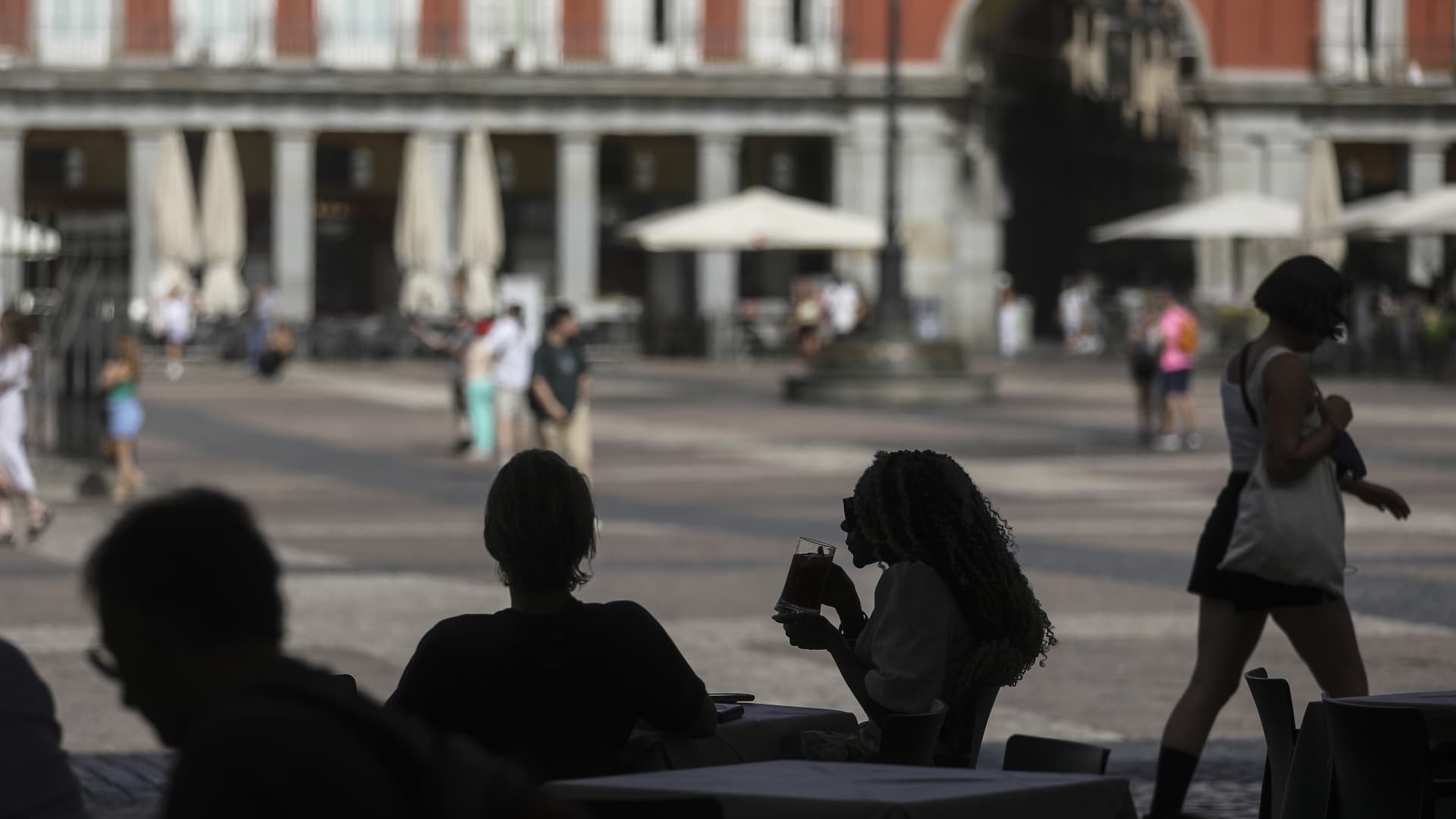
Spain is holding a major election that could potentially bring the far right party Vox to power for the first time since Francisco Franco's dictatorship. Polls suggest a conservative win for the PP, but they may need to form a coalition government with Vox. This scenario is seen as moderately market-positive. The election is focused on cultural issues such as nationalism, LGBT rights, and climate change. The outcome may also be influenced by recent heatwaves in Spain.
Spain is heading for elections, with the right-wing Popular Party (PP) expected to win the most seats but without a parliamentary majority. This could lead to a coalition government with the far-right Vox party, marking the first time a far-right party holds power since the end of Franco's dictatorship. The PP's campaign has faced challenges, including questions about its leader's ties to a drug trafficker. On the other side, the Socialists and a new left-wing movement called Sumar warn that a right-wing government would threaten Spain's post-Franco changes. Many voters are undecided, reflecting a sense of choosing the least bad option. The election results are expected to be close.
Hard-right leaders in the European Union are throwing their support behind Spain's far-right party Vox, aiming to increase their influence in Brussels. Vox, known for its anti-immigration and anti-European Union stance, has gained popularity in recent years and is now seeking to expand its presence in the European Parliament. This move by hard-right leaders highlights the growing influence of right-wing parties in European politics.
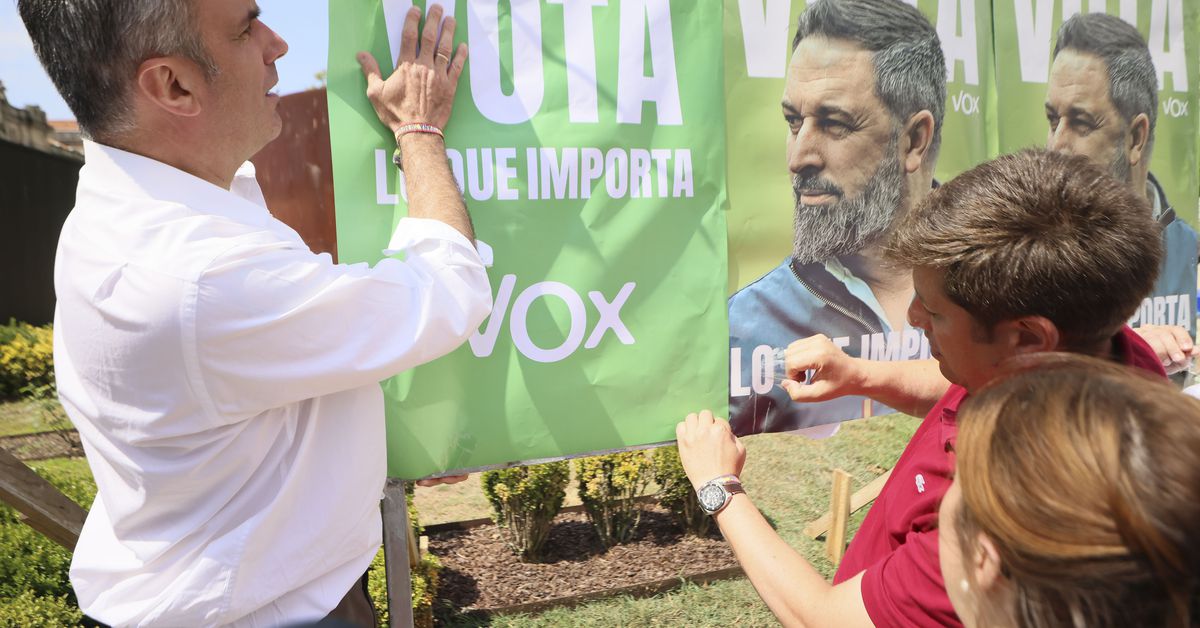
Spain's far-right party, Vox, could potentially become a junior partner in a conservative coalition government after the upcoming national elections. This would mark the first time in generations that the far-right has gained significant influence in Spain. Vox's platform includes anti-immigrant, anti-Muslim, and anti-LGBTQ views, and it advocates for policies such as banning abortion and reversing trans rights laws. While the Popular Party (PP) is expected to win the most seats, it will likely need Vox's support to form a government. If Vox enters the government, it could push for a rightward shift on various issues. Vox's rise in Spain mirrors the gains of far-right parties across Europe, potentially emboldening similar movements in other countries.
Spain is holding a summer election on July 23rd, a highly unusual timing that has been criticized due to scorching temperatures and millions of Spaniards being on holiday. The election comes after four years of left-wing rule, with Prime Minister Pedro Sánchez calling for the vote in response to a poor performance in the May local elections. The Popular Party (PP) under Alberto Núñez Feijóo is favored to win, but their lead has narrowed in the polls. Neither the PP nor the Socialists are projected to win enough votes to govern on their own, potentially requiring support from far-right party Vox or left-wing grouping Sumar. Key campaign issues include LGBT and gender rights, nationalism, and the economy.
After his party's defeat in regional and municipal elections, Spanish Prime Minister Pedro Sánchez has called for snap elections on July 23rd. The conservative opposition People's Party (PP) won in several regions, including one that has been held by the Socialists since 1978. The PP will need the support of the hard-right Vox to govern in most of the regions it has won. Sánchez's coalition partner, Podemos, was also pummelled, and parties to the left of the Socialists must reorganise themselves quickly.
Spanish Prime Minister Pedro Sanchez has called a snap election for July 23, in an apparent attempt to give his flagging Socialist party the best chance of retaining power before its support weakens further. His move to bring the election forward took most of his government and even some members of his inner circle by surprise. The conservative opposition leader Alberto Nunez Feijoo called on voters to make him Spain's next leader, while political experts said Sanchez had bet his rivals won't be ready to fight a coordinated campaign for the July 23 poll. The PP and the far-right Vox could unseat Sanchez's Socialist Workers' Party (PSOE) if they replicated their performance at national level.
Spain's opposition conservative People's Party (PP) is expected to make major gains in regional and municipal elections, strengthening its hold on Madrid and potentially taking the regions of Valencia and Aragón from the ruling Socialist Party. The elections will serve as a gauge of the political mood ahead of December's general election and are expected to signal a return to the two-party system. The PP has sought to use the elections as a referendum on the Socialist prime minister, Pedro Sánchez, and his style of government. The far-right Vox party is also expected to gain more power and be in more regional parliaments and councils than in 2019.
Spanish Prime Minister Pedro Sanchez survived a no-confidence vote brought by the far-right populist party Vox, with 201 lawmakers voting against the motion, 53 in favor and 91 abstaining. Sanchez accused the conservative Partido Popular (PP) of abstaining to appease Vox. The parliamentary debate was marked by acrimony, with legislators attacking each other over personal and policy issues. Vox leader Santiago Abascal said he was "satisfied" with the result, even though the motion did not go through.