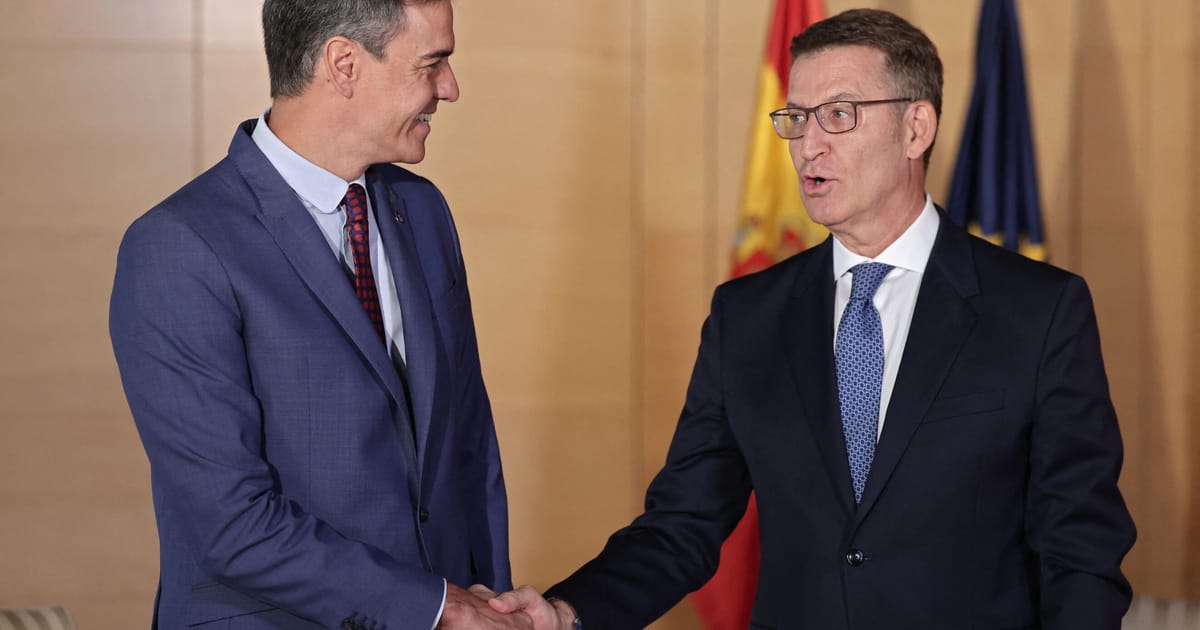
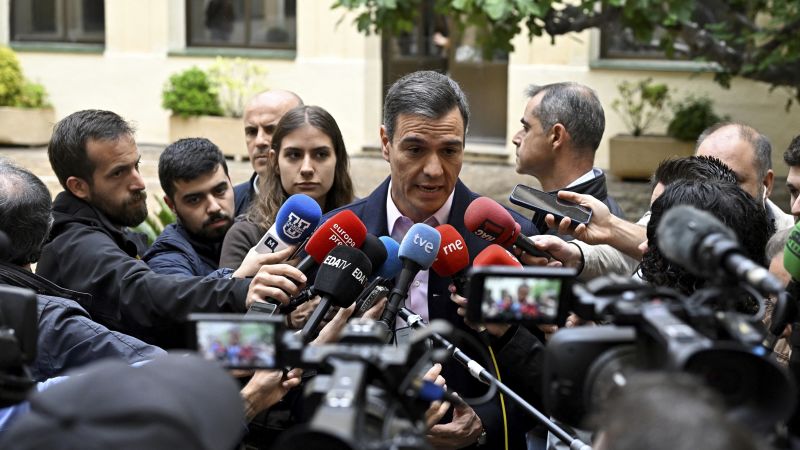
Spanish Popular Party leader Alberto Nunez Feijoo failed to secure enough votes to become prime minister in a vote by lawmakers. Feijoo's conservative party won the most seats in the July 2023 general election but has struggled to form a coalition government due to opposition to concessions for separatist parties. Feijoo will have a second vote on Friday, but his chances of being chosen are slim. If he fails, acting Prime Minister Pedro Sanchez may have a chance to stay in office with the support of regionalist parties, including those led by exiled former Catalan President Carles Puigdemont.
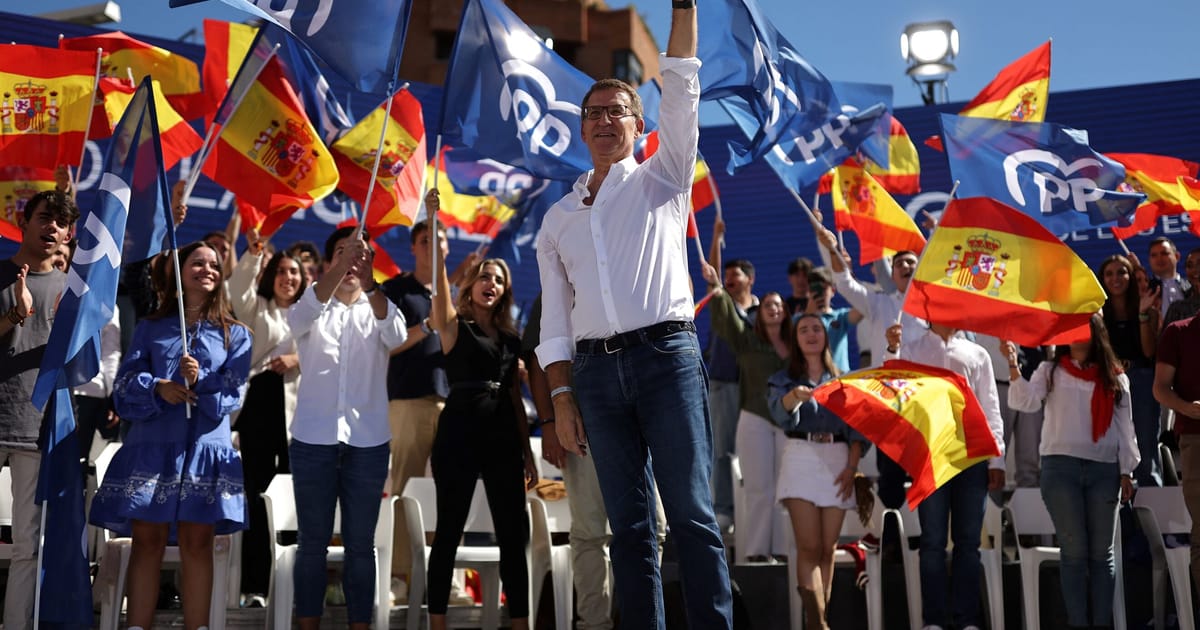
Alberto Núñez Feijóo, leader of Spain's Popular Party, is set to begin a two-day debate in parliament arguing that he should be the country's next prime minister. However, despite his party winning the most votes in July's national election, Feijóo lacks the necessary support to form a government. His bid is expected to be rejected, leaving caretaker Prime Minister Pedro Sánchez in the best position to retain control. Sánchez is currently negotiating with Catalan separatist groups to secure their support, but their demands, including a blanket amnesty and a new vote on self-determination, remain sticking points.
Alberto Núñez Feijóo, leader of Spain's center-right Popular Party, has asked caretaker Prime Minister Pedro Sánchez for support in his bid to become prime minister for a two-year term. Feijóo proposed that the two parties work together to pass major bipartisan legislation during this time, after which new elections would be called. However, Sánchez rejected the proposal, calling it a delusion and criticizing Feijóo for wasting time. The majority of Spanish MPs are expected to reject Feijóo's bid, and Sánchez is seeking support from the Catalan separatist group Junts to stay in power.
Spain's right-wing Popular Party (PP) won the snap general election but fell short of a parliamentary majority, securing 136 seats out of 350. The PP now needs support from several junior parties, including the far-right Vox party, to achieve a governing majority. However, even with Vox's support, they are seven seats short. The radical left-wing Sumar, which backed the Socialists, won 31 seats. Smaller region-specific parties, including the Catalan pro-independence parties, may play a role in forming a coalition. Failure to form a coalition could lead to another election.
Spain is heading for elections, with the right-wing Popular Party (PP) expected to win the most seats but without a parliamentary majority. This could lead to a coalition government with the far-right Vox party, marking the first time a far-right party holds power since the end of Franco's dictatorship. The PP's campaign has faced challenges, including questions about its leader's ties to a drug trafficker. On the other side, the Socialists and a new left-wing movement called Sumar warn that a right-wing government would threaten Spain's post-Franco changes. Many voters are undecided, reflecting a sense of choosing the least bad option. The election results are expected to be close.
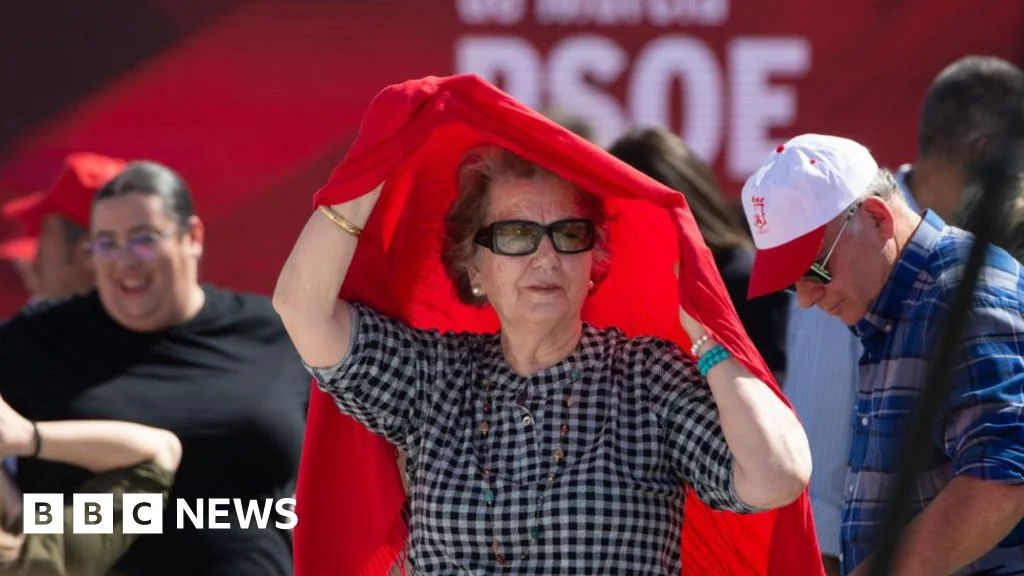
Spain is holding a summer election on July 23rd, a highly unusual timing that has been criticized due to scorching temperatures and millions of Spaniards being on holiday. The election comes after four years of left-wing rule, with Prime Minister Pedro Sánchez calling for the vote in response to a poor performance in the May local elections. The Popular Party (PP) under Alberto Núñez Feijóo is favored to win, but their lead has narrowed in the polls. Neither the PP nor the Socialists are projected to win enough votes to govern on their own, potentially requiring support from far-right party Vox or left-wing grouping Sumar. Key campaign issues include LGBT and gender rights, nationalism, and the economy.
Spanish Prime Minister Pedro Sanchez has called for snap parliamentary elections on July 23 after his ruling Socialists suffered major setbacks in regional and local elections. The conservative Popular Party made huge gains in Sunday’s elections, defeating incumbent Socialists in numerous key regional and city governments. Sanchez became prime minister in 2018 after winning a vote of no confidence in parliament against then-conservative Prime Minister Mariano Rajoy. Sanchez then won a general election in November 2019, but fell short of a majority and formed a coalition government with the leftist Podemos party, which also suffered setbacks in Sunday’s local elections.
Spain's ruling Socialist party is considering toughening legislation covering surrogate pregnancies after actress and presenter Ana Obregón, 68, used a surrogate mother in Miami to have a baby. Surrogate pregnancies are banned in Spain, although children from such pregnancies can be registered. The leftist coalition government has criticized the practice, while the main opposition conservative Popular Party has said it is open to debating legalizing such pregnancies if there is no payment involved. The issue of surrogacy may become a topic in Spain's election year.