US Defense Secretary Pete Hegseth visited Vietnam to reaffirm the longstanding partnership, focusing on healing war scars through artifact exchanges and cooperation on postwar issues, amid Vietnam's balancing of relations with the US, Russia, and North Korea.
Vietnam was surprised by the US's announcement of a 20% tariff on its exports, higher than the expected 10-15%, and is actively seeking to negotiate a lower rate while balancing relations with China and diversifying its markets amid ongoing trade tensions with the US.
Vietnam's proactive approach in negotiating a trade deal with the Trump administration has given it an advantage over regional rivals, with ongoing negotiations on tariffs and trade policies aimed at balancing relations with the US and China, and potential for significant US investment and defense deals.
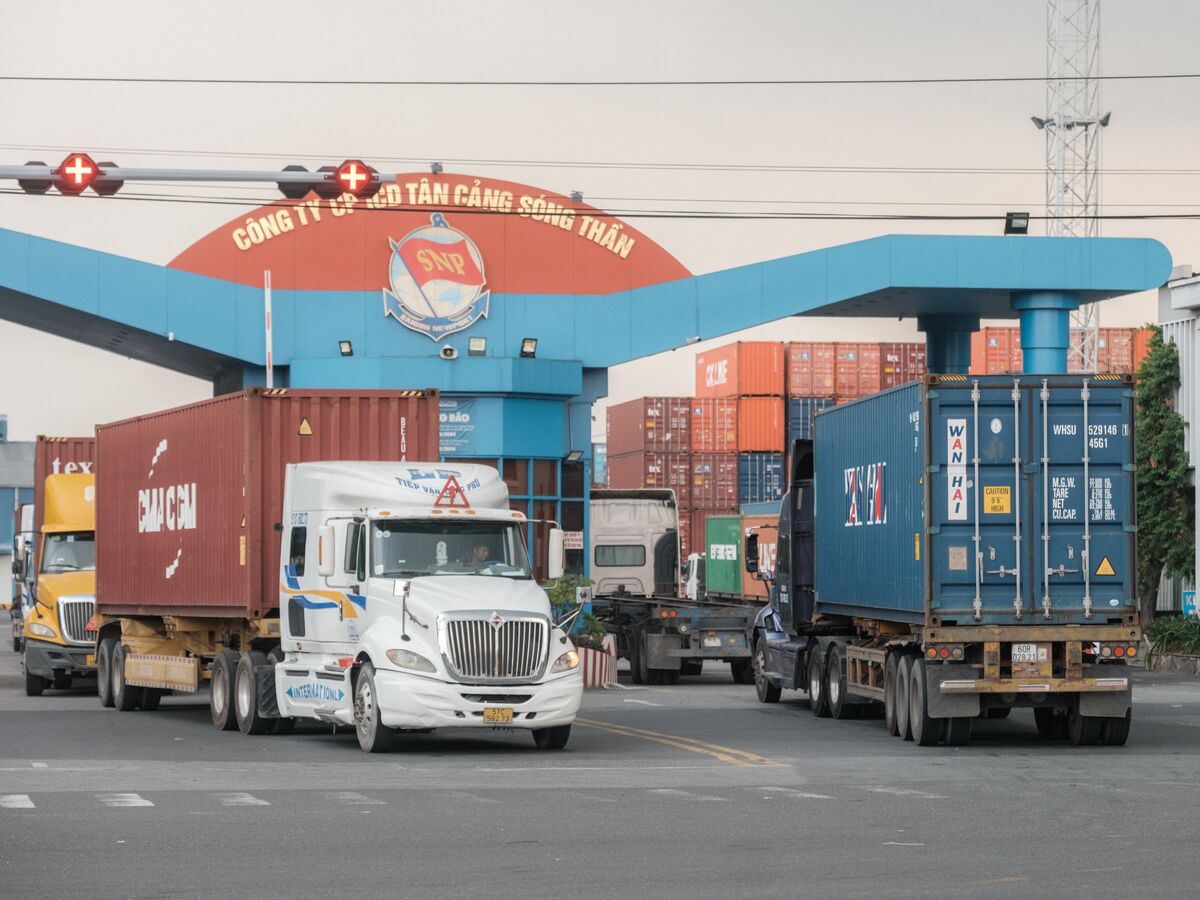
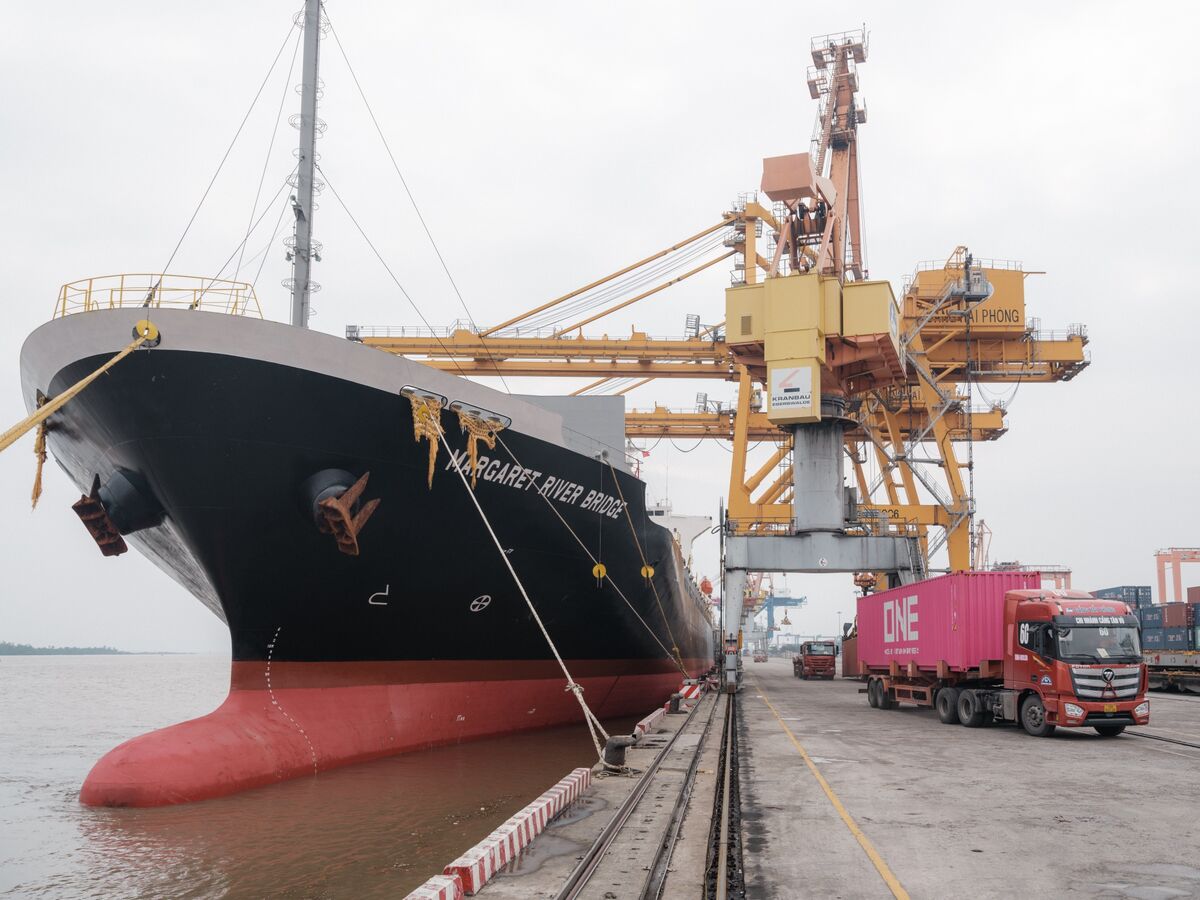
Vietnam is still finalizing the details of a trade deal announced by President Trump, which includes a 20% tariff on Vietnamese exports and a 40% levy on transshipped goods, amidst uncertainties about implementation and enforcement, especially regarding transshipment and tariffs' scope, with China expressing concern over the deal's implications.
President Trump announced a trade deal with Vietnam involving tariffs of 20% on goods from Vietnam and 40% on goods shipped through Vietnam, with the promise of increased market access for US products, particularly SUVs, though details remain unclear. This comes amid ongoing tariff negotiations and a history of growing US-Vietnam trade relations since 1994.
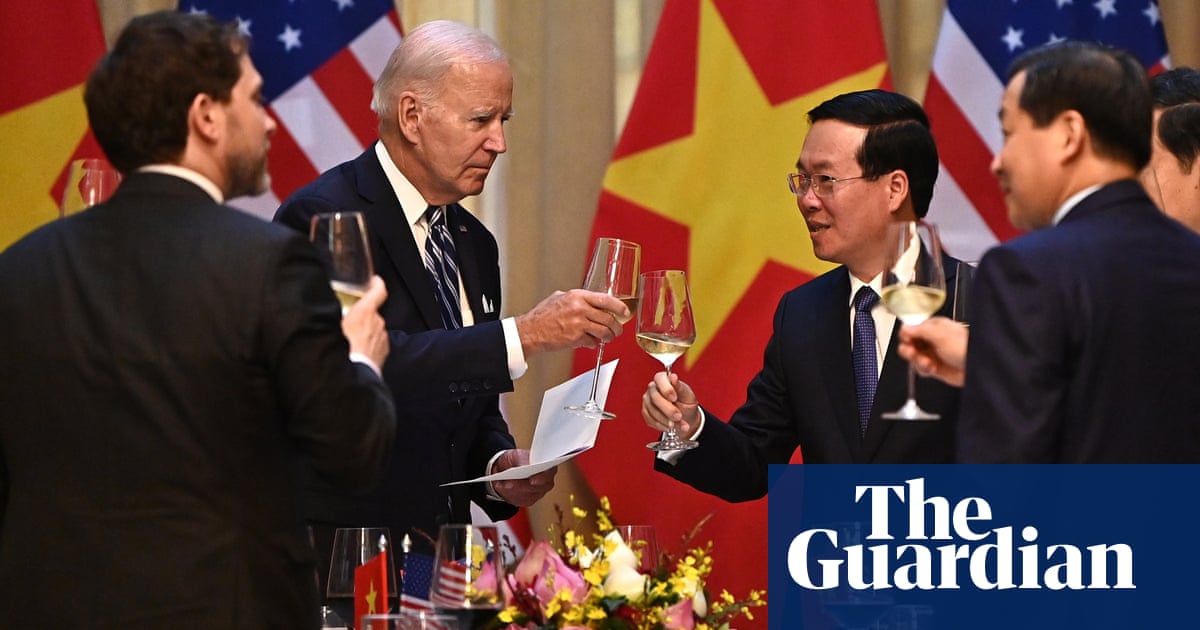
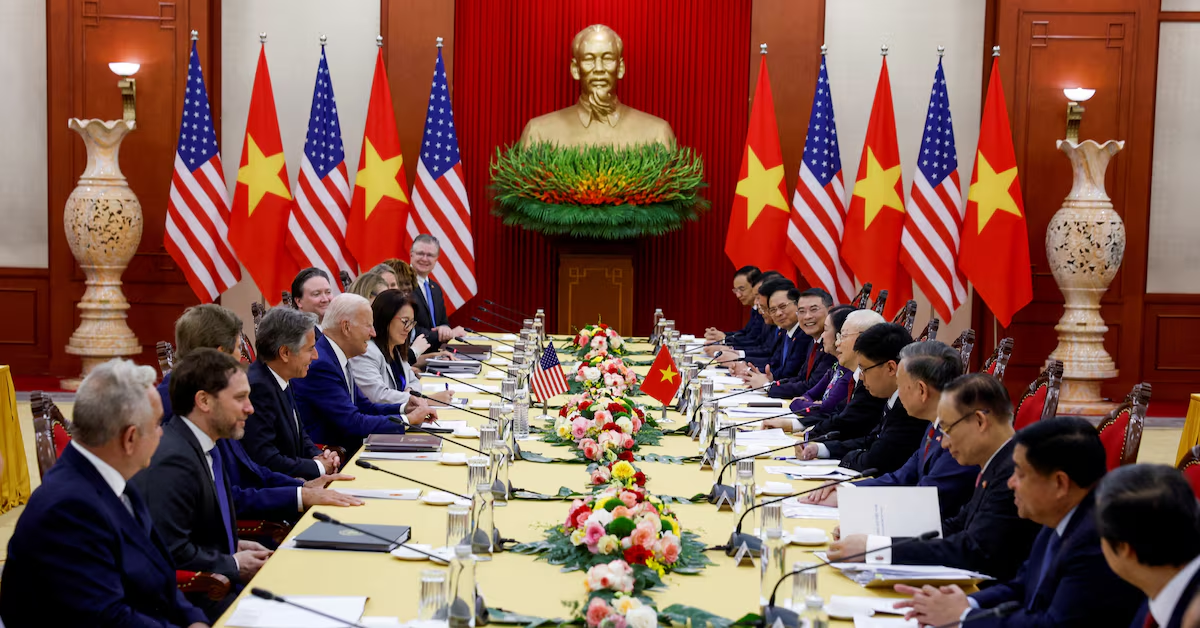
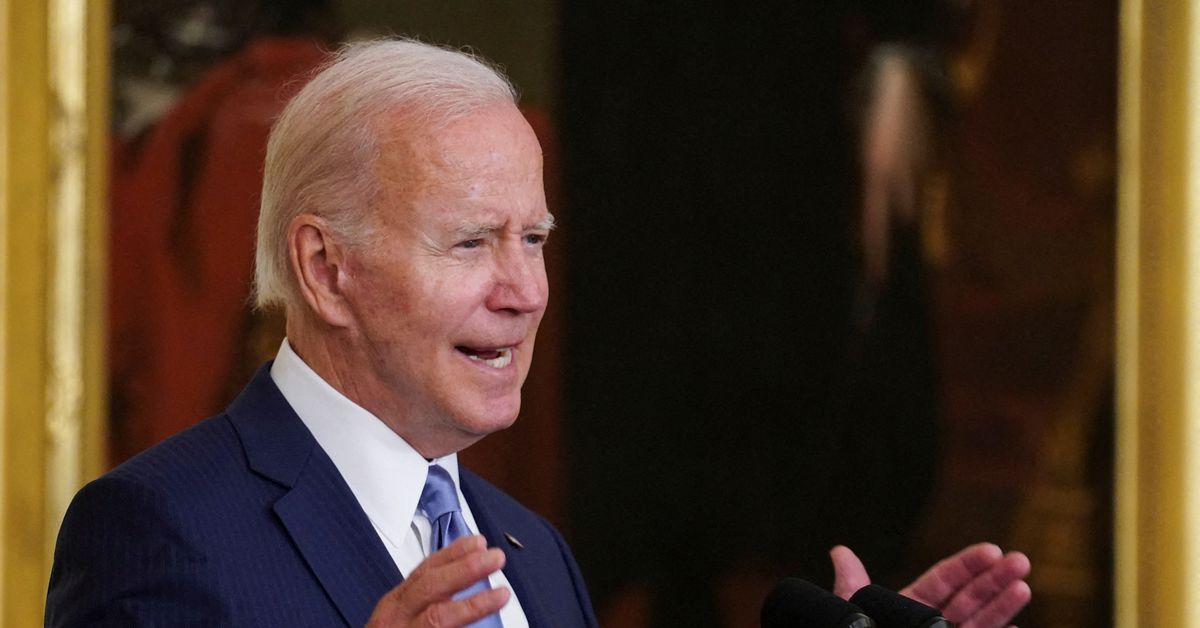
US President Joe Biden has upgraded diplomatic ties with Vietnam to a comprehensive strategic partnership (CSP), putting the US in the same category as China, Russia, India, and South Korea. The move comes as the US seeks to counter China's regional ambitions and strengthen economic cooperation in the Indo-Pacific region. The upgrade signifies Vietnam's importance as a key partner in the US endeavor to forge a resilient supply chain amidst escalating great power rivalry.
Executives from top U.S. and Vietnamese firms in the semiconductor, tech, and aviation sectors met during President Joe Biden's visit to Hanoi, discussing business partnerships and unveiling new deals. The meeting highlighted cooperation in cloud computing, semiconductors, and artificial intelligence, with a focus on reducing the sector's exposure to China-linked risks. Deals announced include Vietnam Airlines' purchase of 50 Boeing 737 Max jets worth $7.8 billion, Microsoft's plans for an AI-based solution tailored for Vietnam, and Nvidia's partnership with Vietnamese companies on AI. The White House also highlighted chip-related investments by U.S. firms in Vietnam, including the construction of chip design centers and the opening of a new Amkor factory.
The United States is expected to upgrade its diplomatic relations with Vietnam to the top level during President Joe Biden's upcoming visit to Hanoi, a move that may provoke China. Vietnam initially expressed caution about the upgrade due to concerns about China's reaction, but the Biden administration has made efforts to persuade the country. The upgrade is expected to boost economic cooperation, including potential announcements from companies like Boeing and AES. The U.S. is already Vietnam's largest export market, and trade procedures could be eased to further enhance trade.
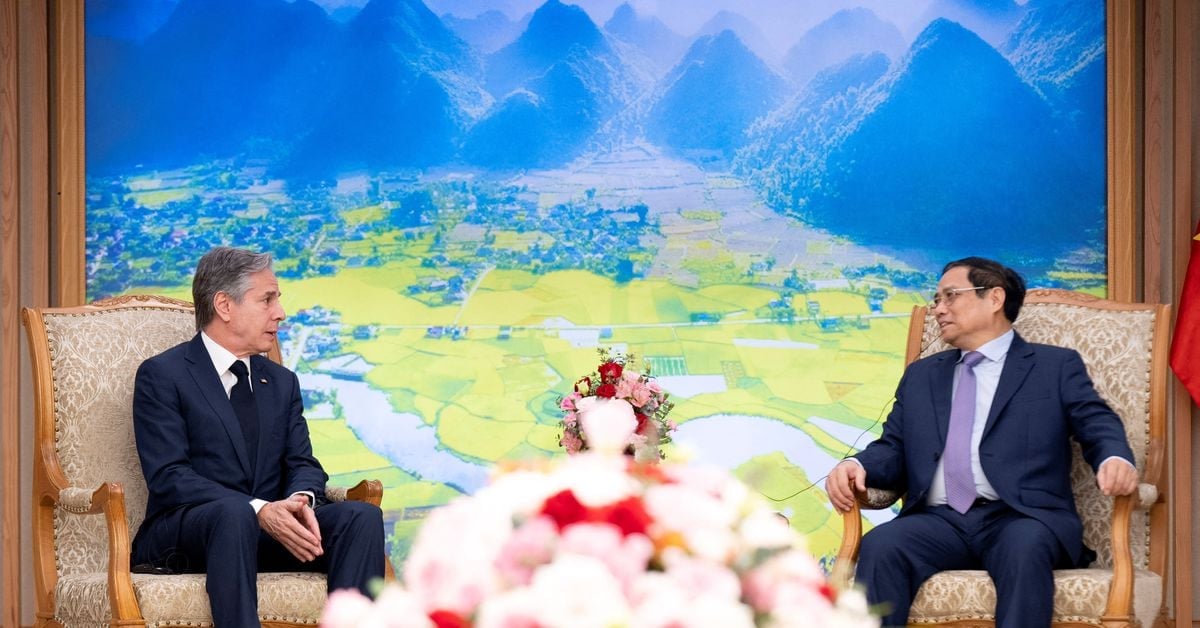
US Secretary of State Antony Blinken and Vietnamese Prime Minister Pham Minh Chinh expressed a desire to deepen and upgrade their ties during Blinken's first visit to Vietnam as the top US diplomat. The US seeks to solidify alliances in the region to counter an increasingly assertive China. Vietnam is a crucial Southeast Asian trading partner that Washington wants to bolster ties with, but for Hanoi, it has been a difficult balancing act between cooperating with Washington without upsetting Beijing. Blinken also emphasized the importance of human rights during his meeting with Chinh.