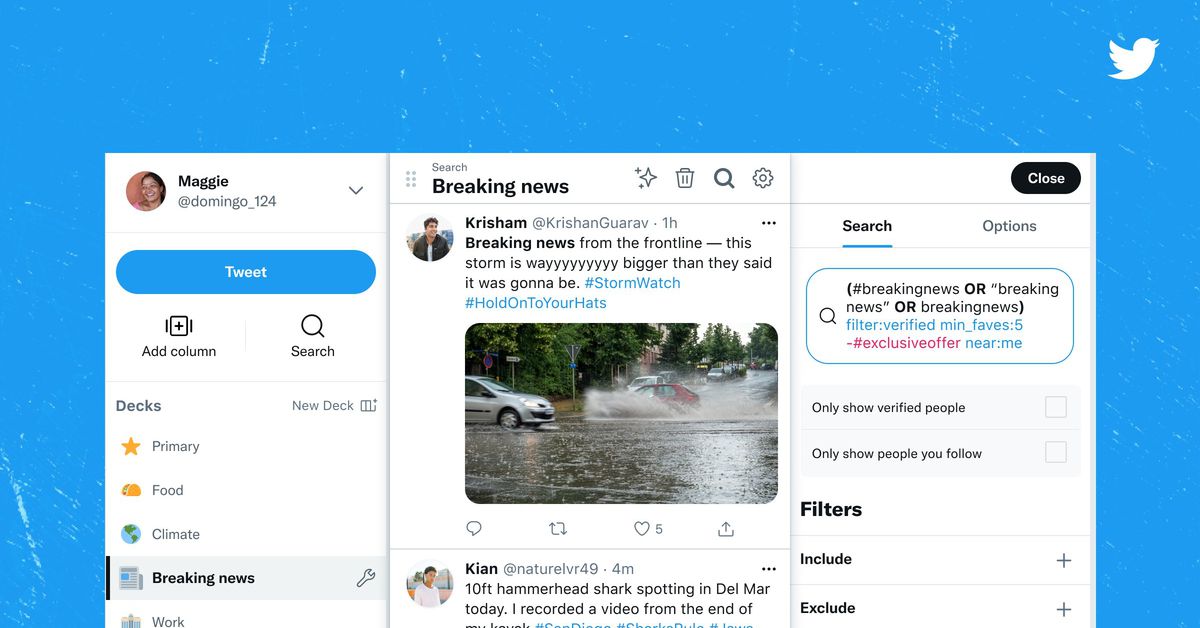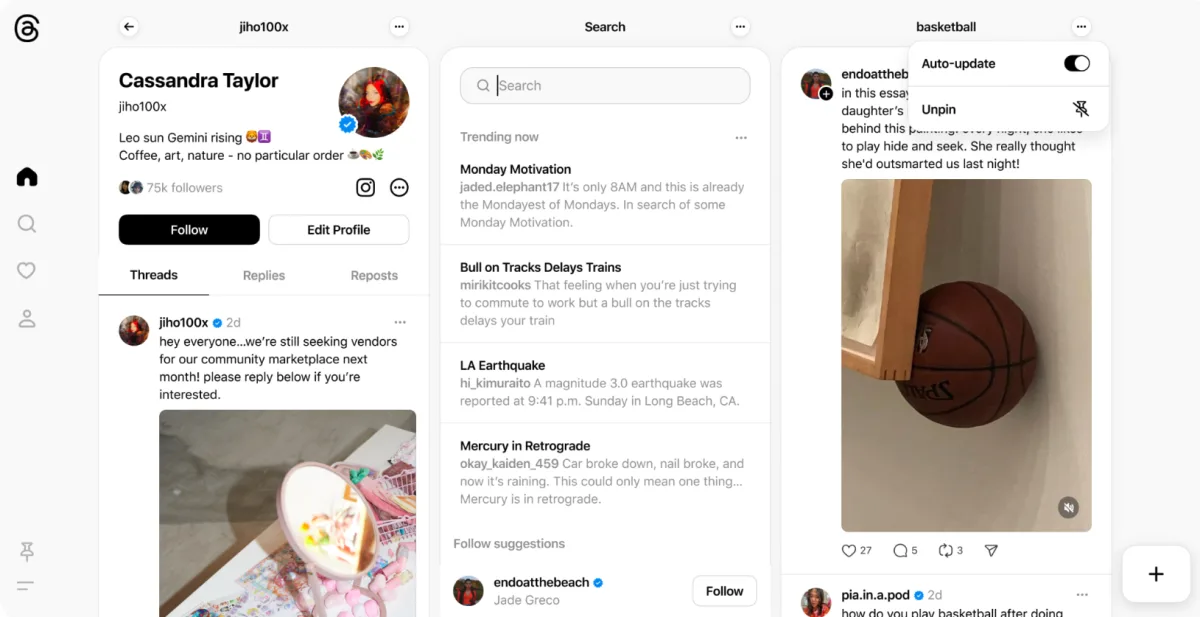
Meta has introduced a TweetDeck-like column view for Threads, allowing users to pin up to 100 different feeds and auto-update them. This new layout addresses user complaints about the "for you" algorithm by making it easier to hide and increasing the number of posts visible at once. The update also enhances the visibility of features like the "recent" filter and "trending topics."
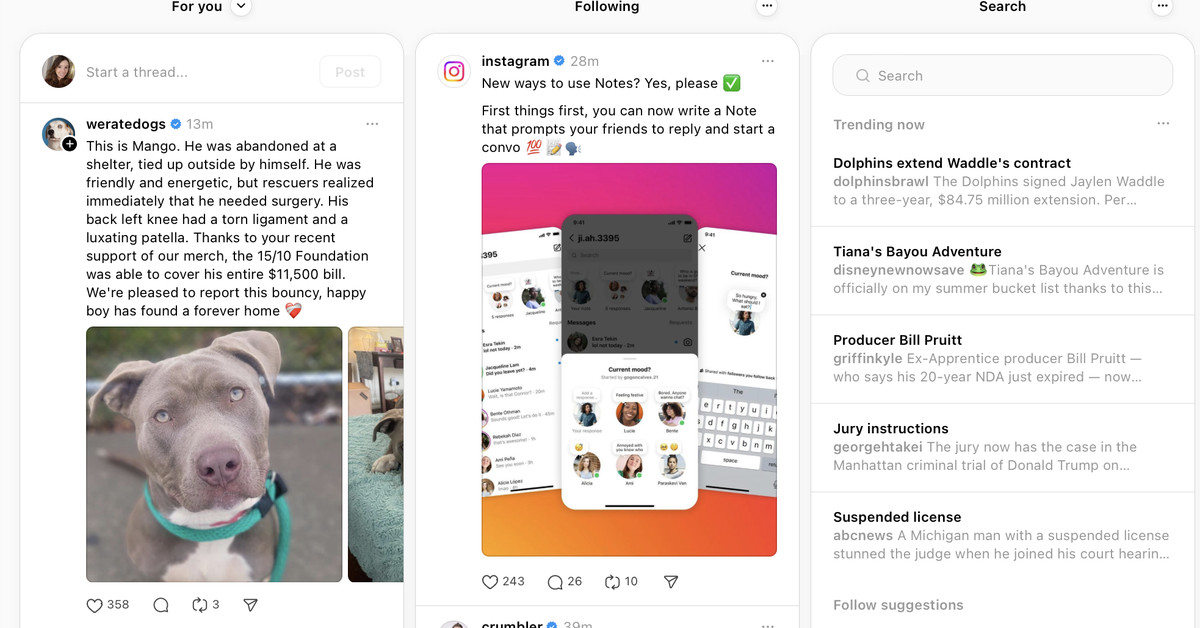
Threads is rolling out a new desktop site redesign globally, allowing users to customize their homepage with multiple feeds similar to TweetDeck. The new layout includes options to pin various feeds like Following, For You, saved posts, and notifications, and supports real-time updates. This feature is available for free, unlike the paid subscription model of TweetDeck's successor, X Pro.
Twitter has revoked free access to TweetDeck, a tool used by power users and journalists, redirecting users to sign up for X Premium, the subscription service formerly known as Twitter Blue. X owner Elon Musk had previously hinted at launching an improved version of TweetDeck with additional features. The move has sparked disappointment among users who relied on TweetDeck's ability to follow multiple feeds and lists simultaneously. Some users feel that Musk's changes are aimed at driving journalists away from the platform. This is part of Musk's efforts to generate revenue from users rather than relying on advertising, as he has made several changes since acquiring Twitter. The disappearance of free access to TweetDeck is seen as another example of Musk taking away valuable features.
Twitter, now known as X, has started charging users for access to TweetDeck, which has been renamed X Pro. Previously a free service, X announced in July that TweetDeck would become a subscriber-only feature. Users will now have to pay for X Premium, costing $84 a year, to access X Pro. Subscribers will receive additional features such as a blue checkmark on their account, prioritized rankings in replies and search, access to longer posts, and fewer ads. This move comes after Elon Musk acquired Twitter and initiated a rebranding effort, including changes to the names of Twitter's services.
TweetDeck, the popular social media management tool, has officially been rebranded as XPro. The new name is now visible on the TweetDeck landing page, although remnants of the old brand still remain. The rebranding is part of Twitter's larger transformation into X. While XPro is currently accessible to all users, it is expected to become a subscriber-only benefit in the near future. The full rebranding is gradually being implemented across the platform, including the Android and iOS apps.
Twitter has released a new version of TweetDeck, but after a 30-day trial period, only verified users, including Twitter Blue subscribers, verified organizations, and those gifted verification by Twitter, will be able to access the platform. The update includes features such as full composer functionality, Spaces, video docking, and polls, but Teams functionality is temporarily unavailable. The move comes after Elon Musk implemented rate limits on TweetDeck to prevent scraping, causing disruptions for users. Social media managers and brands may seek alternative platforms with better features as TweetDeck transitions to a paid product.
Twitter has launched a new version of Tweetdeck after the old version broke down due to recent limitations on the number of posts users could view each day. The new version, currently called "Tweetdeck Preview," restores basic functionality and supports features like saved searches, lists, and columns. However, it is unclear if the old version will be retired permanently, and there are indications that the new Tweetdeck may become exclusive to Twitter Blue subscribers in the future.
Google search results are no longer displaying tweets and pages from Twitter as effectively as before due to changes made by Twitter. Twitter has implemented restrictions on browsing tweets for unregistered users and introduced temporary limits on the number of tweets that can be read in a day. These changes have affected how Google crawls Twitter, resulting in fewer search results including a carousel of tweets. The number of indexed Twitter URLs in Google search has significantly decreased. It remains uncertain if the rate limits on tweets will be lifted, potentially restoring the usual amount of tweets in Google search results. Additionally, Twitter's recent changes have also impacted TweetDeck, leading to the launch of a new version and its availability as a Twitter Blue feature in the future.
Twitter is planning to force all TweetDeck users to switch to the "new" version due to recent issues with the legacy version. The old interface of TweetDeck is currently experiencing problems, with columns displaying a perpetual "Loading..." message. Twitter employees clarified that the issues are not caused by rate limits but rather by the removal of legacy APIs to prevent data scraping. The transition to the new version will begin this week, but users are expressing reluctance. Twitter's lack of communication about the changes and the mixed reception of the preview version raise concerns about the user experience.
Twitter's power-user interface, TweetDeck, is experiencing major issues after owner Elon Musk implemented limits on the number of tweets users can view daily. Users are reporting an empty interface, with notifications, mentions, likes, and lists failing to load. These problems are likely to impact professional and power users who rely on TweetDeck for brand building and reporting. The issues are believed to be related to the new tweet viewing limits announced by Musk, which were implemented to address data scraping and system manipulation. Twitter's main website and apps appear to be functional. This is the latest example of Twitter's reliability suffering, following previous outages and layoffs under Musk's ownership.
Twitter's apps, including Tweetdeck, are experiencing issues following Elon Musk's decision to cap tweet rates and require users to log in. Many users are reporting that Tweetdeck is no longer functioning properly, with columns showing a spinning wheel or repeatedly retrying 404s. Additionally, Google Search is displaying up to 50% fewer Twitter URLs due to the logged-in requirement. It is speculated that a bug in Twitter's web app is causing a "self-DDOS" effect. Twitter has stated that these restrictions are temporary but has not provided a timeline for their removal.
Elon Musk has implemented read limits on Twitter to prevent data scraping, but this has caused major issues for TweetDeck users, including notifications and columns failing to load. Initially, the limits were set at 6,000 daily posts for verified users and 600 for unverified users, but they were later increased to 10,000 and 1,000 respectively. The effects of these restrictions are amplified within TweetDeck, which loads multiple tweets simultaneously. Users have reported errors and issues with various columns. The future of TweetDeck under Musk's management remains uncertain, with rumors of it potentially becoming a paid feature. Twitter has also implemented restrictions on viewing tweets without a login to prevent data scraping.
Twitter Blue, the paid subscription service of Twitter, can be annoying to use as it prioritizes tweets of subscribers and shows them at the top of comment threads. Blue Lite Blocker, a free browser extension, can filter out comments from Twitter Blue subscribers without affecting the people you follow. Other workarounds include using the Following tab, blocking all retweets, and using TweetDeck. However, Twitter may try to find a way to break these tools as they want to turn Blue checkmarks into sellable status symbols.