
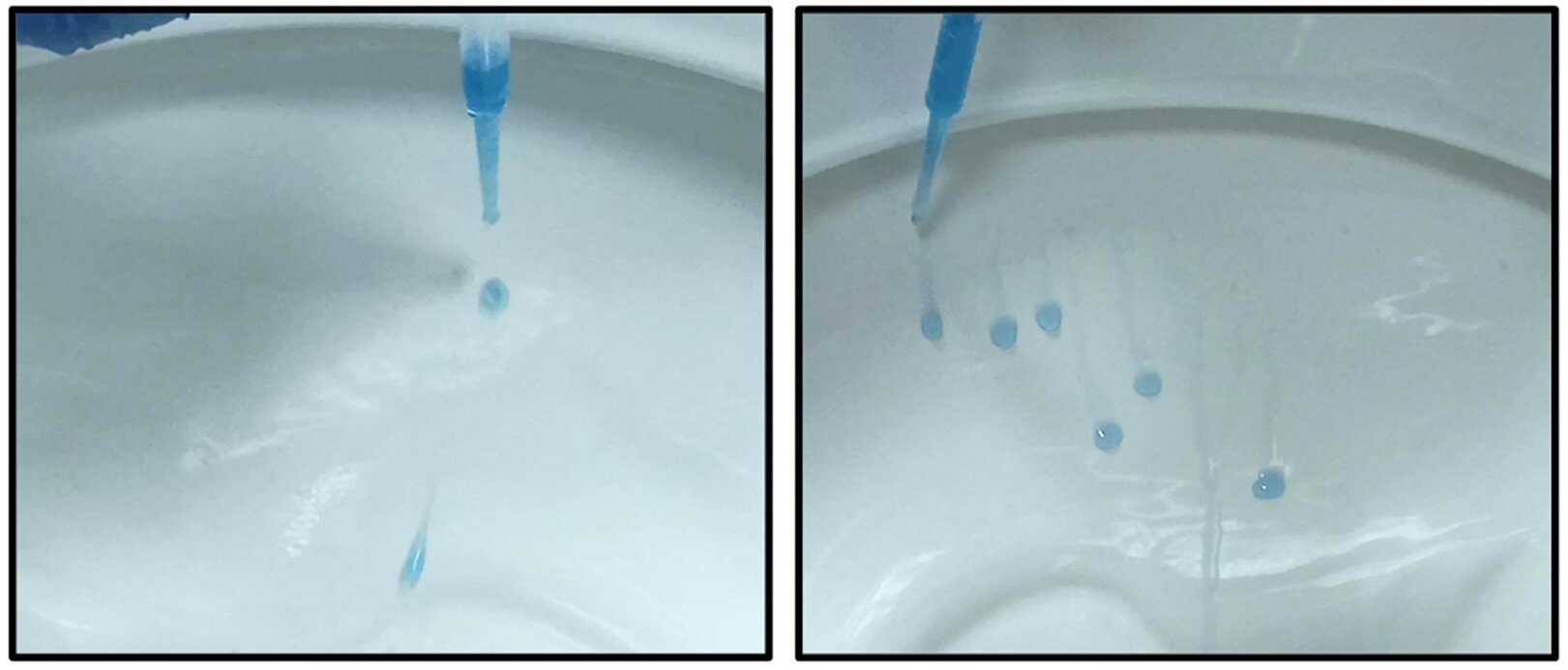
Researchers have developed a transparent and colorless coating that can be applied to toilet bowls, making them more water-repellent and preventing bacteria from sticking. The coating, made by grinding silicone oil in a ball mill, forms a durable, oily layer on the surface. Tests showed that the treated area inhibited 99.99% of bacterial growth compared to the untreated area. This self-sanitizing treatment could have practical applications for public health.
Scientists at Huazhong University of Science and Technology in China have developed an ultra-slippery toilet bowl that repels complex fluids and viscoelastic solids, making it impossible for anything to stick to it. The bowl remains slippery even after being used multiple times and rubbed with sandpaper. This new material could potentially reduce water usage for flushing and may have applications beyond toilet bowls, such as lunar toilets.
Vodka can be used as a natural disinfectant to clean and remove stubborn toilet bowl rings. Its cleaning properties make it effective in eliminating grime, mildew, and odors without leaving behind a strong smell. Simply pour ½ cup of vodka into the toilet bowl, scrub with a toilet brush, and let it sit for a few minutes. Vodka can also be used to disinfect other surfaces in the bathroom and remove tough grime marks on the floor.