Tether plans to raise up to $20 billion in a private placement, potentially valuing the company at around $500 billion, making it one of the most highly valued private companies and rivaling firms like SpaceX and OpenAI, as it seeks to expand its presence in the U.S. market.
Tether Holdings SA is in early talks to raise up to $20 billion for a 3% stake, potentially valuing the company at around $500 billion, making it one of the most valuable private companies globally, as it seeks to expand and return to the US market.
Tether has launched USA₮, a $169 billion market-cap stablecoin aligned with U.S. regulations, led by ex-White House crypto adviser Bo Hines, aiming to reinforce the dollar's dominance in digital finance through transparency and compliance, with partnerships ensuring secure reserves.
Tether launches USA₮, a U.S.-regulated stablecoin under the GENIUS Act, aiming for significant growth in the American market, while Circle rapidly increases USDC supply and Japan’s JPYC targets ¥1 trillion in stablecoin holdings, reflecting a global expansion in the stablecoin sector.
Tether, a major player in the cryptocurrency space, is planning to launch a new stablecoin aimed at the US markets, signaling ongoing developments in digital currencies and their regulatory landscape.
Tether announced the launch of USAT, a new dollar-backed stablecoin, with ex-Trump adviser Bo Hines appointed as CEO. The stablecoin aims to meet US regulatory standards and will utilize Tether’s Hadron platform, reflecting ongoing US and global interest in stablecoins as tools for maintaining dollar dominance and financial stability. Hines's return to the private sector coincides with increased regulatory focus on stablecoins worldwide.
Tether, the world's largest stablecoin issuer, has appointed Bo Hines as CEO of its U.S. operations and is launching a new U.S.-regulated stablecoin called USAT, aimed at institutional and business use, highlighting its commitment to U.S. regulation and the digital dollar economy.
Tether announced the launch of USA₮, a U.S.-regulated dollar-backed stablecoin, and appointed Bo Hines as CEO of Tether USA₮, emphasizing transparency, compliance, and American leadership in digital assets to strengthen U.S. dollar dominance.
The GENIUS Act poses a significant challenge to Tether (USDT), requiring it to comply with strict transparency and audit standards within 18-36 months, exit the U.S., or launch a new compliant stablecoin, potentially reshaping the stablecoin landscape. Tether's future depends on whether it can meet these regulations, exit the market, or adapt with a new product, while USDC may benefit from increased regulatory clarity, but market dominance will not shift overnight.
The U.S. Department of Justice has seized $225.3 million in USDT linked to large-scale crypto investment scams involving a sophisticated money laundering network, marking the largest civil forfeiture of digital assets in U.S. history. Tether collaborated with authorities to combat fraud, and the seized funds will be used to compensate over 400 victims. The case highlights increasing crypto scams and efforts to improve compliance and security in digital assets.
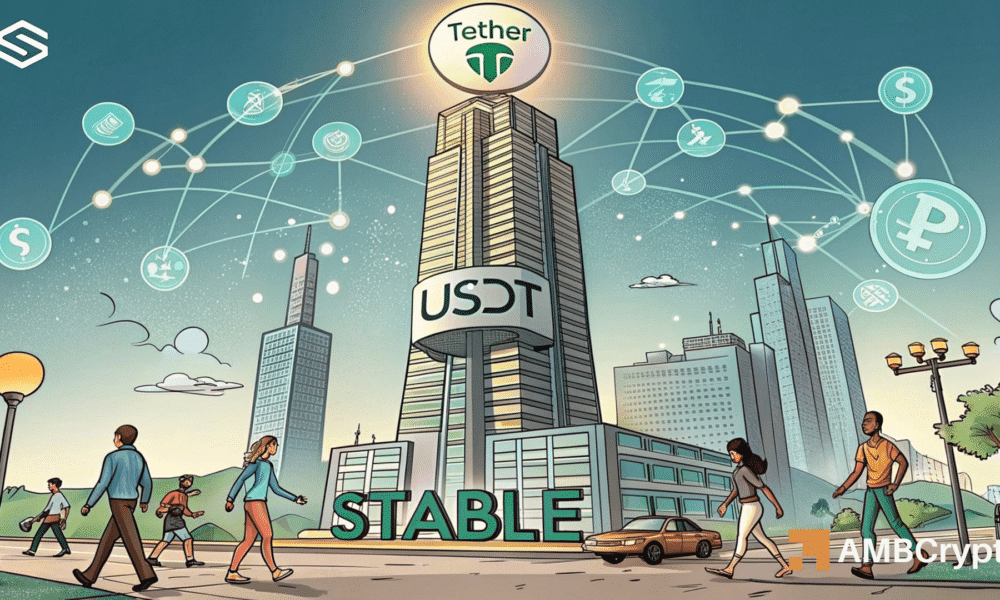
Tether has surpassed Tron and decentralized exchanges in revenue, earning $432.5 million in the past month, and has achieved over $1 trillion in monthly on-chain transfers, solidifying its dominant position in the crypto space. The company is also launching a new blockchain project called Stable, aimed at integrating stablecoins into business operations, with USDT playing a central role.
Tether's CEO Paolo Ardoino dismisses the idea of going public, despite speculation that its $515 billion valuation could make it the 19th largest company globally, and suggests that its growing Bitcoin and gold reserves might justify an even higher valuation. The company is also expanding its Bitcoin holdings and has acquired a significant stake in Bitcoin treasury through Twenty One Capital, reflecting its strong position in the crypto market.
The Financial Services Oversight Council (FSOC) has called for increased regulation of stablecoins, citing risks to financial markets due to a lack of transparency and reserve management standards. The FSOC's 2024 Annual Report urges the US Congress to establish a regulatory framework for stablecoins, highlighting concerns over market dominance and potential economic instability. Tether, the leading stablecoin, faces scrutiny for its lack of transparent audits, raising fears of market disruption. The FSOC warns it may take further action if legislation is not enacted.
As Bitcoin's allure wanes amid rising market volatility, Tether's USDT minting on Ethereum and Tron is boosting liquidity and attracting investor interest. Despite Bitcoin's recent surge past $100K, driven by favorable market conditions, uncertainty about its next psychological target raises concerns of potential bearish pressures. This has led some investors to consider stablecoins like USDT as a safer bet, offering a cushion against market instability. The market remains volatile, with conflicting predictions about Bitcoin's future, prompting a shift towards stablecoins and high-cap altcoins.
Tether has minted $3 billion in USDT stablecoins, with $2 billion on Ethereum and $1 billion on Tron, signaling a bullish sentiment in the cryptocurrency market. This increase in USDT supply is expected to enhance market liquidity, facilitate larger transactions, and potentially drive up crypto prices. The move could also attract more institutional investors by fostering a more stable trading environment.