Archaeologists discovered deliberate finger engravings in a sealed Neanderthal cave in France, dating back over 57,000 years, challenging the view that symbolic behavior was unique to modern humans and suggesting Neanderthals possessed complex cognitive abilities.
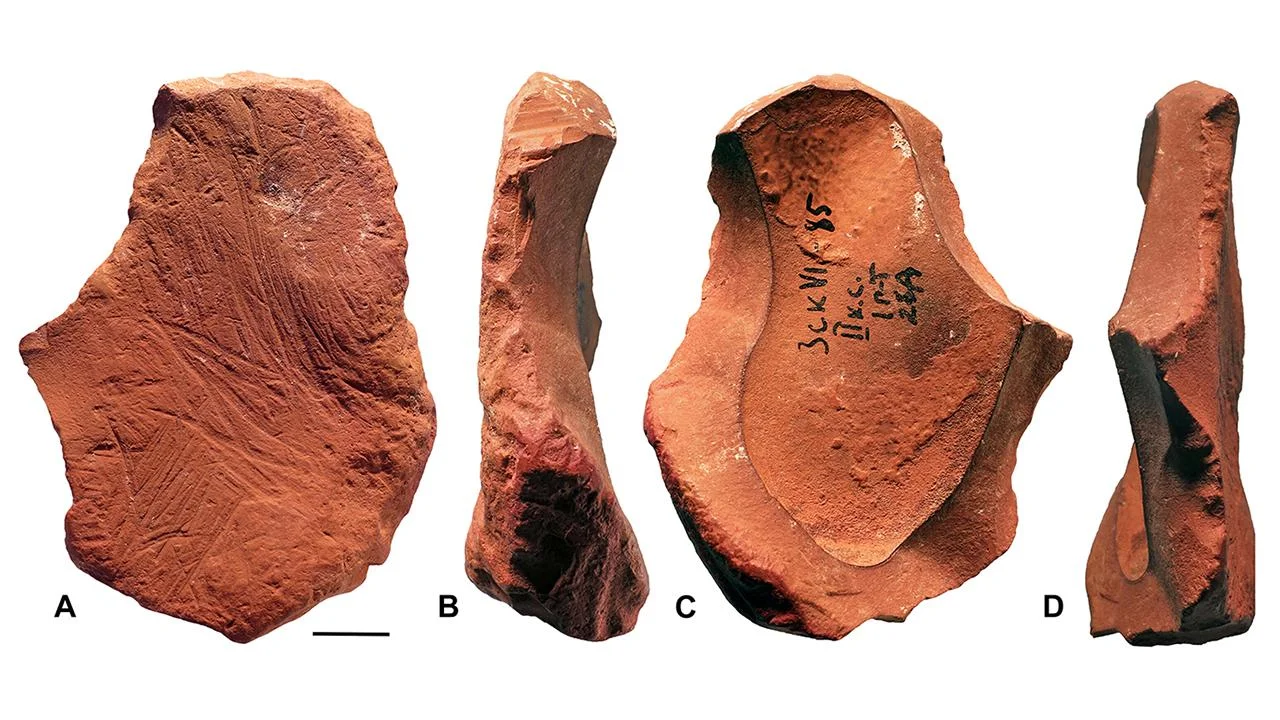
New evidence suggests Neanderthals used ochre not only for practical purposes but also for symbolic or artistic activities, with deliberate shaping and engraving of ochre fragments indicating complex cognition and potential communication or identity expression, challenging the view that symbolic behavior was exclusive to Homo sapiens.
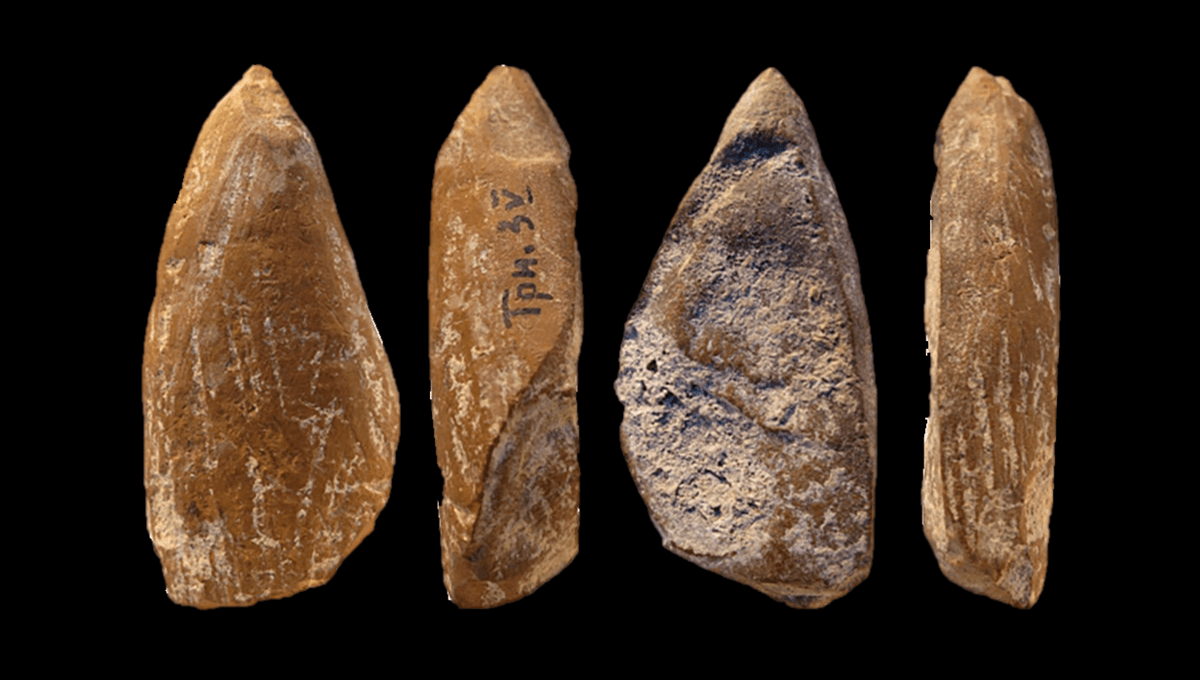
A 42,000-year-old ocher fragment found in Neanderthal sites suggests they used it as a crayon-like tool for drawing or marking, indicating symbolic behavior and challenging stereotypes of Neanderthals as lacking culture.
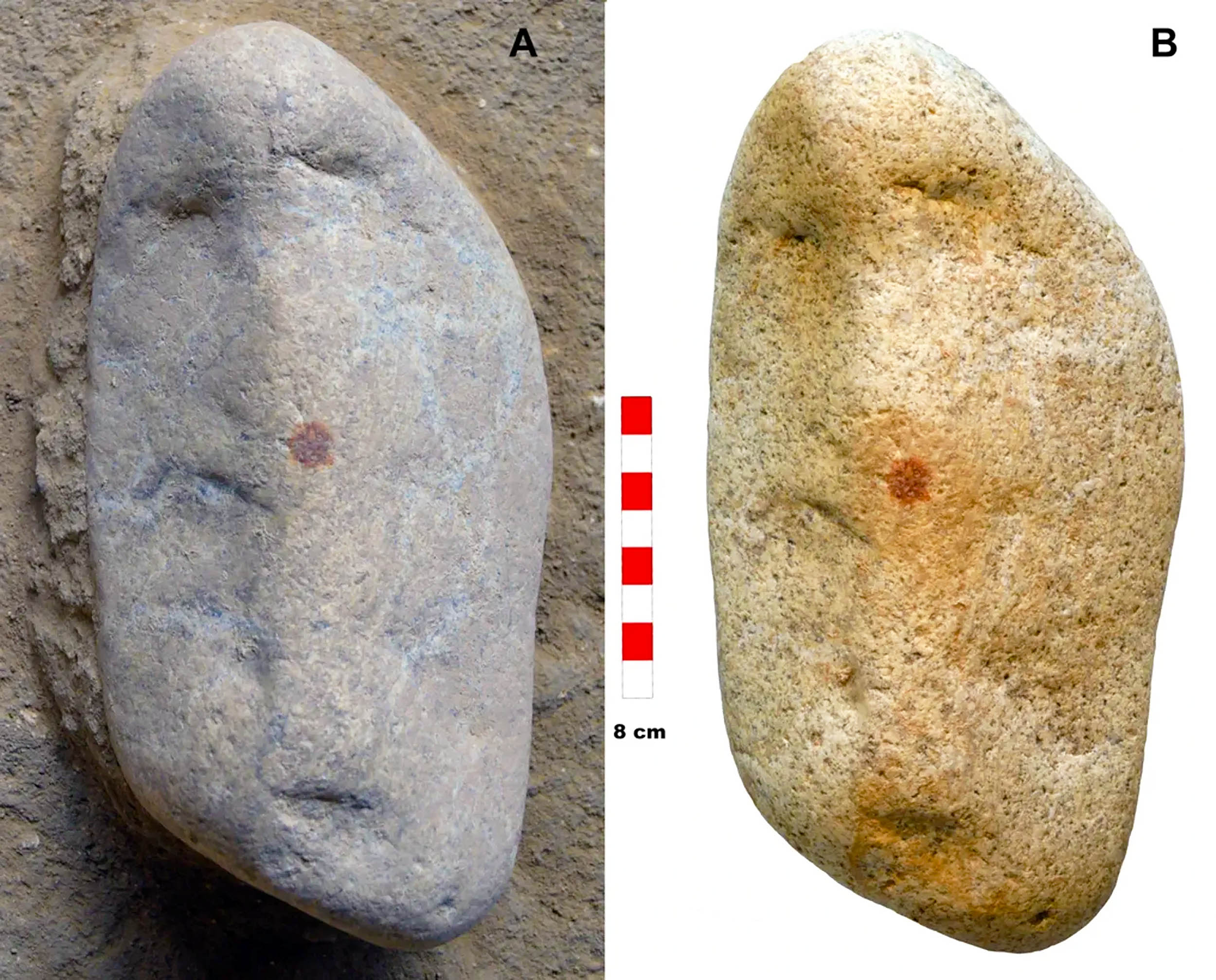
Archaeologists discovered a pebble with a human fingerprint and red pigment, likely made by Neanderthals around 43,000 years ago, suggesting they engaged in symbolic or artistic activities, challenging previous notions of their cognitive abilities.
Recent archaeological discoveries, including a 51,000-year-old engraved deer bone found in a German cave once occupied by Neanderthals, suggest that ancient human relatives may have engaged in primitive forms of art and symbolic behavior. These findings challenge the traditional view that only modern humans were capable of artistic expression, reshaping our understanding of the cognitive abilities of Neanderthals and earlier hominins. The debate over the world's oldest art is informed by theories about the purpose of art and what it says about human cognition, with some experts suggesting that the development of an artistic sense among hominins may have been linked to their abilities to modify their habitats and communicate within larger groups.