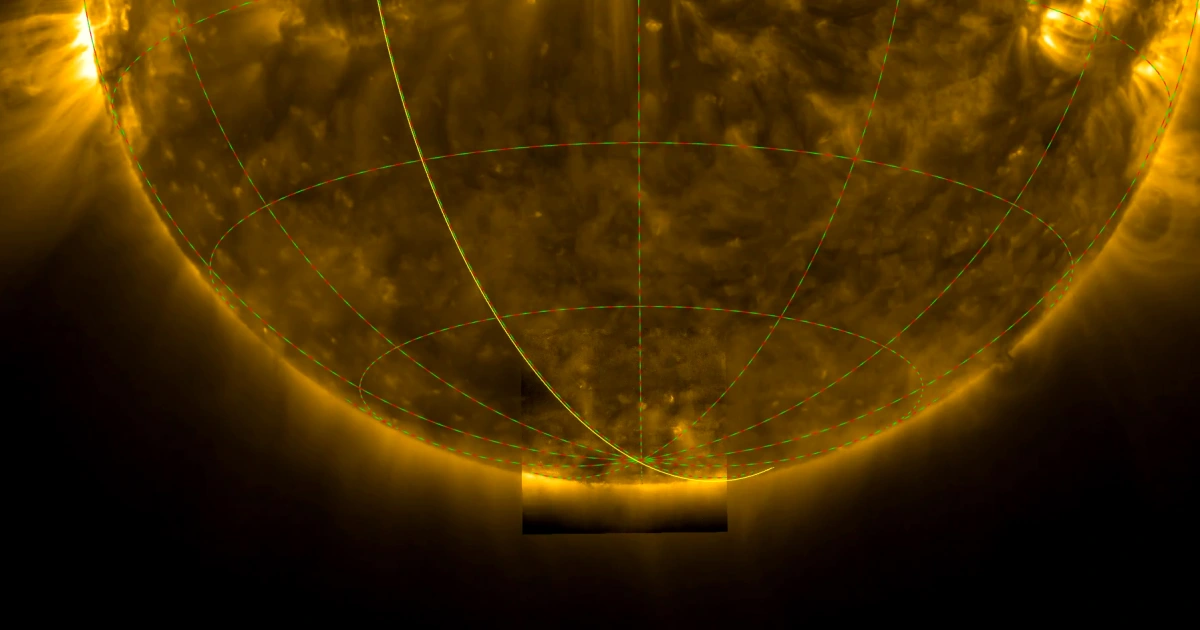
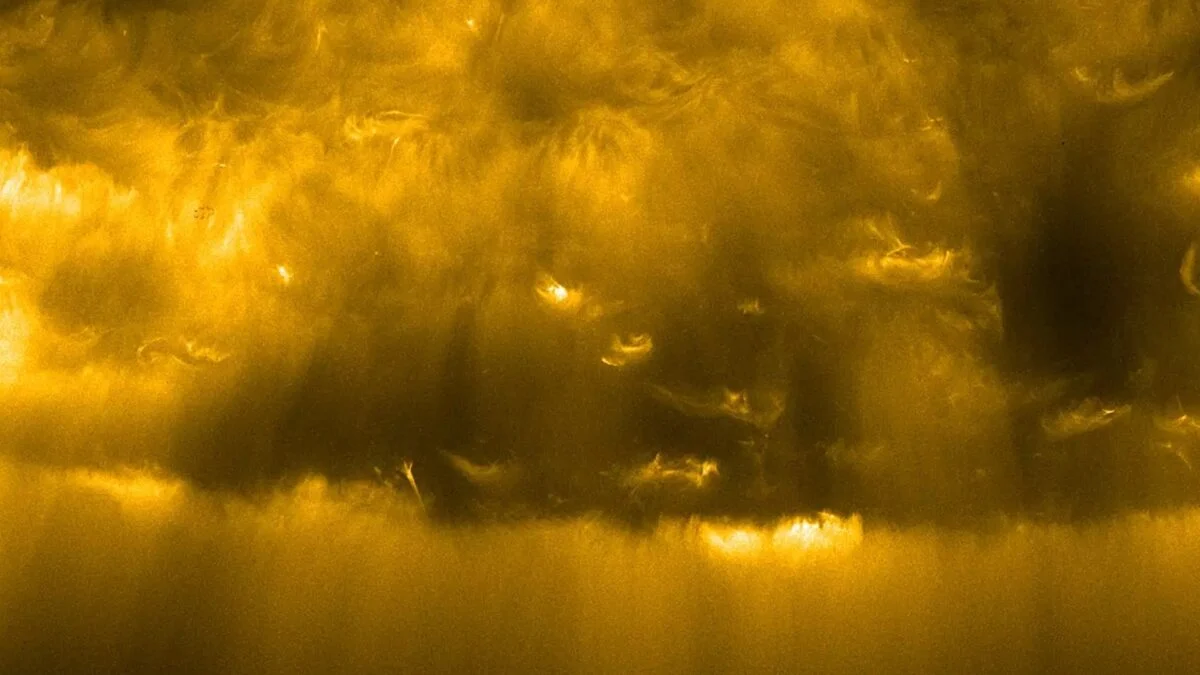
The European Space Agency's Solar Orbiter has captured the first-ever images of the sun's south pole, revealing complex magnetic activity and providing new insights into solar behavior and magnetic field dynamics, especially during the sun's active solar maximum phase.
The Solar Orbiter has captured the first clear images of the Sun’s south pole from outside the ecliptic plane, revealing complex magnetic activity and providing new insights into the Sun’s magnetic cycle and solar outbursts. The spacecraft's unique vantage point allows scientists to better understand the Sun's polar regions, which are crucial for understanding solar activity and its effects on Earth.
The European Space Agency's Solar Orbiter has released the first-ever images of the sun's south pole, captured in late March, providing new insights into solar magnetism and marking a historic milestone in solar observation.
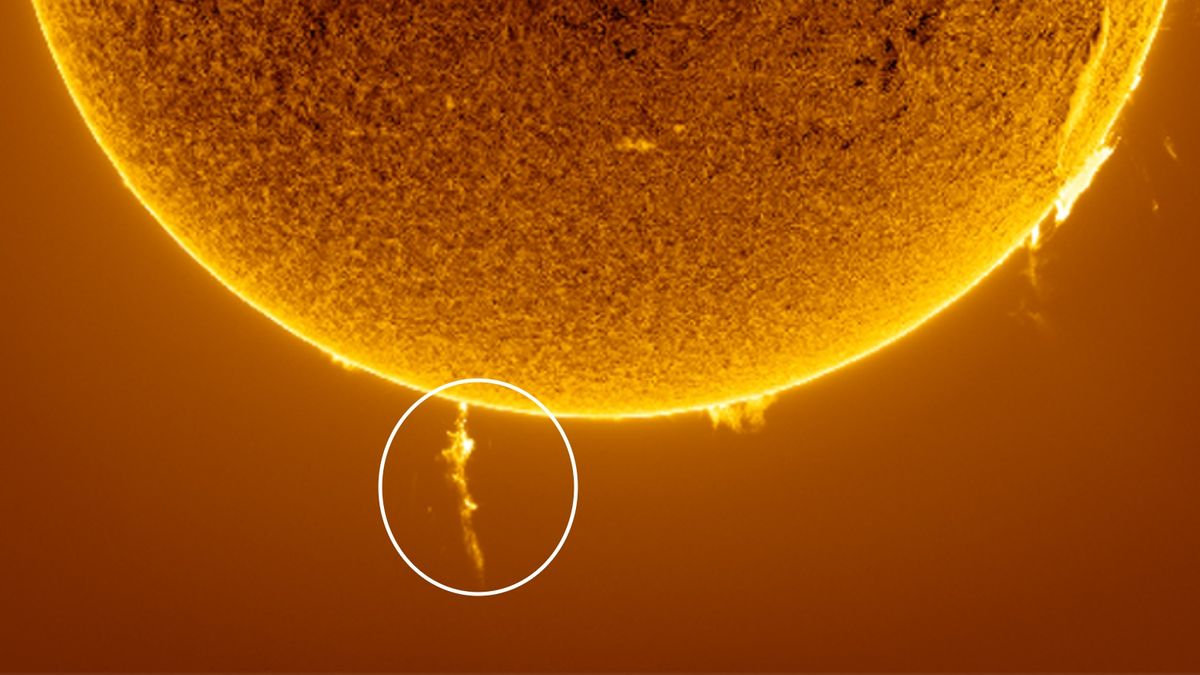
A rare solar eruption occurred at the sun's south pole, releasing a massive plasma plume that towered over 125,000 miles above the solar surface, captured in stunning detail by astrophotographer Eduardo Schaberger Poupeau. This unusual event, triggered by a polar crown filament, is a sign that the sun is approaching its most active phase, the solar maximum. As the sun's magnetic crowns constrict, they "strangle" nearby magnetic fields, making them more likely to explode. This phenomenon, occurring close to the sun's poles, is a rare occurrence and indicates the sun's increasing activity as it approaches the solar maximum.