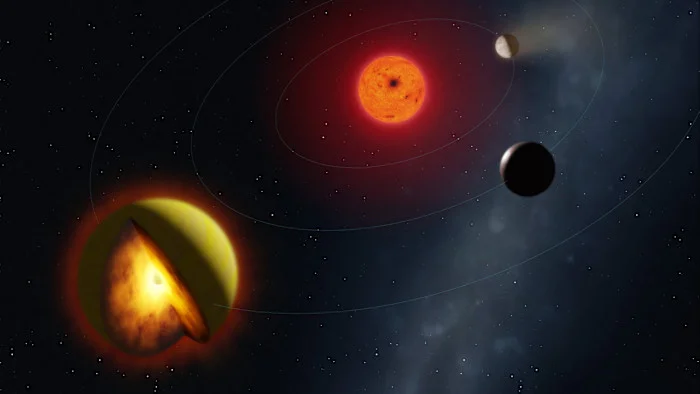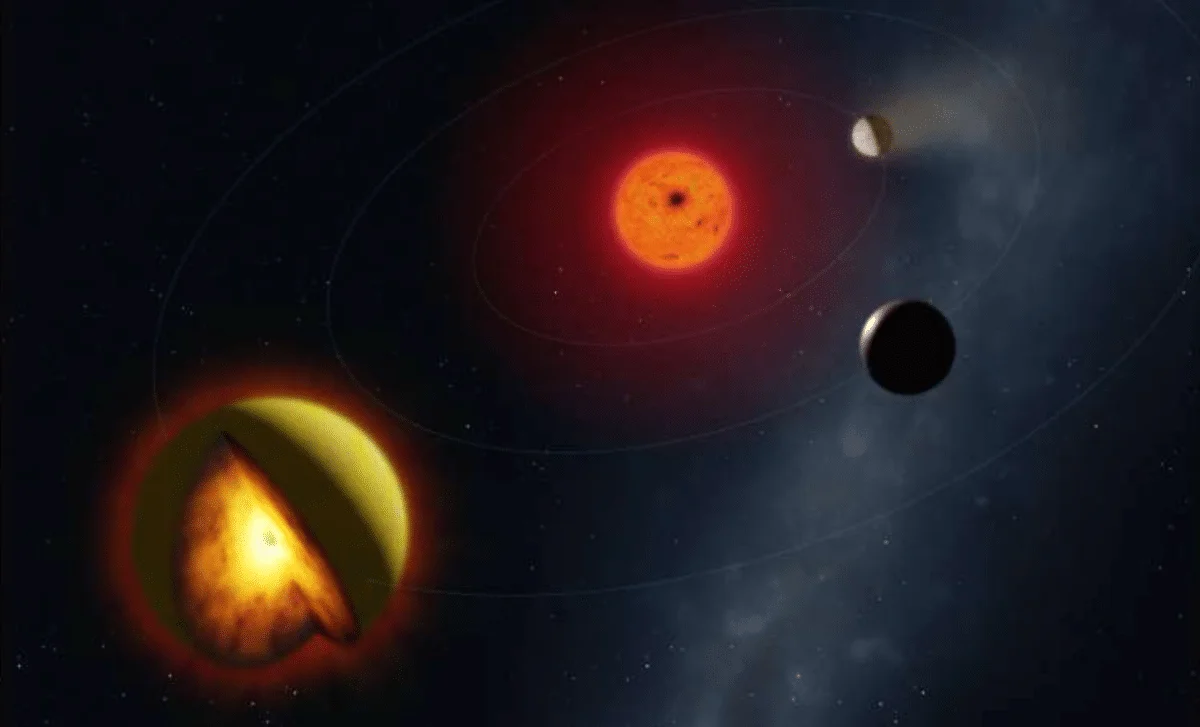
Sulfur-Scented Exoplanet Redefines Planet Types
Scientists using JWST have identified L 98-59 d, a 1.6× Earth-radius exoplanet 35 light-years away with a global magma ocean that stores sulfur, producing a sulfur-rich atmosphere including hydrogen sulfide; its low density and molten interior challenge existing small-planet categories. Computer models trace its five-billion-year evolution from a volatile-rich world that cooled and shrank while preserving sulfur, implying more exotic planet types exist—though the planet is unlikely to host life.