
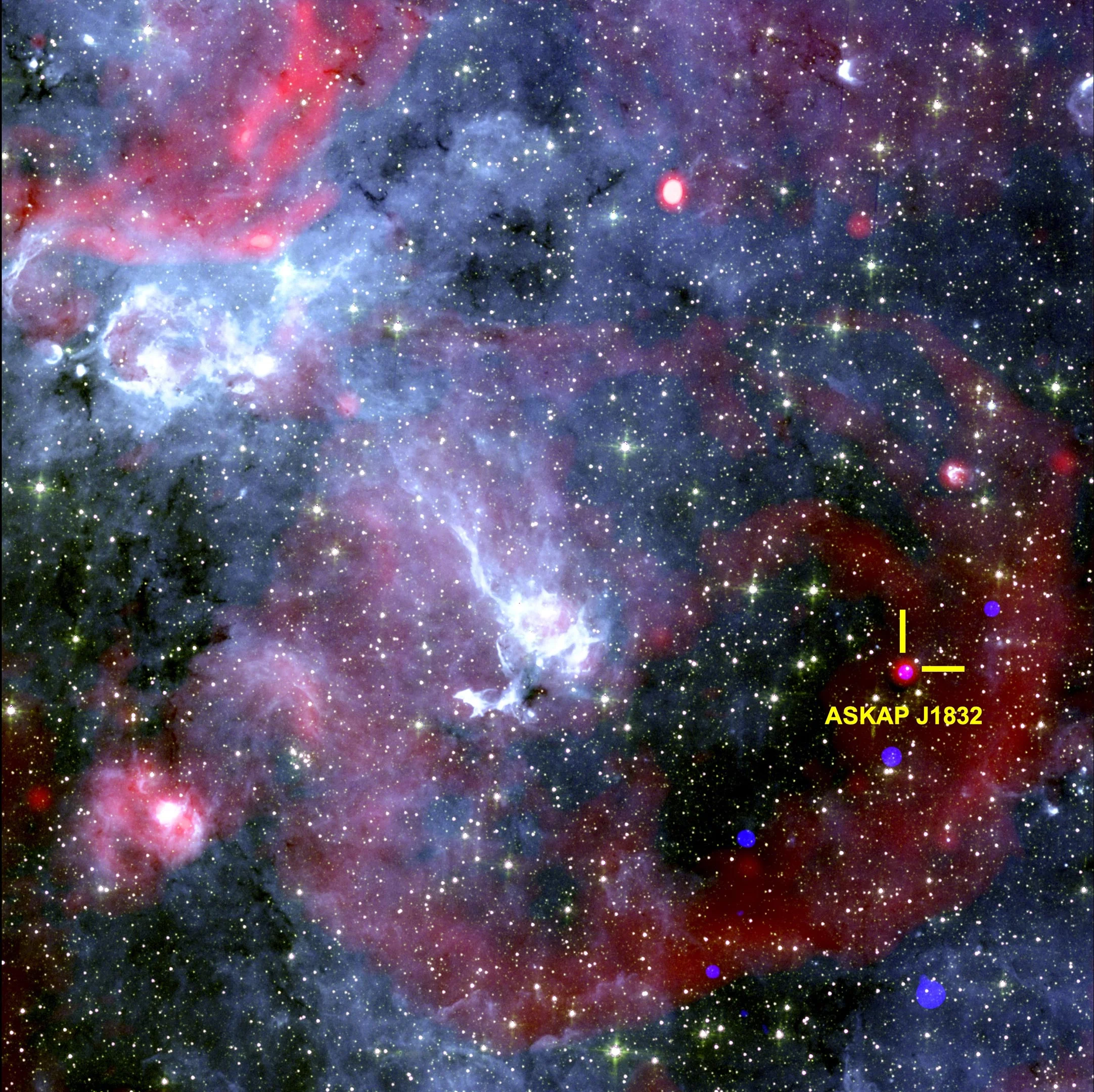
Astronomers have discovered a unique cosmic object, ASKAP J1832-0911, 15,000 light-years away in the Milky Way, that emits both radio waves and X-rays in a 44-minute cycle, potentially revealing new physics or stellar evolution models. The simultaneous detection by radio and X-ray telescopes suggests many more such objects may exist, challenging current understanding of stellar phenomena.
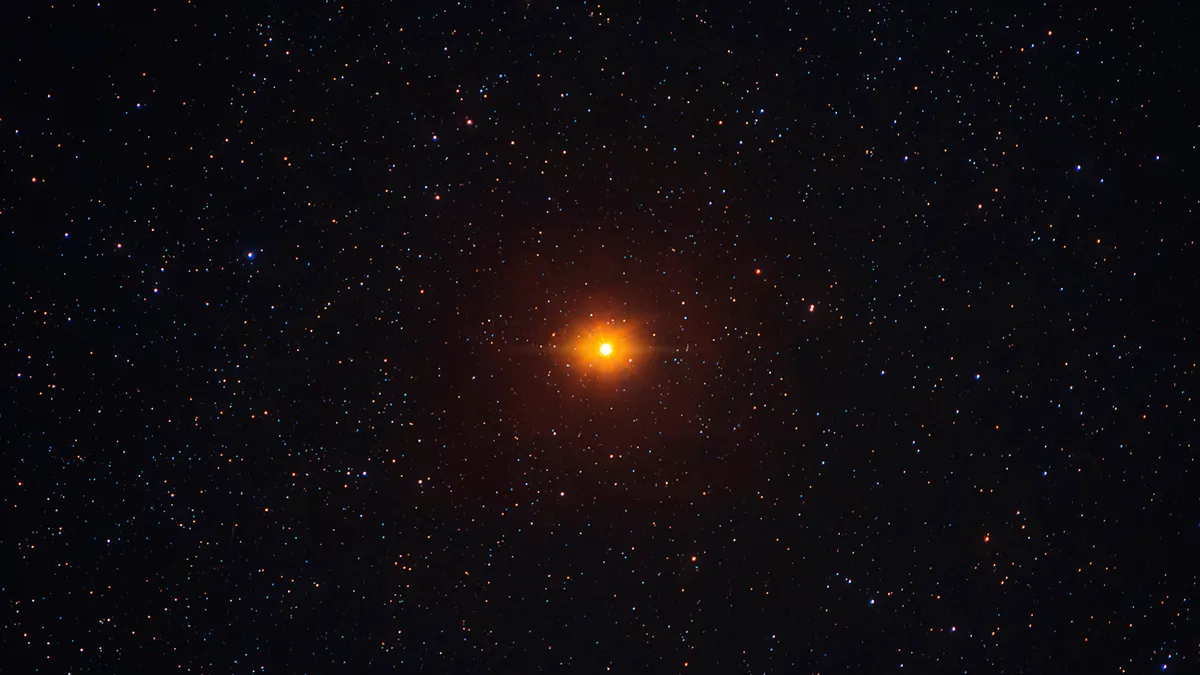
UY Scuti, a red supergiant star, holds the title of the largest known star in the universe, with a radius about 1,700 times larger than that of our Sun. Its immense size challenges our understanding of stellar physics, and if placed at the center of our solar system, it would engulf the orbits of Mercury, Venus, Earth, Mars, and potentially even Jupiter. Eta Carinae, a luminous blue variable star, is the brightest star in the universe in terms of intrinsic luminosity, while R136a1, located in the Large Magellanic Cloud, is currently the heaviest star, challenging previous theories on stellar mass limits.