Astronomers observed a supermassive black hole in a galaxy cluster about 6 billion light-years away just beginning its active phase, launching tiny jets and coinciding with a period of intense star formation, providing rare insights into the early stages of black hole feedback and galaxy evolution.
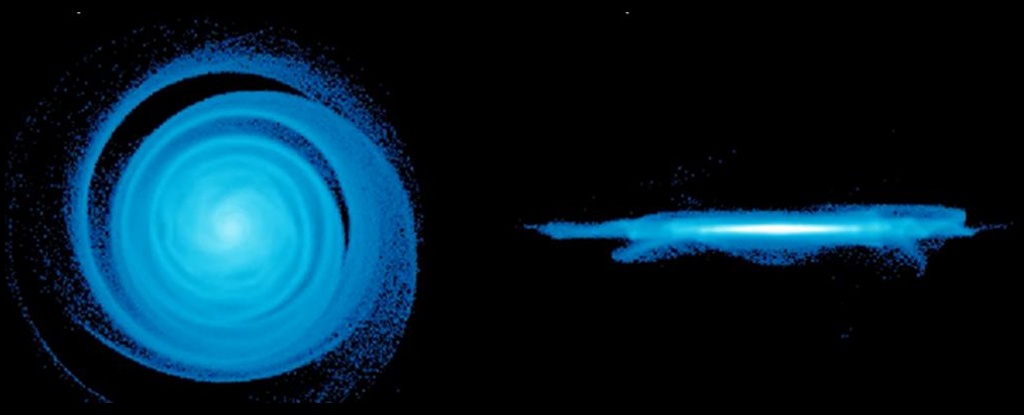
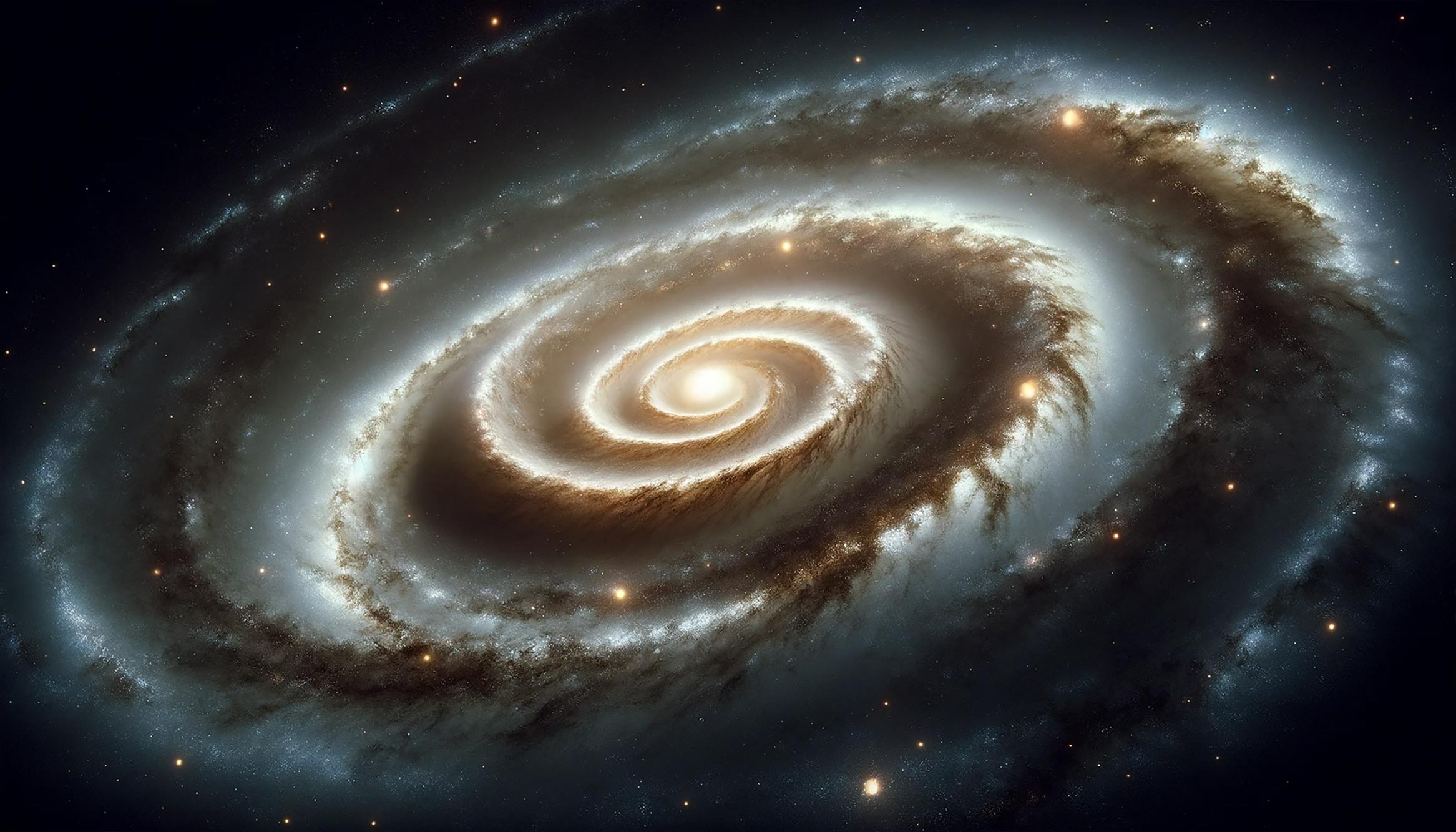
Astronomers using the ALMA telescope have observed unique pond-like ripples in the gaseous disk of BRI 1335-0417, the oldest known spiral galaxy, over 12 billion years old. These ripples suggest recent disturbances, possibly from interactions with another galaxy or a massive gas cloud, which could explain the galaxy's rapid star formation rate. Additionally, a central bar was detected, which is significant as it challenges previous theories on bar formation in galaxies, indicating that bars can form early in the universe through a star-forming gaseous bar rather than from a pre-existing stellar disk. This discovery, published in the Monthly Notices of the Royal Astronomical Society, provides new insights into galaxy formation and evolution.
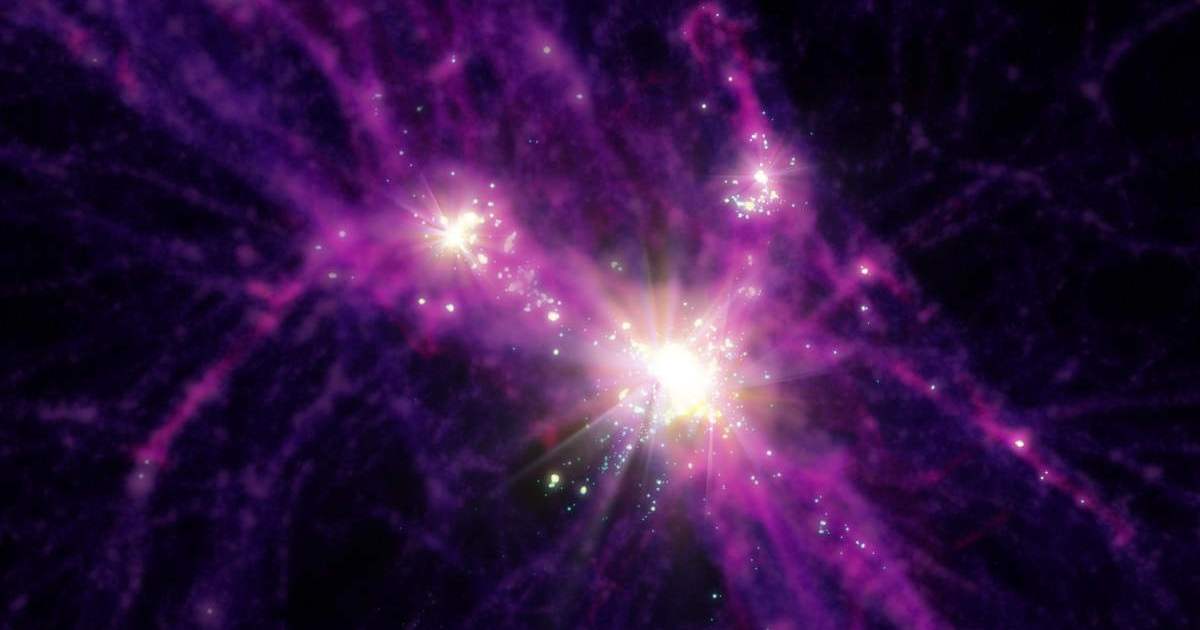
The Universe's star formation peaked in its first few billion years and has since plummeted, with the current rate being the lowest in over 13 billion years. Early stars were massive and metal-free, forming in a denser Universe, but over time, factors like the uniformity of matter distribution, gravitational forces, and cosmic expansion influenced the rate of star formation. Major mergers of galaxies triggered significant starbursts, but as the Universe expanded and dark energy became dominant, the formation of large-scale structures beyond galaxy clusters was limited. Today, star formation continues at a much slower pace, with dark energy and other factors preventing the creation of new stars at the rates seen in the past. The James Webb Space Telescope (JWST) and other instruments are helping to reduce uncertainties in our understanding of the Universe's star formation history.
Astronomers using the ALMA observatory have studied BRI 1335-0417, the oldest known spiral galaxy at over 12 billion years old, to gain insights into early galaxy formation. They observed seismic wave patterns and a bar structure within the galaxy, which are indicative of dynamic star formation processes and the galaxy's growth. The findings, which include the most distant known galactic bar, help explain the rapid star formation rates in early galaxies and provide a glimpse into the past when the Universe was only 10 percent of its current age. The research contributes to our understanding of how spiral structures form and the evolution of galaxies like our own Milky Way.
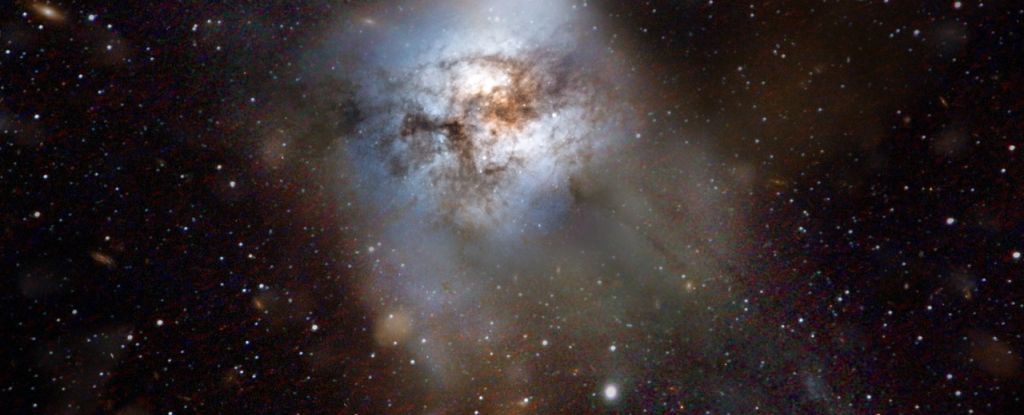
The James Webb Space Telescope (JWST) has revealed that HFLS3, previously thought to be a single galaxy with rampant star formation early in the Universe, is actually six galaxies in the midst of a massive collision. This discovery, led by Gareth Jones of the University of Oxford, challenges previous notions about the size and star formation rates of early galaxies and provides insight into galaxy interactions during the Cosmic Dawn. The findings, which show the galaxies are closely interacting and igniting new stars at a high rate, have been accepted for publication in Astronomy & Astrophysics and call for a reevaluation of similar cosmic objects.
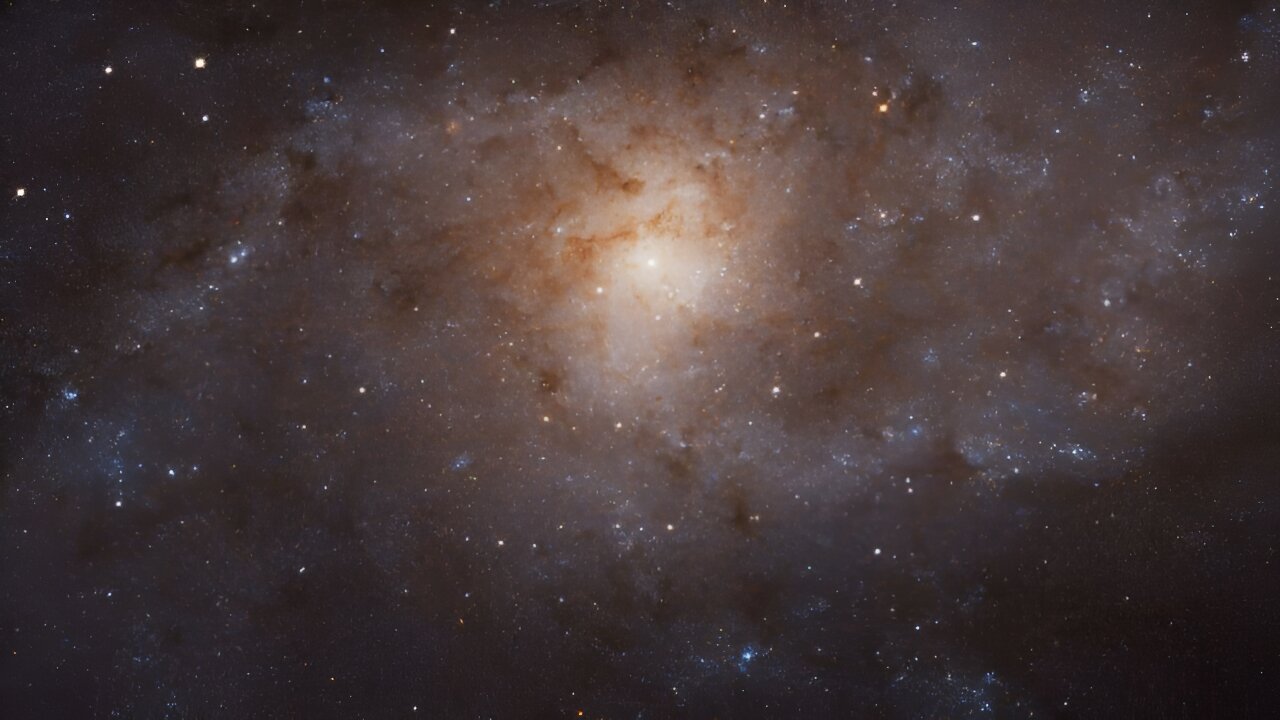
The James Webb Space Telescope (JWST) has broken new ground by observing nearly 800 young stellar objects (YSOs) in the Triangulum Galaxy (M33), which is 2.7 million light-years away. This is the farthest observation of star formation to date. Using its mid-infrared imager (MIRI), JWST has provided insights into the star-formation processes in other galaxies, which are crucial for understanding their evolution. The findings suggest that the mechanisms of star birth in M33 are similar to those in the Milky Way, with the potential for further research to reveal more about the galaxy's evolutionary state and history.