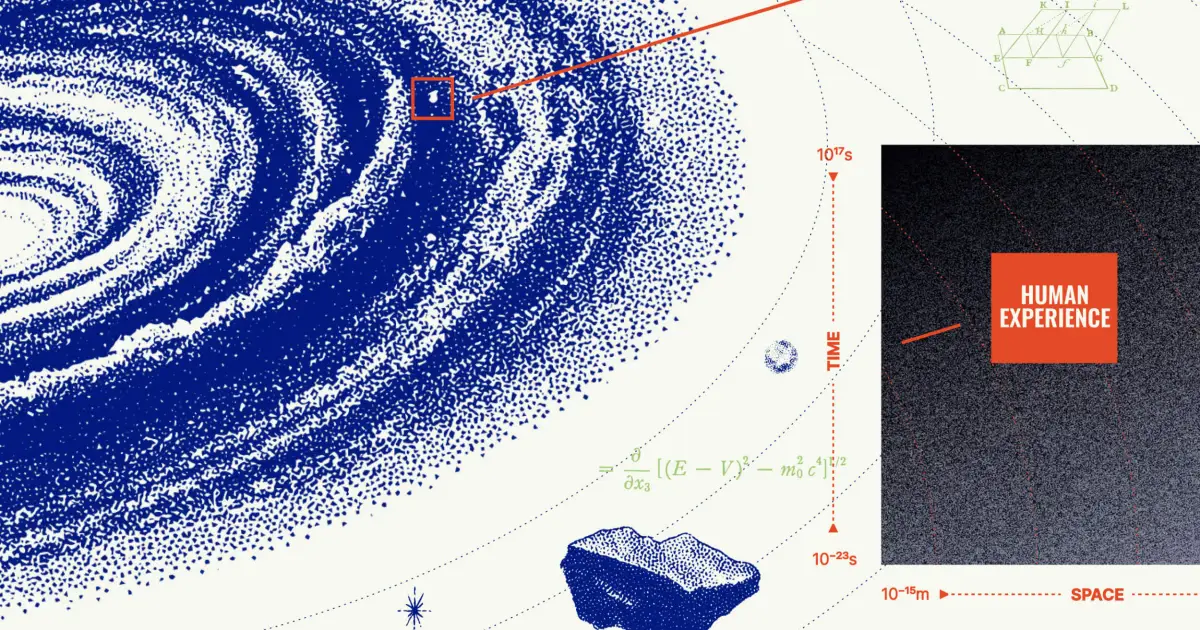
The article explores the vast scales of space and time beyond human perception, illustrating how our senses are limited and how scientific tools and imagination extend our understanding of the universe, from quantum particles to cosmic distances, highlighting the contrast between our intuitive experience and the universe's true scale.
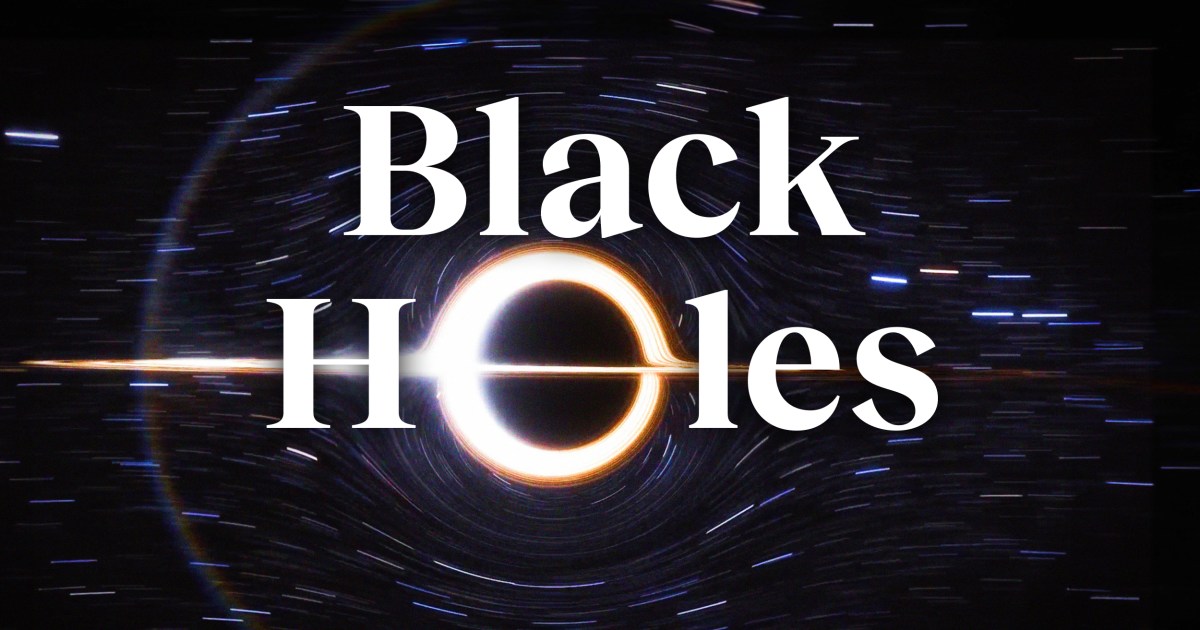
Black holes pose a conceptual challenge to the compatibility of quantum theory and general relativity, pushing scientists to seek a unified theory of gravity. They are crucial in understanding the nature of space, time, and the fundamental laws of physics. The event horizon, the boundary between the external universe and the interior of a black hole, and the concept of Hawking radiation have revolutionized our understanding of these cosmic objects. The question of what happens to the information of objects that fall into a black hole, known as the black hole information paradox, is still being explored. The study of black holes offers a glimpse into a deeper theory of gravity and the emergence of space and time from smaller underlying components.