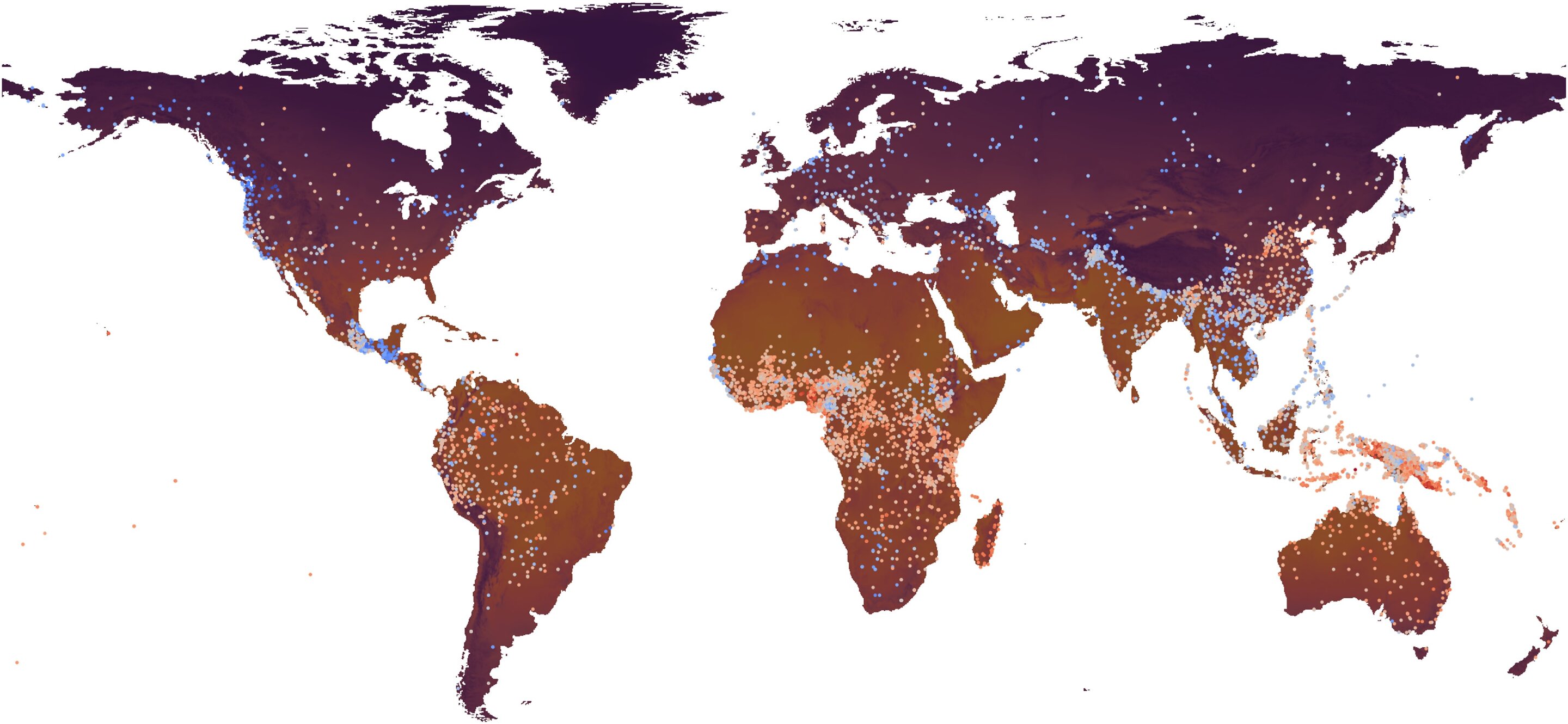
A study finds that languages in warmer climates tend to be more sonorous, with more vowels and flowing sounds, possibly due to the physical effects of temperature on air and vocal production, suggesting that climate influences language evolution over centuries.
A new study published in PNAS Nexus suggests that the average ambient temperature of a region influences the loudness of certain speech sounds in languages. The study found that languages in warmer regions tend to be louder than those in colder regions. Factors such as the dryness of cold air and warm air's absorption of high-frequency energy could favor a higher volume of speech sounds in warmer climates. However, there are exceptions to this trend, indicating that the effects of temperature on sonority develop slowly over centuries or even millennia. The study challenges the assumption that linguistic structures are self-contained and not influenced by the environment.
A study published in PNAS Nexus suggests that languages spoken in warmer regions tend to be louder than those in colder regions. The study found a clear relationship between the mean sonority of language families and the mean annual temperature. The physics of air, influenced by temperature, affects the production and perception of speech sounds. However, there are exceptions to this trend, indicating that the effects of temperature on sonority develop slowly over centuries or even millennia. This research challenges the notion that linguistic structures are self-contained and not influenced by the environment, opening new paths for understanding human societies and migration patterns.