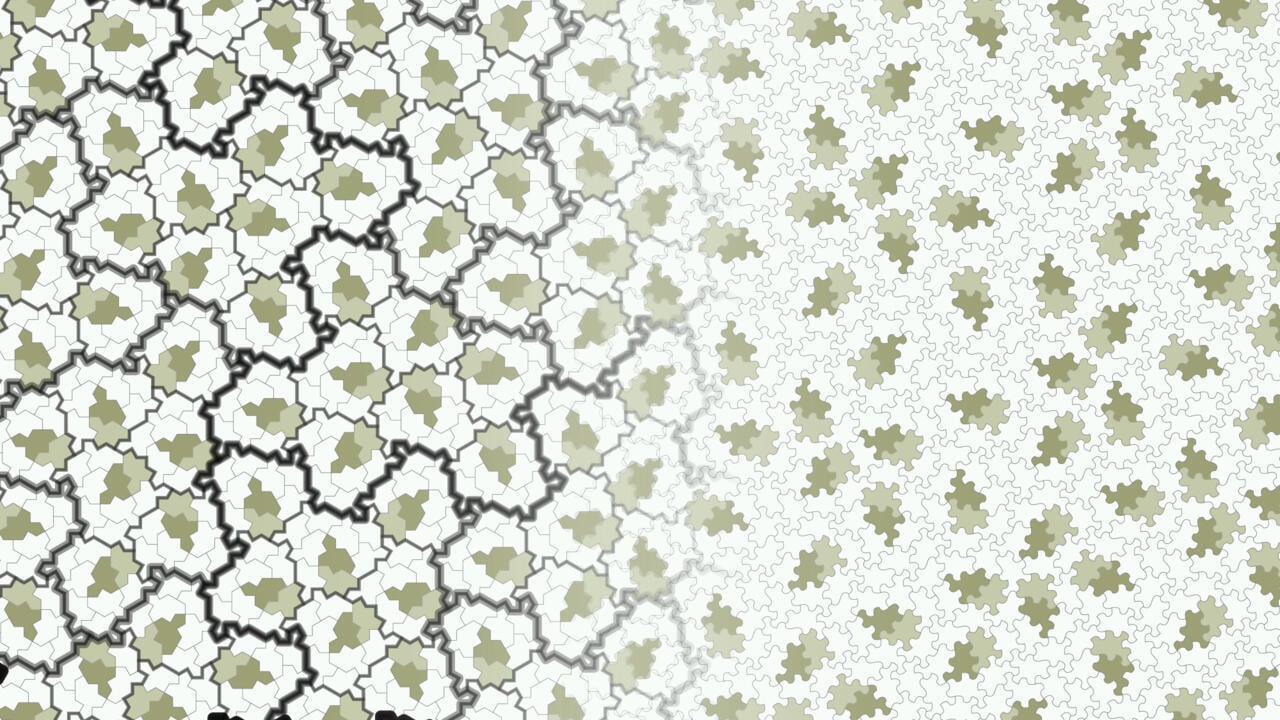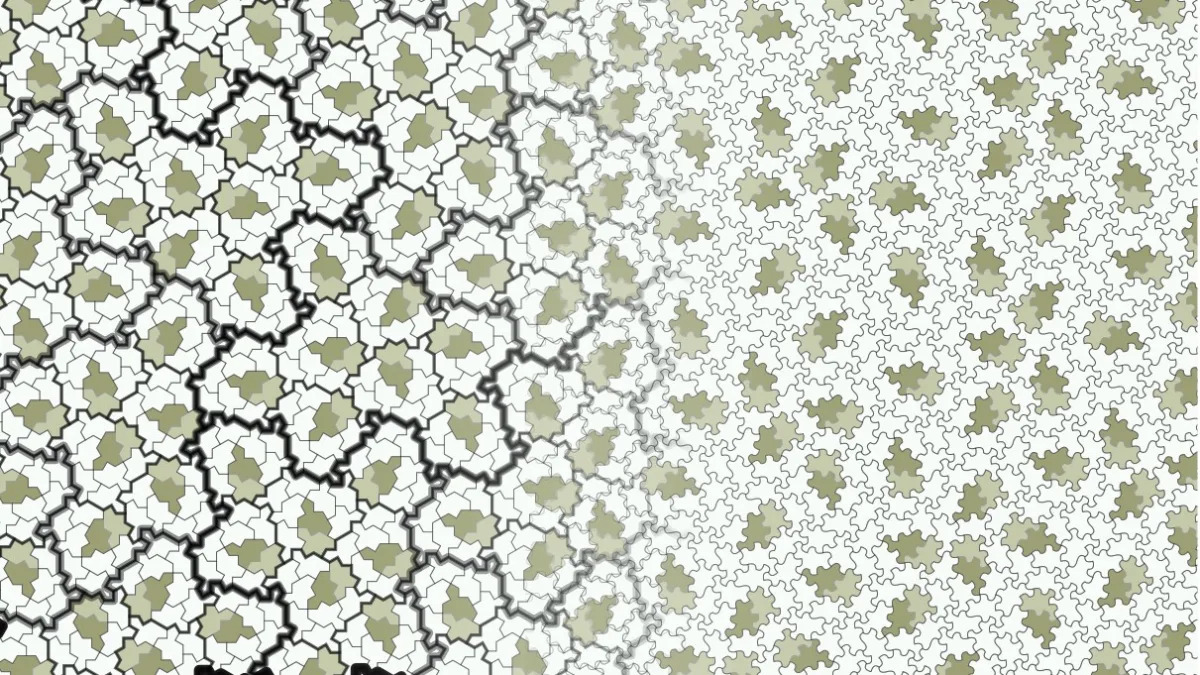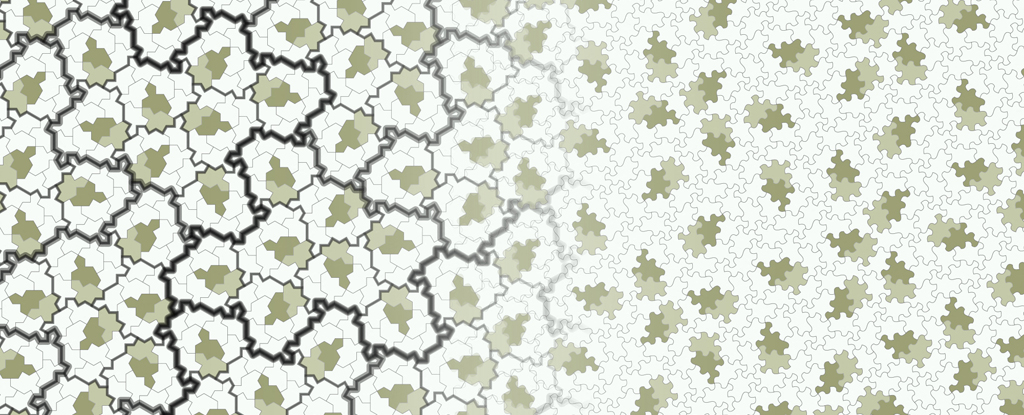
A retired print technician from England discovered a 13-sided polygon called "the hat" that can completely cover an infinitely large flat surface without ever repeating the same pattern, making it the first "einstein" and solving a problem posed 60 years ago. The mathematician then discovered a new shape called "the spectre," which requires no mirror image, making it an even purer einstein. Both shapes are "stunning" and may lead to a deeper understanding of order in nature.
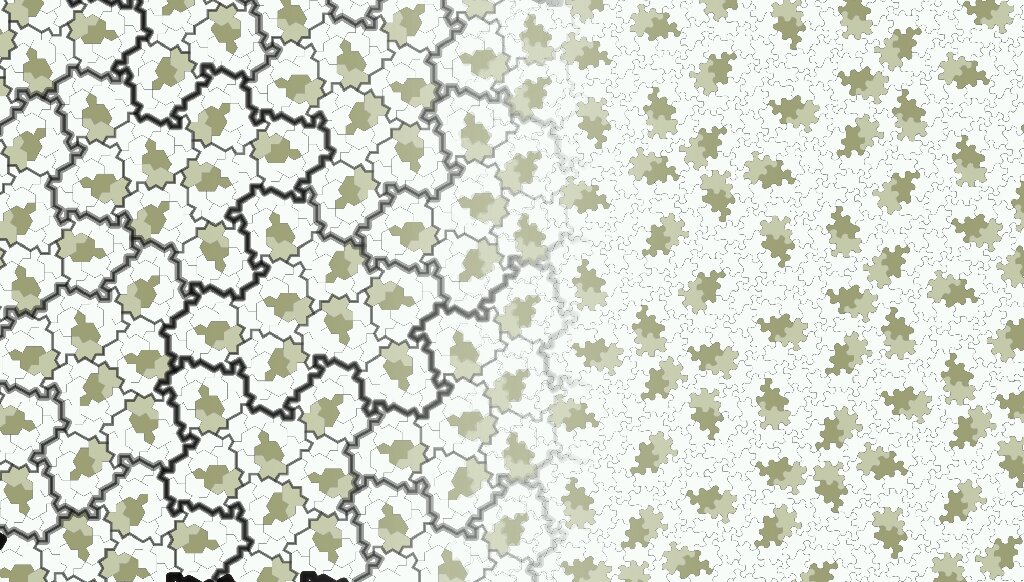
A retired print technician from the UK, David Smith, has discovered two new shapes that have stunned the mathematics world. The first shape, called "the hat," is the first single shape ever found that can completely cover an infinitely large flat surface without ever repeating the same pattern. The second shape, called "the specter," requires no mirror image, making it an even purer einstein. Smith, a hobbyist with no training in math, stumbled upon these shapes while pursuing his hobby of looking for interesting shapes.
A retired print technician from the UK, David Smith, has discovered two new shapes that have stunned the mathematics world. The first shape, called "the hat," is the first single shape ever found that can completely cover an infinitely large flat surface without ever repeating the same pattern. The second shape, called "the spectre," requires no mirror image, making it an even purer einstein. Smith, a hobbyist with no training in maths, stumbled upon the shapes while pursuing his hobby of looking for interesting shapes.
Mathematicians have discovered a 14-sided shape called "Spectre" that can tile a surface without repeating or being flipped, making it the first example of an aperiodic monotile that tiles the plane without reflections. The shape was discovered by adding an extra side to the original "hat" shape and transforming its straight edges into curved ones. The discovery culminates decades of hunting by mathematicians around the world for a shape that could completely tile a surface without ever repeating.